Ch. 9 The Endocrine System
Marieb - Essentials of Human Anatomy & Physiology 13th Edition
Marieb13th EditionEssentials of Human Anatomy & PhysiologyISBN: 9780135624340Not the one you use?Change textbook
Chapter 9, Problem 10

More than one choice may apply.
Hormones that act to decrease the blood glucose level include
a. Insulin
b. Glucagon
c. Epinephrine
d. Growth hormone

Verified step by step guidance
1
Understand the role of blood glucose regulation: Blood glucose levels are tightly regulated by hormones to maintain homeostasis. Some hormones decrease blood glucose levels, while others increase it.
Analyze the function of insulin: Insulin is a hormone secreted by the pancreas (beta cells of the islets of Langerhans). It lowers blood glucose levels by promoting glucose uptake into cells and stimulating glycogen synthesis in the liver and muscles.
Evaluate the role of glucagon: Glucagon, secreted by the pancreas (alpha cells of the islets of Langerhans), increases blood glucose levels by stimulating glycogen breakdown (glycogenolysis) and glucose production (gluconeogenesis) in the liver.
Consider the effects of epinephrine: Epinephrine, also known as adrenaline, is secreted by the adrenal medulla. It increases blood glucose levels by promoting glycogenolysis and inhibiting insulin secretion during the fight-or-flight response.
Examine the role of growth hormone: Growth hormone, secreted by the anterior pituitary gland, indirectly increases blood glucose levels by reducing glucose uptake in tissues and promoting lipolysis (fat breakdown) for energy use.

Verified video answer for a similar problem:

This video solution was recommended by our tutors as helpful for the problem above.
Video duration:
3m
Was this helpful?

Key Concepts

Here are the essential concepts you must grasp in order to answer the question correctly.

Insulin

Insulin is a hormone produced by the pancreas that plays a crucial role in regulating blood glucose levels. It facilitates the uptake of glucose by cells, particularly in muscle and fat tissues, thereby lowering blood sugar levels. Insulin is essential for maintaining energy balance and preventing hyperglycemia.
Recommended video:
Guided course
4:31
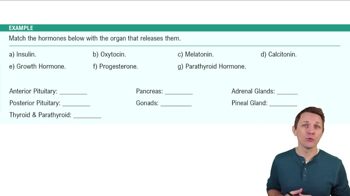
Hormone Review Table Example 1

Glucagon

Glucagon is another hormone produced by the pancreas, but it has the opposite effect of insulin. It stimulates the liver to release stored glucose into the bloodstream, raising blood sugar levels. While glucagon primarily acts to increase glucose levels, it is important to understand its role in the overall regulation of blood glucose homeostasis.
Recommended video:
Guided course
4:31
Hormone Review Table Example 1

Hormonal Regulation of Blood Glucose

The hormonal regulation of blood glucose involves a complex interplay between various hormones, including insulin and glucagon. This balance is crucial for maintaining normal blood sugar levels. Other hormones like epinephrine and growth hormone can also influence glucose metabolism, but their primary roles are not to decrease blood glucose, making the understanding of insulin's function particularly important.
Recommended video:
Guided course
13:06
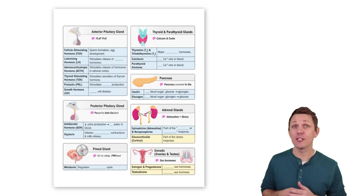
Review of Major Hormones