Back

Fermentation definitions

Control buttons has been changed to "navigation" mode.
1/15
  • Pyruvate

    Three-carbon molecule produced from glucose during glycolysis; its fate depends on oxygen availability and cell type.
  • Anaerobic Conditions

    Cellular environment lacking oxygen, leading to fermentation pathways instead of aerobic respiration.
  • Lactate

    Product formed when pyruvate is reduced by NADH in human cells during lactic acid fermentation.
  • Ethanol

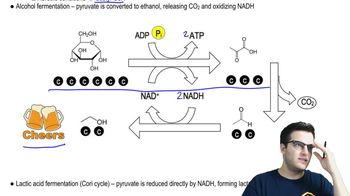
    Alcohol produced by yeast from acetaldehyde during alcohol fermentation, accompanied by carbon dioxide release.
  • Carbon Dioxide

    Gas released during the decarboxylation of pyruvate in alcohol fermentation by yeast.
  • Acetyl CoA

    Molecule formed from pyruvate under aerobic conditions, entering the citric acid cycle for further energy production.
  • Fermentation

    Process that regenerates NAD+ from NADH, allowing glycolysis to continue in the absence of oxygen.
  • NAD+

    Electron carrier recycled during fermentation, essential for sustaining glycolysis when oxygen is unavailable.
  • Glycolysis

    Metabolic pathway breaking down glucose into pyruvate, yielding ATP and NADH as energy and electron carriers.
  • Red Blood Cells

    Cells relying exclusively on lactic acid fermentation to maintain glycolysis due to lack of mitochondria.
  • Alcohol Fermentation

    Pathway in yeast converting pyruvate to ethanol and carbon dioxide, recycling NAD+ for glycolysis.
  • Lactic Acid Fermentation

    Process in human cells where pyruvate is directly reduced to lactate, regenerating NAD+ for glycolysis.
  • Acetaldehyde

    Intermediate formed from pyruvate during alcohol fermentation, subsequently reduced to ethanol.
  • Cori Cycle

    Metabolic pathway involving lactic acid fermentation, named after its discoverers, crucial for recycling NAD+.
  • NADH

    Reduced electron carrier generated during glycolysis, oxidized during fermentation to regenerate NAD+.