Back

Membrane Structure 1 definitions

Control buttons has been changed to "navigation" mode.
1/15
  • Phospholipid

    Major membrane component with hydrophilic head and hydrophobic tails, enabling bilayer formation and lateral movement.
  • Cholesterol

    Sterol molecule that fills gaps between fatty acids, reducing membrane fluidity and enhancing structural integrity.
  • Protein

    Predominant membrane constituent responsible for functional roles such as transport, signaling, and structure.
  • Fatty Acid

    Hydrocarbon chain in phospholipids; saturation level influences membrane rigidity and fluidity.
  • Saturated Fatty Acid

    Hydrocarbon chain without double bonds, promoting membrane rigidity and higher melting points.
  • Unsaturated Fatty Acid

    Hydrocarbon chain with cis double bonds, introducing kinks that increase membrane fluidity at low temperatures.
  • Monolayer

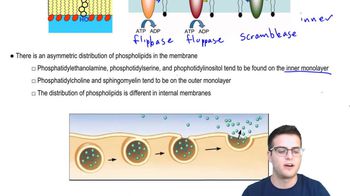
    Single leaflet of the membrane bilayer, exhibiting distinct lipid composition and asymmetric distribution.
  • Flippase

    Enzyme facilitating movement of phospholipids from one membrane leaflet to the opposite side, maintaining asymmetry.
  • Scramblase

    Enzyme enabling bidirectional phospholipid transfer between membrane leaflets, contributing to lipid distribution.
  • Lipid Raft

    Dense microdomain within the membrane, enriched in sphingolipids and cholesterol, influencing membrane organization.
  • Sphingolipid

    Lipid class concentrated in membrane rafts, contributing to microdomain formation and membrane stability.
  • Plasma Membrane

    Cell's outer boundary, rich in cholesterol and proteins, crucial for structural integrity and selective interactions.
  • Internal Membrane

    Intracellular membrane with distinct lipid composition, often involved in vesicle formation and fusion.
  • Fluid Mosaic Model

    Concept describing membranes as dynamic, fluid structures with diverse proteins and lipids enabling cellular functions.
  • Vesicle

    Membrane-bound structure formed by pinching or fusion, facilitating transport and communication within cells.