Skip to main content
Cell Biology
My Course
Learn
Exam Prep
AI Tutor
Study Guides
Flashcards
Explore
Try the app
My Course
Learn
Exam Prep
AI Tutor
Study Guides
Flashcards
Explore
Try the app
Back
B Cell Development definitions
You can tap to flip the card.
B Cell
You can tap to flip the card.
👆
B Cell
A lymphocyte responsible for producing highly specific antibodies as part of the adaptive immune response.
Track progress
Control buttons has been changed to "navigation" mode.
1/14
Related flashcards
Related practice
Recommended videos
B Cell Development quiz #1
B Cell Development
10 Terms
B Cell Development
21. The Immune System
7 problems
Topic
Antibody Structure and Diversity
21. The Immune System
7 problems
Topic
21. The Immune System - Part 1 of 2
4 topics
11 problems
Chapter
21. The Immune System - Part 2 of 2
4 topics
10 problems
Chapter
Guided course
08:41
B Cell Development
278
views
6
rank
1
comments
Terms in this set (14)
Hide definitions
B Cell
A lymphocyte responsible for producing highly specific antibodies as part of the adaptive immune response.
Antibody
A protein molecule that binds to a unique antigen, marking pathogens for destruction by the immune system.
Antigen
A molecular sequence on a pathogen recognized as foreign, triggering a targeted immune response.
Self-Tolerance
A property ensuring immune cells do not react against the body's own tissues, preventing autoimmunity.
Autoimmune Disease
A condition resulting from immune cells attacking the body's own tissues due to loss of self-recognition.
Vaccination
A preventive method that primes the immune system by exposing it to antigens, leading to future protection.
Primary Immune Response
The initial, mild immune reaction upon first exposure to a pathogen or vaccine antigen.
Secondary Immune Response
A rapid and robust immune reaction upon subsequent exposures to a previously encountered antigen.
Clonal Selection Theory
A model explaining how only specific lymphocytes are activated and expanded upon antigen exposure.
Naive Cell
An immune cell that has not yet encountered its specific antigen and remains unactivated.
Effector Cell
An activated immune cell that produces large amounts of antibodies to combat a current infection.
Memory Cell
A long-lived immune cell that persists after infection, enabling rapid response to future exposures.
Adaptive Immune Response
A highly specific defense mechanism involving lymphocytes that target and remember unique pathogens.
Proliferation
The rapid multiplication of activated immune cells to increase antibody production during infection.
 BackBack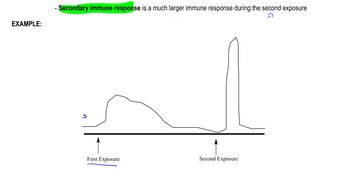
 08:41
08:41