Exploring the four Cs: Using future skills to unlock young learners’ potential

Annie Altamirano
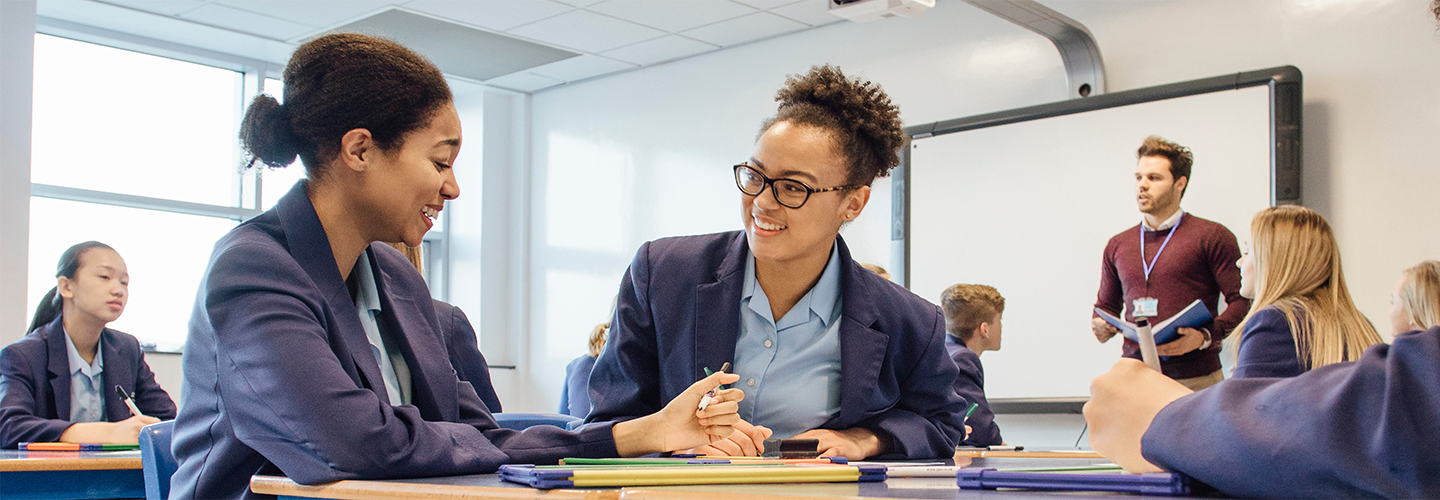
Students sat together in a classroom working together
Reading time: 5 minutes

What do we mean by future skills? 

The skills students will need in their future studies and careers are dramatically different from those required previously. Times are changing rapidly and educational institutions and teachers have a critical role to play in developing those skills in our young learners so that they are able to fulfill their potential and have bright futures ahead of them. 

These skills are referred to as future skills. There is no common consensus on how to define these skills but, broadly speaking, they can be grouped into four categories: 

1. Ways of thinking

Skills in this category include critical thinking, creativity, innovation, problem solving, metacognition and learning skills.

2. Ways of working

Here, we’re talking about the skills of communication and collaboration.

3. Tools for working

Information literacy is an important 21st-century skill, as well as ICT literacy and citizenship, both global and local. 

4. Life skills

The final category covers life and career skills, and is all about personal and social responsibility. 

One way you can encourage young learners to build these skills is through STEAM subjects (that’s science, technology, engineering, arts and math), which will equip them with functional skills such as organizing, planning, cognitive flexibility and self-regulation. 

The four Cs 

The four Cs refer to four important skills for young learners to master: communication, collaboration, critical thinking and creativity. These are essential, not just in an educational context, but in everyday life. 

Falling into the first two categories of future skills (ways of thinking and ways of working), these can help children build confidence and self-esteem. They also encourage healthy emotional development.  

So let’s take a closer look at the theory behind them.

1. Communication

We usually think of communication as speaking and listening, but it’s actually much broader than that. Communication encapsulates telling stories, reading, sharing ideas and experiences, body language, facial expression, eye contact and tone. Children learn to decipher the world around them by learning and practicing these skills.

Strong communication skills, developed early, are directly related to their literacy success. These skills allow children to articulate their thoughts and ideas effectively, and listen to decode meaning. Students then begin to use communication for a range of purposes, and communicate effectively in diverse environments. Furthermore, developing strong patterns of verbal and non-verbal communication also fosters self-esteem and social skills. 

2. Collaboration

Collaboration is how young children begin to build friendships with others. At first, young children will watch what others do and say, before moving on to playing together. As they get older, they become aware of other children’s feelings and ideas. Friendships become motivating and they learn how to make compromises and respect each other’s perspectives and skills. 

Collaboration is enhanced through group work and project-based activities, sharing time with peers. Children thrive when they feel valued by the people around them, not just adults but their peers too. 

3. Creativity

Creativity is a complex concept. Many people think that creativity is being good at painting or drawing, but actually, creativity can manifest itself in a multitude of ways. Some of the key attributes of creative thinking include divergent thinking, imagination, flexibility, and the ability to tolerate ambiguity. 

Children who can express themselves creatively show less frustration and develop a joy of learning. And this expression can take many forms: writing, drama, scientific exploration, and dance and other movement – to name just a few.

Part of creativity is learning to innovate. Innovation is how children test their thinking and how they interact with their world. Creative children are able to create content from their own ideas or other resources. They can use that newly created content to solve problems and participate in creative activities. 

4. Critical thinking

Critical thinking refers to the higher levels of thinking that learners need to enable them to think rationally and effectively about their needs, the best way to do things, identifying links between ideas, analyzing points of view, evaluating arguments, and supporting evidence and reasoning. It’s about thinking in a non-linear, open-ended way, allowing for multiple responses and unspecified answers, and considering issues from various perspectives, challenging assumptions and exploring possible alternatives. 

Critical thinking is not a natural function like sleeping or eating. Children benefit significantly from teaching methods that take the development of their thinking skills seriously. And when children start applying critical thinking skills, they’ll begin to enjoy more challenging tasks. 

Five steps to the four Cs

So how can teachers plan their lessons to develop these four skills in their young learners? There are five steps that provide a framework that challenges and stimulates students: 

1. Determine learning objectives and define behaviors that learners should exhibit

Think about the purpose of your lesson. What new concept or information do you want your students to absorb? And what learning behaviors do you want to elicit from them? Clarifying these aims before your lesson will help you to measure its success afterwards. 

2. Model a new concept and encourage students to think critically and creatively through questioning

It’s important for the teacher to plan significant questions and give students time to respond. Follow up on those responses by asking probing questions and periodically summarizing key points of the discussion. There are various types of questions you can use in class: 

  • Clarification questions, for example, What do you mean? Can you explain that more? Could you put that in another way? 
  • Assumption questions, for example, Why do you think so? Would you make this assumption? 
  • Evidence questions, for example, Can you give me an example? Do you think this is true? 
  • Origin or source questions, for example, Where did you get that idea? Is this your own idea or did you hear it from someone else? 
  • Consequence questions, for example, What effect would that have? What would the implications be? What alternatives could there be? 
  • Viewpoint questions, for example, How are these ideas different? How would different groups of people respond? 

It’s important to include as many students as possible in the discussion. In this way, they are more likely to communicate with each other and discover knowledge on their own. 

3. Choose activities that promote active learning 

One activity that typically receives a positive response is the KWL approach. Create a table with three columns:

  • K = what students know 
  • W = what they want to know 
  • L = what they have learned

Once the class has completed the first two columns, you can put the table aside until the end of the lesson or the topic. Then complete the final column as a way of reviewing everything that has been covered in the lesson. 

Also, try think-pair-share activities. Assign students short tasks to complete individually. Just make sure that they prompt learners to come up with creative responses. Once students have had an opportunity to think critically and creatively about the concept, they can share their ideas with a partner before sharing with the whole class. 

4. Prompt communication and collaboration, and give students an opportunity to review and refine their ideas 

Moving into larger groups, learners can share their work, accept different perspectives and defend their own point of view. Presenting to one another and answering questions will prompt them to review and refine their ideas before the final step in the process.

5. Learners present their work, getting feedback and creating an opportunity for self-assessment 

Depending on the type of work you’re doing, presenting could be as simple as sharing answers to questions or giving a project presentation with a group spokesperson. Encourage the other members of the class to ask questions and provide feedback, as well as giving your own feedback. Then, encourage learners to reflect on their participation in the lesson.

More blogs from Pearson

  • A woman sat on a tablet smiling outside
    6 ways to use AI to support your language learning
    By Charlotte Guest
    Reading time: 3 minutes

    AI is becoming a bigger part of our lives, including education and language learning. AI tools can give you more ways to practice a language. For example, you can use them to practice conversations or get feedback on your writing.

    But it is important to use AI in the right way. AI can be a useful extra tool for language learning. It can support your learning outside the classroom, but it cannot replace teachers, lessons or real-life communication with other people.

    Here are some simple ways to use AI to support your language learning.

    1. Practice conversations

    It is not always easy to find someone to practice speaking with. AI can give you another way to practice when you are studying by yourself. You can ask AI to have a conversation with you. For example, it could act as a shop assistant, a hotel receptionist or a new colleague.

    Try asking: “Have a simple conversation with me in Spanish about ordering food. Correct my mistakes after each answer.”

    Make sure you do the speaking yourself. Don't only read the AI's answers. Say your answers out loud and try to think in the language you are learning. This can be a useful way to get extra practice between lessons.

    2. Ask for hints

    When you are learning, it can be tempting to ask AI for the answer straight away. But you can learn more if you try to find the answer yourself first. Instead of asking for the answer, ask AI to give you a hint.

    For example: “Don't give me the answer. Give me a hint.”

    You could also ask: “Help me find and correct my mistake, but don't tell me the correct answer.”

    This gives you support while still letting you do the important thinking and learning.

    3. Get help with your writing

    AI can help you look at a short piece of writing in the language you are learning. You could use it to check an email, message or short paragraph. But try not to ask AI to rewrite everything for you. If it does all the work, you may not understand your mistakes.

    Instead, try asking: “Find three mistakes in my writing and explain why they are wrong. Don't rewrite the whole text.”

    Then, try to correct the mistakes yourself. You can also ask your teacher for feedback. Teachers can help you understand your mistakes and tell you what you need to practice next.

    4. Practice with topics you enjoy

    Language learning can feel more interesting when you practice with topics you like. You can ask AI to create simple activities about your hobbies or interests. This could be your favorite music, films, sport, food or travel.

    For example: “Create a B1-level German vocabulary quiz about football.”

    This can give you extra ways to practice words and language that interest you. You could even take some of the new vocabulary you learn and use it in your next lesson or in a conversation with someone else.

    5. Check the information AI gives you

    AI can make mistakes. Sometimes it may give you information that sounds correct but is actually wrong. It may also suggest words or sentences that are correct but do not sound natural. So, don't believe everything AI tells you without checking it.

    You can check information in a trusted dictionary, your course materials or another reliable language learning resource. You can also ask your teacher when you are not sure. Learning how to check information is an important skill, whether you are using AI or another source online.

    6. Keep learning with teachers and other people

    AI can give you more chances to practice, but it is only one tool. Teachers can explain difficult language, answer your questions and give you feedback that is right for your needs. Learning with other students can also help you share ideas and build confidence.

    Speaking with real people is important too. Real conversations can be different every time, and they help you learn how to listen and respond naturally. Use AI as one part of your language learning. Keep learning with teachers, classmates and other people too.

    Use AI to support your learning

    AI can give you new ways to practice a language, especially when you want to do some extra learning outside your lessons. You can use it to practice conversations, get hints, check your writing and explore topics you enjoy.

    But remember: AI is there to support your learning, not to replace your teacher or real-life communication.

    The most important part of language learning is still you. Keep listening, speaking, reading, writing, making mistakes and practising with other people. AI can be one useful tool to help you along the way.

  • A team of professionals talking together with a laptop
    Is adding a new English test complicated for admissions teams?
    By Alice Bazzi
    Reading time: 2 minutes

    For admissions teams, introducing a new English language test can feel like a significant operational challenge. Questions typically arise around integration, staff training, evaluation criteria and ongoing administration. 

    But the reality is: modern English tests like PTE Express are designed to fit into existing workflows, not disrupt them. 

    PTE Express has been built with institutional usability at its core. It aligns to globally recognized frameworks such as the Global Scale of English (GSE), allowing institutions to set clear, consistent score requirements that map easily to existing proficiency benchmarks. 

    From an operational perspective, implementation is straightforward. Admissions teams receive digital score reports through secure platforms to help eliminate manual handling and streamline verification processes. This reduces administrative burden while improving efficiency.

  • A woman and child sitting meditating
    Mindfulness activities for kids to reduce stress
    By Amy Malloy
    Reading time: 4 minutes

    How can we help children (and ourselves) deal with turbulent situations?

    As humans, we are programmed to position ourselves according to the constants around us: people, structures and boundaries. When those constants shift, it can be unsettling for adults and children. Sometimes we find ourselves in unprecedented situations, and we each have our own approach to managing things. If you feel confused and without direction because of a turbulent situation, please know that is okay.

    We’ll look today at why that is, to help us understand ourselves a little more and why these simple mindfulness activities can help us navigate it.

    What causes social stress?

    There may be many reasons for feeling stressed in life, but during turbulent times in society, it is often due to not feeling safe. Something in our environment is alerting our survival instinct. This makes our brains produce stress hormones, which get us ready to fight the threat, run from it or freeze until it’s gone away. The threat might be to our physical or even social survival – and the two are linked. Things can feel even scarier when we also feel isolated from our social group, which keeps us protected from that threat.

    Human beings are social by nature. We live and work in communities, we connect through love and empathy and we protect each other. There’s truth to the saying “there’s safety in numbers”. But it’s not just about safety. We also define ourselves by comparing ourselves to others and working out what we are not.

    Research has found that we identify deeply with our role in society and the "pack" to which we belong. This holds deep ties with our sense of safety, contentment and self-esteem. If the boundaries by which we define and position ourselves have shifted or continue to shift, we will feel unsafe, threatened and therefore stressed.

    Are children affected by social stress in the same way?

    If we then apply this to children, the constants to whom they look for security are the adults in their life. If the adults are behaving differently, the children will feel a shift and feel unsafe and stressed too. If they don’t have their friends alongside them for social positioning, this too can lead to them feeling confused and uncertain. 

    Here are some key ways we can help:

    Communicating and listening

    Children may often lack the language to express what they are feeling, or even to recognize it themselves. Therefore, we must offer ways to help them make sense of the world around them,to help them feel safe, and to help express their concerns. Communication provides the necessary social interaction and models for them on how to handle the new situation. It firms up their boundaries and provides a safe space where they feel listened to and acknowledged, and this, in turn, helps diffuse their stress. The activity below is a lovely way to invite children to express any worry they might be feeling, mindfully and with support – and give them something to do with their feelings. It also helps them breathe fully and slowly, which can calm their nervous system.

    Breath activity: Worry bubbles

    1. Sit together and invite your child to put their palms together.
    2. Invite them to take a big breath in. As they breathe in, they can draw their palms further and further apart, spreading their fingers as they imagine blowing up a big bubble between their hands.
    3. Invite them to whisper a worry into the bubble.
    4. Invite them to blow the breath out nice and slowly. As they breathe out, they can imagine blowing the bubble (and the worry) away with a big sigh.
    5. Twinkle the fingers back down to the lap, and start again, either with the same worry or a new one

    Helping them find a safety anchor inside themselves

    By helping children focus on breathing, we can teach them that even if things feel wobbly around them, their breath is always there. The act of focusing on the breath also helps settle the fight-or-flight branch of their nervous system into a calmer, more balanced state.

    Breath Activity: Counting breaths

    1. Invite your child to sit with you.
    2. Invite them to place their hands on their tummy and breathe in slowly so they push into their hands, counting slowly up to four.
    3. As they breathe out, invite them to count up to six, as they slowly empty their belly and their hands lower back down.
    4. Continue until they feel calmer. You can do this every morning or evening to help sustain balance. With younger children, they might like a teddy on their tummy to push up and down.

    These two activities can be lovely daily practices to try and provide some safety and structure to your child or students’ mental health right now. They are also enjoyable activities to try for yourself – you may like to increase the in and out count of the breath a little bit for an adult breath.