How to teach students to be global citizens

Jeanne Perrett
Jeanne Perrett
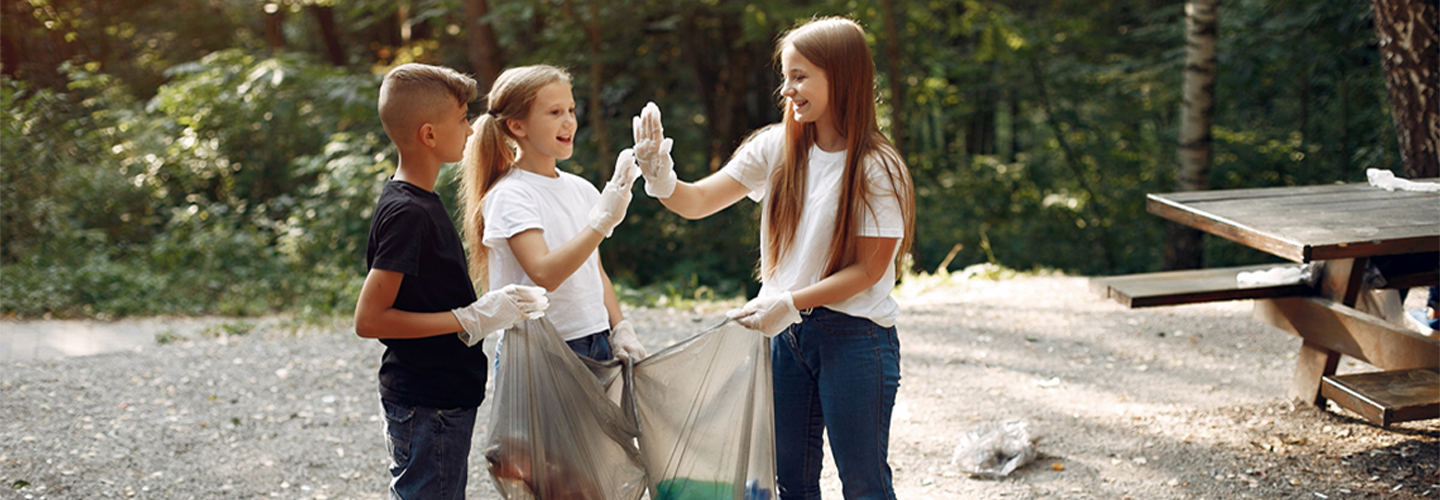
Children working together outdoors picking up litter
Reading time: 4.5 minutes

As teachers, we all want our students to work toward making the world a better place. Through focusing on global citizenship, this drive to change the world is something we can help foster every day in the classroom. In this post, we’ll explore how.

What are global citizens?

 A global citizen is someone who knows that they are part of a worldwide community. They understand that there are people who have completely different lifestyles, appearances, cultures and routines but with whom we share common values and responsibilities. Global citizenship encourages tolerance and understanding, and learning about it helps children become open-minded adults.  

In a primary English classroom, helping students become aware of themselves as citizens of the world will introduce them to a global way of thinking. We can do this while also helping them become familiar with, and proficient in, English.  

How can we introduce the concept?

Before students put themselves in a global context, they should get to know themselves as individuals. But they should also get to know themselves as people who are part of their immediate communities.  

In the classroom, this can be done by encouraging students to think about something personal, such as their likes and dislikes. We can then encourage students to look a little further: What kinds of homes do they see in their communities? What makes a house a home to them? What about people working in their communities — what important jobs do they do, and how do they make an impact? 

For language teachers, the idea is to combine vocabulary and grammar structures with a slowly widening view of our world. Simply by introducing the concept that we are part of a worldwide community can take the children out of their own experiences and help them start to consider others.

Tips and activities

Social media makes it possible for teachers to contact each other across borders and to collaborate between their schools. Something simple, like organizing a class video call for students after lunchtime and encouraging students in different countries to discuss what they ate in English, can help learners become more globally aware. 

How can we teach students to be proactive?

Once students know something, they can progress to putting their knowledge into action. Teachers can foster this by encouraging good habits – a simple example is how we teach very young children to throw their litter in a bin. As they grow older, we can ‘unpack’ these habits. That is, we can help children look deeper into why they're so important. Using the example of litter again, this could mean making students aware about how their civic responsibility has a real environmental impact. 

Let’s look at how we can go from knowing to doing, in simple stages, with a range of topics that are common in the language classroom: 

Food

  • Ask students to think about what they like and dislike. 
  • Ask students to name foods that are good for us and what we should eat more of. 
  • Teach about school lunches in other countries. 
  • Teach about dishes eaten on special occasions around the world. 
  • Have a food festival or ‘munch day’ where students make snacks from around the world.

Buildings

  • Ask students to talk about their own homes. 
  • Teach about types of homes in other countries. 
  • Discuss eco-architecture – such as solar panels, living walls, wind turbines on roofs, and local materials that might be used in building processes.  
  • Venture outside as a class to plant potted flowers and improve the school yard or make a container to collect rainwater for the school garden. 

Jobs

  • Teach about the jobs people do at school – such as cleaning, cooking, or driving. 
  • Think about jobs within the community and why they are necessary. 
  • Think about what skills each child and their parents have and how these skills are needed for different jobs. 
  • Have a skill-sharing day where students teach each other something new.  
  • Host a ‘kids take over day’ where students get to do an important job at school (such as cleaning the classrooms or serving lunch). 

Technology

  • Discuss the different types of technology used at home and school. 
  • Think about how to use this technology responsibly.  
  • Talk about different households and find out how and when tablets, laptops and phones are used. For example, who is allowed to watch videos while eating? Who can read on their tablet in bed? 
  • Make your own set of technology rules for the classroom and discuss why they’re important. 

Holidays

  • Ask students what they like to do on holiday.
  • Teach about how to stay safe at the ocean or in the countryside.
  • Talk about other countries students have travelled to or would like to travel to and learn about interesting landmarks in those countries.
  • Discuss eco-tourism efforts and why they are important.
  • Have a ‘Let’s go to [name of a city or country) day.’ Make posters about famous sights, learn some phrases of the language spoken there and have students imagine they have gone abroad for the day.

Sharing the message 

The United Nations has set out a collection of 17 global goals, called the Sustainable Development Goals (SDGs), which aim to create a better future by 2030. They address issues like gender equality, hunger and poverty and can be an excellent resource for teachers to use in the classroom when discussing how global citizenship can help to improve our world.  

Teachers can encourage students to spread the message about SDGs in various ways. For example, students can:  

  • Give speeches – at school or in the local community. 
  • Begin a fundraising campaign. 
  • Write letters to politicians.

Teaching students to be global citizens may sound like a big task. However, through weaving these ideas through language lessons, teachers have the opportunity to plant an important seed in students. Because who knows, they may really grow up to change the world. 

More blogs from Pearson

  • A woman holding papers walking through a campus smiling
    Waiting for English test results? Get your scores faster
    By Abi Fordham
    Reading time: 3 minutes

    Let’s be honest. One of the hardest parts of taking an English test isn’t the test itself; it’s what happens afterward. That strange limbo where the test is over, but your future still feels on hold. You’re waiting, refreshing your inbox, thinking about every question you answered, and wondering how long it’ll be until you can finally move on with your plans. If that sounds like you, just remember: it’s totally normal. Completely normal.

    Why waiting feels so intense (and why it’s not “impatience”)

    The moment you finish a test, your brain jumps ahead to everything that depends on that score:

    • Can I apply this week?
    • Will I meet the deadline?
    • Do I need to prepare a backup option?
    • When can I tell my family?

    It’s not just curiosity. It’s the need for certainty so you can take the next step. Because studying in the USA involves so many moving parts – applications, forms, accommodation, visa timelines – and every one of them depends on knowing your score.

    Fast results aren’t just a nice bonus; they directly impact how smoothly your study plan goes.

  • A woman at a computer working
    Introducing the PTE Teacher Hub
    By Magda Woodham
    Reading time: 2 minutes

    Your new home for PTE Teaching Support

    Teaching PTE requires staying up to date, being confident in your scoring and being equipped with resources that accurately reflect the test – so you can help your students prepare for success and ease some of their test-day worries. To make that easier, we’re pleased to introduce you to the new PTE Teacher Hub, your dedicated space designed specifically for teachers preparing learners for PTE Academic and PTE Core.

    Everything you need to teach PTE, in one trusted place

    The PTE Teacher Hub is an authenticated, teacher‑first platform that brings together everything you need to teach PTE effectively. Instead of searching across multiple channels, you now have a single, reliable source for official updates, classroom‑ready resources and professional development – direct from Pearson.

    Official updates and ready‑to‑use resources, all in one hub

    At launch, the Hub focuses on the two core areas that teachers told us matter most. PTE News and Updates provides a trusted channel for timely information on Pearson news, PTE updates, information on upcoming webinars and events, assessment insights and community highlights, helping you stay confident that the guidance you give learners is accurate and up to date.

    PTE Resources offers an exclusive library of ready‑to‑use, PTE‑aligned lesson plans and materials, saving preparation time and supporting both in‑class and online teaching.

    Built to support teachers at every stage of their PTE journey

    Beyond day‑to‑day teaching support, the PTE Teacher Hub is designed to support your ongoing professional growth. Teachers can access guidance and insights at any time, deepen their understanding of the PTE test portfolio and strengthen their teaching practice with official Pearson materials.

    Whether you’re new to teaching PTE or an experienced educator, the PTE Teacher Hub is your central destination for clarity, confidence and connection.

    Log in, bookmark the page, and make it your go‑to home for PTE teaching.

  • Children in a classroom with a teacher while they play with a toyhouse
    The importance of teaching values to young learners
    By Katharine Scott
    Reading time: 3 minutes

    Why teaching values matters in early education

    The years children spend in school are about far more than academic success. Alongside literacy, numeracy and subject knowledge, children develop the social and emotional skills needed to thrive in the world around them.

    From sharing ideas to resolving disagreements, these everyday interactions shape how children understand fairness, respect and responsibility. These are more than just learned skills – they are rooted in deeper values that guide behavior over time.

    Without clear guidance, children often learn behaviors simply by observing others. While this can be positive, it can also reinforce negative habits. That’s why schools play a critical role in explicitly teaching values, not just expecting them.

    Social skills vs. Social values

    Although closely related, social skills and values are not the same:

    • Social skills are behaviors (such as taking turns, listening, cooperating)
    • Social values are the principles behind those behaviors (such as fairness, respect, empathy)

    When children understand why something matters—not just what to do—they are more likely to apply those behaviors consistently.

    Core values every child should learn

    Defining values can be complex, but most education systems emphasize a shared set of foundational principles:

    • Respect for others and appreciation of diversity
    • Collaboration and community awareness
    • Environmental responsibility
    • Self-worth and confidence

    Even at a young age, children demonstrate a natural sense of fairness and honesty. With the right support, these instincts can be developed into strong moral foundations.

    Moving beyond “School Rules”

    Too often, values are reduced to simple instructions like:

    • “Don’t be late”
    • “Wait your turn”
    • “Be kind”

    While important, these rules can feel arbitrary if not explained. Without context, children may follow them only when supervised – or break them when they can.

    To truly teach values, educators need to:

    • Explain the reasoning behind rules
    • Encourage discussion and reflection
    • Connect actions to real-world impact

    This transforms rules into meaningful learning experiences.

    Effective school strategies for teaching values

    The most successful approaches to values education involve the entire school community – teachers, students, parents and staff.

    1. Environmental awareness programs

    Schools can foster responsibility through hands-on initiatives such as:

    • Recycling systems
    • School gardens
    • Renewable energy projects
    • Second-hand bookshops

    These activities help children understand their role in protecting the planet.

    2. Anti-bullying initiatives

    Strong anti-bullying programs go beyond policies and focus on prevention through:

    • Empathy-building exercises
    • Peer accountability activities
    • Confidence and self-esteem development

    Helping children recognize and respond to bullying is key to creating a safe environment.

    3. Anti-racism and inclusion programs

    Promoting inclusivity requires a proactive, school-wide approach:

    • Teaching diverse histories and cultures
    • Inviting guest speakers from different communities
    • Challenging stereotypes through discussion
    • Encouraging empathy for marginalized groups

    These efforts help children develop respect for diversity from an early age.

    The role of consistency

    Children learn as much from what adults do as from what they say. For values education to be effective:

    • Teachers must model positive behavior
    • School policies should reflect stated values
    • Parents should be involved where possible

    Consistency across all environments reinforces learning and builds trust.

    Putting values into practice

    Teaching values to young learners is not an “extra” part of education – it is foundational. When children understand respect, empathy and responsibility, they are better equipped to succeed academically, socially and emotionally.

    By embedding values into everyday learning and school culture, educators can help shape thoughtful, responsible individuals who contribute positively to society.