Improving employee engagement: The crucial role of language learning in business

Samantha Ball
A business woman and man sat at a long table discussing with eachother
Reading time: 8 minutes

The ways we approach employee engagement are rapidly evolving and changing. For HR professionals and global business leaders, understanding these trends is essential to encourage a motivated, productive, and loyal workforce. A key yet often overlooked aspect of this engagement is the role of language learning and cultural understanding. Failure to adapt to the international market doesn’t just hinder growth—it can lead to significant financial losses.

This blog post will delve into current employee engagement trends, provide suggestions for improvement, and talk about the importance of language learning and company culture in fostering a thriving global workforce through an effective employee engagement strategy.

How can language learning help employee engagement?
Play
Privacy and cookies

By watching, you agree Pearson can share your viewership data for marketing and analytics for one year, revocable by deleting your cookies.

Employee engagement trends: A snapshot

Declining engagement levels

Recent research reveals that only 33% of employees in the US are actively engaged at work, while in 2023, 50% of employees were not engaged (quiet quitting). “Quietly quitting”—a term used to describe psychological disengagement from work. This issue is costly, with Gallup estimating an annual global economic impact of around $8.8 trillion.

The rise of learning and development (L&D)

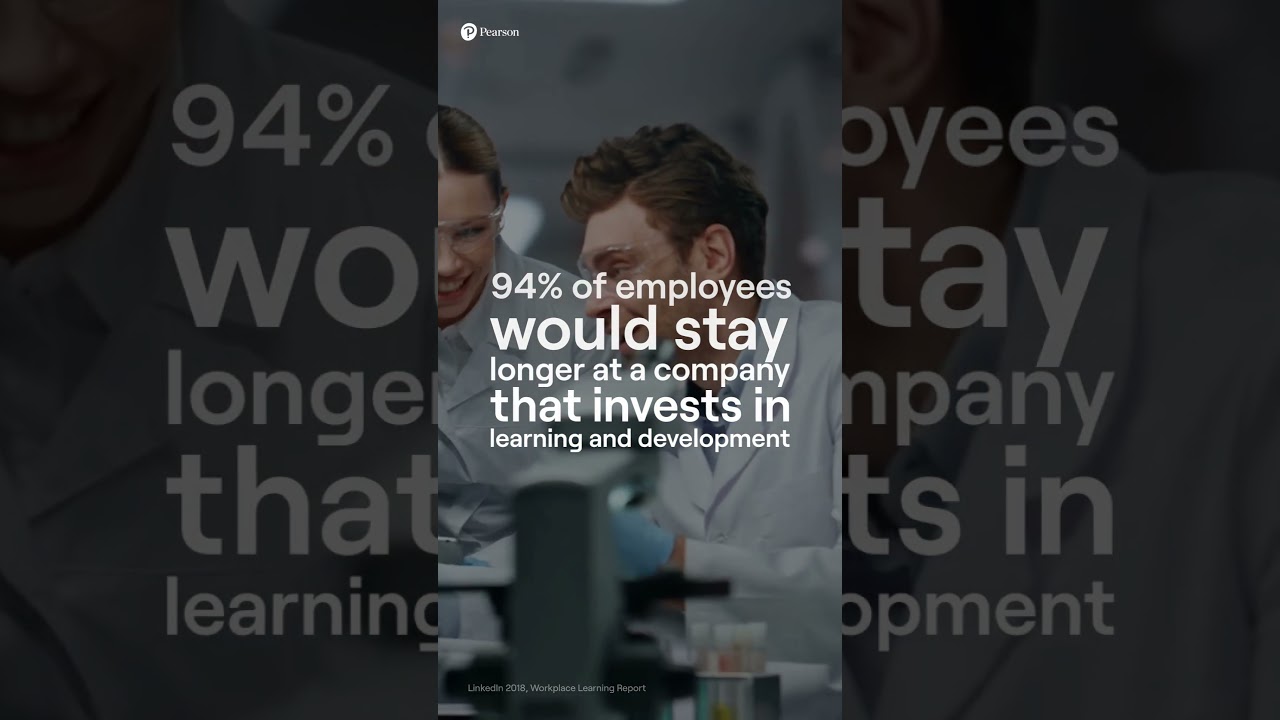
Despite these alarming engagement statistics, there is a silver lining: 94% of employees state they would stay longer at a company that invests in their learning and development (L&D). This indicates a pivotal opportunity for businesses to enhance engagement through targeted L&D initiatives, which can help cultivate an engaged employee.

These initiatives can include comprehensive training and development programs, language training, professional development opportunities, and continuous learning opportunities.

The impact of language barriers

Language barriers are a significant impediment to effective communication in the workplace. Miscommunication costs businesses an average of $62.4 million annually, illustrating the critical need for robust language training programs. According to our research, only one in three companies currently provides language upskilling, despite 88% of employees acknowledging its importance.

What are some employee engagement strategies used to motivate employees?

Foster a culture of recognition 

Recognizing and rewarding employees for their contributions can significantly boost morale and employee motivation too. Implementing a robust employee recognition program that includes both formal awards and informal acknowledgments can help employees feel valued and appreciated.

Enhance internal communication 

Effective communication is a cornerstone of any employee engagement program. Regular updates from leadership, open forums for feedback, and transparent communication channels can foster a sense of inclusion and trust within the organization.

Develop clear career pathways 

Employees are more likely to stay engaged when they see a clear pathway to career advancement. Regular performance reviews, employee feedback, setting achievable goals, and providing opportunities for promotion can help keep employees motivated and focused on their long-term career aspirations.

Invest in comprehensive L&D programs

Given the strong correlation between L&D and employee retention, companies should prioritize comprehensive training programs that include effective employee engagement strategies addressing both technical skills and soft skills. Incorporating language learning into these programs can significantly enhance employee satisfaction and improve engagement, as shown by our Pearson success stories.

Implement flexible learning solutions to encourage employees

With busy workloads, employees often struggle to find time for learning. Mondly by Pearson offers flexible online language learning solutions that allow employees to study at their own pace, fitting lessons around their schedules. Employers can track progress via a central dashboard, ensuring that learning objectives are met without disrupting daily operations. Flexible learning solutions like these can also boost engagement by allowing employees to learn at their own pace and on their own schedule.

Use technology for enhanced engagement

Incorporating technology like VR, AR and AI can enhance employee engagement through immersive training experiences, personalized learning, and real-time feedback.

Measure and analyze engagement metrics

To enhance your employee engagement programs effectively, it is crucial to regularly measure and analyze engagement metrics. Utilizing advanced employee engagement software can provide valuable insights into areas such as employee satisfaction, communication efficacy, and training program effectiveness. By continuously monitoring these metrics, businesses can identify trends, detect issues early, and adjust employee development strategies accordingly, ensuring that employee engagement initiatives are always aligned with the evolving needs of the workforce.

Prioritise employee wellbeing

Employee well-being should be at the heart of engagement strategies. Promoting a healthy work-life balance, providing mental health support, and creating a supportive work environment are essential components.

Companies that prioritize wellbeing are likely to see higher engagement levels, as employees feel valued and cared for. Initiatives such as wellness programs, flexible working hours, and access to mental health resources and counseling services can significantly contribute to a more engaged and productive workforce.

Comprehensive wellness programs that address physical, mental, and emotional health can significantly impact employee engagement. This can include fitness challenges, counseling services, and wellness workshops.

A multi-faceted approach for engaged employees

Employee engagement is multifaceted and requires a strategic approach that encompasses learning and development, cultural understanding, language training, and leveraging technology. By investing in these areas, businesses can cultivate a motivated, skilled, and loyal workforce positioned to thrive in a globalized economy.

Emphasizing inclusivity, flexibility, technological integration, and wellbeing can drive meaningful employee engagement efforts and ultimately lead to sustained business success.

The impact of ignoring employee engagement on the international stage

Ignoring the international market and failing to address language barriers can have dire financial consequences. According to SHRM, poor communication can cause an average loss per company of $62.4 million.

Moreover, recruiting staff with formal English qualifications only to discover they cannot effectively communicate in English once hired leads to frustration and inefficiencies. Addressing language barriers can help engage employees by improving communication and collaboration across the entire organization too.

Addressing language learning in a globalized workplace

Effective communication between teams spread across different countries and cultures is crucial to business success. When employees possess strong language skills, they’re better equipped to navigate complex, multilingual environments, leading to improved collaboration and productivity. Consequently, investing in language training programs is not just a strategic move to enhance an individual employee's skill sets but an essential step toward fostering a cohesive, well-integrated and engaged workforce.

Language learning: Boosting engagement and productivity

The benefits of language learning extend beyond mere communication. Employees who receive language training report higher levels of engagement and job satisfaction. Language learning can lead to motivated employees who are more engaged and productive in their roles. Mondly by Pearson’s flexible language learning solutions are designed to meet the specific needs of businesses, providing enhanced business-centric content to improve workplace skills and confidence.

Building soft skills

Soft skills are becoming increasingly important for employees. With AI being used more in the workplace, soft skills that AI can’t replace are being sought after more. Soft skills such as critical thinking, collaboration, and emotional intelligence are all key to building an engaged team.

Language learning can help develop these soft skills by providing opportunities for employees to work together on language exercises, practice speaking and listening, and collaborate in a new language. This not only improves their language proficiency but also boosts their soft skills, making them more valuable assets to the company.

The strategic advantage of language learning

We’ve discussed the advantages of learning a new language for your business before but to reiterate, investing in language learning is a strategic enabler for international business. It allows companies to:

  • Increase employee engagement: Providing language learning opportunities can improve employee engagement by equipping employees with the skills they need to succeed in a global market.
  • Recruit top talent: Language training broadens the talent pool, allowing businesses to attract and retain employees who might otherwise be overlooked due to language barriers.
  • Engage in the global economy: Proficiency in multiple languages enables businesses to engage more effectively with global markets, enhancing competitiveness.
  • Enhance customer service: Prioritizing language learning can significantly improve customer service and overall operational efficiency.

The path forward for employee engagement initiatives

Understanding and adapting to employee engagement trends is essential for HR professionals and global business leaders. Investing in language learning and cultural understanding not only mitigates the cost of miscommunication but also the workplace culture that drives employee engagement, satisfaction, and productivity. Engaged employees are more satisfied, productive, and motivated, contributing significantly to overall organizational success.

Elevate your workplace with Pearson

Take the first step towards a more engaged, skilled, and motivated workforce. Explore Mondly by Pearson for your workforce to help them develop their language skills further. 

Contact us today to learn how Versant by Pearson and our workplace solutions can help your organization achieve its goals. Empower your team, boost employee engagement, enhance communication, and unlock unparalleled growth potential. Don't wait—act now and lead your business to success.

More blogs from Pearson

  • Teacher talking to girl working on laptop in classroom smiling
    Designed for learning, built for growth: How Big Ben Education Group reimagined short-term programs
    By Kathy Chan
    Reading time: 3 minutes

    The challenge: Creating meaningful learning in short-term programs

    In recent years, Big Ben Education Group faced a challenge: how to deliver meaningful learning within short-term programs. Although teachers were passionate and students motivated, their short-term courses lacked a clear academic structure, making learning feel rushed and less impactful. At the same time, they relied heavily on a single market and sought to attract a more diverse, global student mix.

    This raised a critical question: How do you design a short-term program that is both academically meaningful and appealing to a global student audience? That question led to the launch of their first Winter Camp in 2024.

    The turning point: From camp to structured learning experience

    The Winter Camp marked a major shift. For the first time, students from across China, Korea, Japan, Central Asia and the Middle East were brought together. Managing this level of cultural and linguistic diversity required more than enthusiasm; it required structure.

    The school introduced Big English as a core academic framework, giving teachers clarity on learning objectives and ensuring consistency across levels, even within a condensed timeframe.

    But the transformation didn’t stop in the classroom. Excursions were redesigned with clear learning goals, turning them into opportunities for real-world language application. This shift from activities to outcomes required careful planning and strong collaboration between academic and operations teams.  What emerged was something new – a structured, student-centered learning experience that balanced academic rigor with real-world engagement.

  • Students sat at a table with microphones talking
    Building fluent, confident speakers: better ways to assess speaking
    By Charlotte Guest
    Reading time: 6 minutes

    Why traditional speaking assessments can make students feel stressed

    Traditional speaking tests often feel high-stakes and performative. Students are asked to respond on demand, usually in front of a teacher or peers, with little room for hesitation or self-correction. This setup can make it harder for students to show what they can really do because:

    • Time pressure shifts focus from communicating meaning to avoiding mistakes
    • Teacher-centered evaluation can feel judgmental rather than supportive
    • One-off testing may not capture a learner's true abilitiy, especially if they're nervous. 

    When people feel anxious, it often affects their fluency. They find it harder to think so they pause more, forget words and feel less confident. As a result, assessments may reflect how comfortable someone feels under pressure, rather than how effectively they can communicate.

    Key components of speaking fluency to evaluate

    Fluency isn't just about talking fast. It involves several clear signs.

  • People studying in a classroom with one holding her hand up
    How to teach business English to beginner learners
    By Margaret O'Keeffe
    Reading time: 4 minutes

    Teaching business English to beginners can feel challenging, especially when learners have limited vocabulary and confidence. However, with the right structure and focus, you can help students build practical workplace communication skills step by step.

    Focus on high-frequency workplace vocabulary

    For beginners learners, communication matters more than complexity. Teaching commonly-used workplace vocabulary allows students to express basic ideas quickly and clearly.

    Focus on:

    • Everyday work routines (emails, meetings, schedules)
    • Common verb–noun combinations (for example, “make a call,” “solve a problem”)
    • Simple functional phrases for greetings and offers

    This focus on high-frequency language helps learners retain and reuse it more easily.

    Introduce vocabulary in manageable, meaningful ways

    Vocabulary learning becomes more effective when it is limited and contextualized. Instead of overwhelming students, introduce a small number of new words per lesson and place them in realistic scenarios.

    For example:

    • Phone conversations
    • Short emails or messages
    • Daily task lists

    Memory improves when learners interact with words actively. Matching exercises, sentence-building and personalization tasks all strengthen recall because they require learners to process meaning rather than just memorize.