How to teach students to be global citizens

Jeanne Perrett
Jeanne Perrett
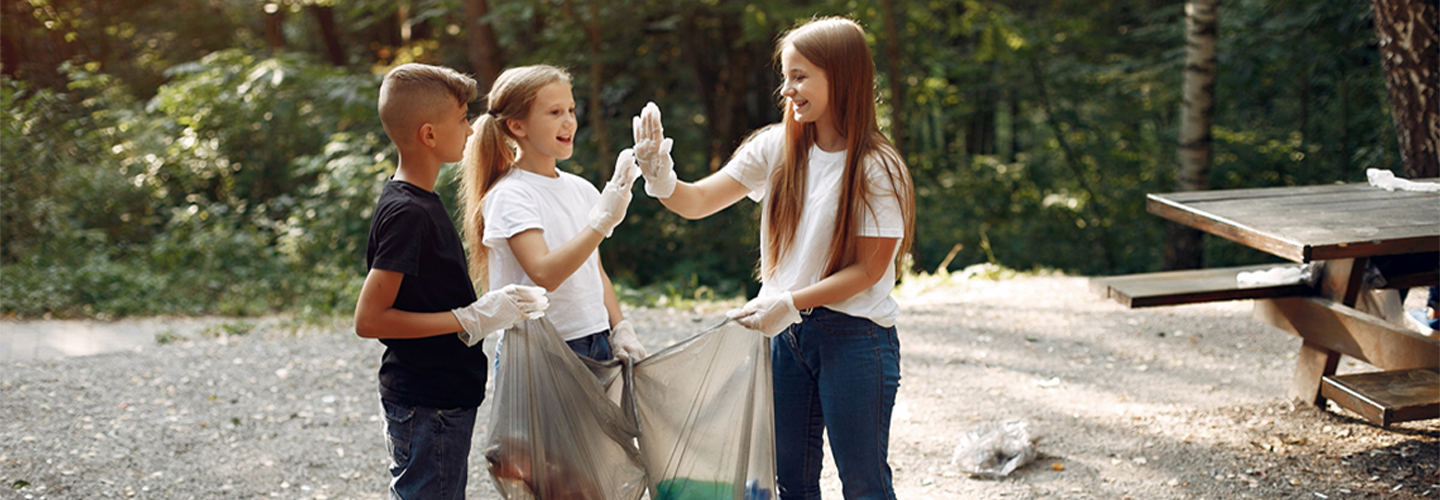
Children working together outdoors picking up litter
Reading time: 4.5 minutes

As teachers, we all want our students to work toward making the world a better place. Through focusing on global citizenship, this drive to change the world is something we can help foster every day in the classroom. In this post, we’ll explore how.

What are global citizens?

 A global citizen is someone who knows that they are part of a worldwide community. They understand that there are people who have completely different lifestyles, appearances, cultures and routines but with whom we share common values and responsibilities. Global citizenship encourages tolerance and understanding, and learning about it helps children become open-minded adults.  

In a primary English classroom, helping students become aware of themselves as citizens of the world will introduce them to a global way of thinking. We can do this while also helping them become familiar with, and proficient in, English.  

How can we introduce the concept?

Before students put themselves in a global context, they should get to know themselves as individuals. But they should also get to know themselves as people who are part of their immediate communities.  

In the classroom, this can be done by encouraging students to think about something personal, such as their likes and dislikes. We can then encourage students to look a little further: What kinds of homes do they see in their communities? What makes a house a home to them? What about people working in their communities — what important jobs do they do, and how do they make an impact? 

For language teachers, the idea is to combine vocabulary and grammar structures with a slowly widening view of our world. Simply by introducing the concept that we are part of a worldwide community can take the children out of their own experiences and help them start to consider others.

Tips and activities

Social media makes it possible for teachers to contact each other across borders and to collaborate between their schools. Something simple, like organizing a class video call for students after lunchtime and encouraging students in different countries to discuss what they ate in English, can help learners become more globally aware. 

How can we teach students to be proactive?

Once students know something, they can progress to putting their knowledge into action. Teachers can foster this by encouraging good habits – a simple example is how we teach very young children to throw their litter in a bin. As they grow older, we can ‘unpack’ these habits. That is, we can help children look deeper into why they're so important. Using the example of litter again, this could mean making students aware about how their civic responsibility has a real environmental impact. 

Let’s look at how we can go from knowing to doing, in simple stages, with a range of topics that are common in the language classroom: 

Food

  • Ask students to think about what they like and dislike. 
  • Ask students to name foods that are good for us and what we should eat more of. 
  • Teach about school lunches in other countries. 
  • Teach about dishes eaten on special occasions around the world. 
  • Have a food festival or ‘munch day’ where students make snacks from around the world.

Buildings

  • Ask students to talk about their own homes. 
  • Teach about types of homes in other countries. 
  • Discuss eco-architecture – such as solar panels, living walls, wind turbines on roofs, and local materials that might be used in building processes.  
  • Venture outside as a class to plant potted flowers and improve the school yard or make a container to collect rainwater for the school garden. 

Jobs

  • Teach about the jobs people do at school – such as cleaning, cooking, or driving. 
  • Think about jobs within the community and why they are necessary. 
  • Think about what skills each child and their parents have and how these skills are needed for different jobs. 
  • Have a skill-sharing day where students teach each other something new.  
  • Host a ‘kids take over day’ where students get to do an important job at school (such as cleaning the classrooms or serving lunch). 

Technology

  • Discuss the different types of technology used at home and school. 
  • Think about how to use this technology responsibly.  
  • Talk about different households and find out how and when tablets, laptops and phones are used. For example, who is allowed to watch videos while eating? Who can read on their tablet in bed? 
  • Make your own set of technology rules for the classroom and discuss why they’re important. 

Holidays

  • Ask students what they like to do on holiday.
  • Teach about how to stay safe at the ocean or in the countryside.
  • Talk about other countries students have travelled to or would like to travel to and learn about interesting landmarks in those countries.
  • Discuss eco-tourism efforts and why they are important.
  • Have a ‘Let’s go to [name of a city or country) day.’ Make posters about famous sights, learn some phrases of the language spoken there and have students imagine they have gone abroad for the day.

Sharing the message 

The United Nations has set out a collection of 17 global goals, called the Sustainable Development Goals (SDGs), which aim to create a better future by 2030. They address issues like gender equality, hunger and poverty and can be an excellent resource for teachers to use in the classroom when discussing how global citizenship can help to improve our world.  

Teachers can encourage students to spread the message about SDGs in various ways. For example, students can:  

  • Give speeches – at school or in the local community. 
  • Begin a fundraising campaign. 
  • Write letters to politicians.

Teaching students to be global citizens may sound like a big task. However, through weaving these ideas through language lessons, teachers have the opportunity to plant an important seed in students. Because who knows, they may really grow up to change the world. 

About Rise and Shine

Rise and Shine is a 7-level story-based primary course that combines language learning with global citizenship. It is built on the Global Scale of English, which helps students to understand exactly what they are learning and why.

The course inspires learners to become confident explorers – they learn English and aim to become responsible global citizens. The series is also designed for use in inclusive and mixed-ability classrooms and supports every learner to achieve and shine.

More blogs from Pearson

  • Teenage students looking at a phone together outside
    Six easy ways to learn English
    By Steffanie Zazulak
    Reading time: 3 minutes

    Learning English can open doors to better career opportunities, travel experiences and global communication. However, staying motivated while learning a new language can sometimes be challenging. The good news is that there are many easy ways to learn English that fit into your daily routine.

    Whether you're a beginner or looking to improve your fluency, these practical English learning tips will help you build confidence and develop your speaking, listening, reading and vocabulary skills faster.

    1. Play word games to build your English vocabulary

    One of the most enjoyable ways to learn English is through word games. Games like Scrabble, Words With Friends, crossword puzzles and word search apps can help you expand your English vocabulary while having fun.

    Word games encourage you to think in English, recognize spelling patterns and learn new words naturally. If you're studying with friends or classmates, make it a regular activity to practice together and challenge each other's vocabulary skills.

    Benefits:

    • Improves vocabulary retention
    • Enhances spelling skills
    • Makes learning English enjoyable
  • A teacher working on a interactive whiteboard and students raising their hands
    Universal Design for Learning (UDL) in language education
    By Charlotte Guest
    Reading time: 5 minutes

    Language classrooms are naturally diverse. Some students are confident speakers but struggle with writing. Others may be multilingual learners, students with learning differences or learners who simply need more time and support. Universal Design for Learning (UDL) offers a practical framework for meeting these varied needs without creating separate lessons for every student.

    UDL was developed by CAST, a nonprofit organization focused on education research and development, and is based on the idea that barriers to learning often exist in the design of instruction rather than in the learners themselves. Instead of expecting all students to learn in the same way, UDL encourages teachers to provide flexible pathways that help everyone access and engage with learning. According to CAST's overview of UDL , UDL aims to improve learning for all students through flexible goals, methods, materials and assessments.

    The three core principles of UDL

    At the heart of UDL are three principles that help teachers design more inclusive learning experiences.

    1. Multiple means of engagement

    This principle focuses on motivation and participation. Students are more likely to learn when they see value in what they are doing and have some choice in how they learn.

    In a language classroom, this might include:

    • Allowing students to choose discussion topics related to their interests
    • Using authentic materials such as podcasts, songs, news articles or social media posts
    • Offering different levels of challenge within the same activity

    When students feel connected to the content, they are more willing to take risks and use the target language. The CAST UDL Guidelines provide detailed recommendations for increasing learner engagement and motivation.

    2. Multiple means of representation

    Students do not all process information in the same way. UDL encourages teachers to present information through different formats so that learners have several ways to understand new content.

    For language teachers, this could mean:

    • Combining written text with audio recordings
    • Using images, diagrams, gestures and videos to support comprehension
    • Pre-teaching key vocabulary before introducing a complex reading task
    • Providing transcripts for listening activities

    These supports are not only beneficial for students with identified learning needs; they often improve comprehension for the entire class. CAST's guidance on representation highlights how varied formats can support learner understanding.

    3. Multiple means of action and expression

    Students should have different opportunities to demonstrate what they know. Traditional language assessments often favor a narrow set of skills, but learners may show understanding in many ways.

    Examples include:

    • Recording an oral presentation instead of delivering it live.
    • Creating a video, podcast or digital story.
    • Participating in an interview or conversation.
    • Producing written work using supportive technologies.

    The learning objective remains the same, but students have more than one way to demonstrate achievement. The educational resource Understood.org explains this principle in its guide to UDL.

    Why UDL matters in language education

    Language learning involves reading, writing, listening, speaking, vocabulary development and cultural understanding. Because so many skills are involved, barriers can emerge in different places for different learners. UDL helps teachers anticipate these differences and design lessons that provide access from the start rather than adding accommodations later.

    Research from CAST suggests that designing for learner variability benefits all students, not just those with identified educational needs. This is particularly relevant in language classrooms, where students often have diverse linguistic backgrounds, proficiency levels and learning preferences.

    Importantly, UDL is not about creating separate lessons for every learner. Instead, it is about building flexibility into lesson design so that a wider range of students can participate successfully.

    UDL strategies for language teachers

    If you are new to UDL, start small. Consider adding one or two flexible options to your existing lessons.

    Here are a few simple ideas:

    • Provide both written and spoken instructions.
    • Use captions on videos whenever possible.
    • Offer vocabulary lists with visuals and examples.
    • Allow students to choose between speaking or writing for some tasks.
    • Include collaborative and independent learning opportunities.
    • Use digital tools that support translation, text-to-speech or speech-to-text functions.
    • Clearly communicate learning goals before each lesson.

    For additional classroom examples, CAST's UDL Guidelines website contains guidance that teachers can adapt across different age groups and language-learning contexts.

  • Friends stood by a camper van with food by the sea socialising
    How to maintain language skills over summer break
    By Charlotte Guest
    Reading time: 3 minutes

    Summer break is a welcome chance to relax, but it can also be a challenging time for students. Without regular classes over the summer, many students notice that their vocabulary, grammar and speaking confidence begin to fade: this is often called the "summer slide".. The good news is that maintaining language skills over summer break does not require hours of study each day. Small, consistent habits can help you retain what you have learned and return to your studies with confidence.

    Why language learners forget so much during summer break

    When we stop using a language regularly, our brains begin to forget information that is not being reinforced. Vocabulary becomes harder to recall, grammar rules feel less familiar and speaking confidence can decrease.

    Fortunately, language retention does not require intensive study. The key is maintaining regular contact with the language, even for just a few minutes a day.