How language learning can improve your life for the better

Samantha Ball
A group of friends smiling
Reading time: 7 minutes

Language learning is more than just something you study—it's a strategic move that integrates into every aspect of your life—socially, professionally and mentally. With English often being the common ground for global business, communicating effectively in this language has never been more important.
In this post, we uncover the benefits of language proficiency, particularly in English, backed by relevant statistics and insights from Pearson's recent ground-breaking new research.

Earn up to 80% more with better English skills | Pearson Impact of English
Play
Privacy and cookies

By watching, you agree Pearson can share your viewership data for marketing and analytics for one year, revocable by deleting your cookies.

The transformative power of language proficiency

Did you know that 20% of the world's population speaks English as a first, second, or additional language? This underscores the vital role English plays in our global society.

Our research illustrates a compelling link between language proficiency and career development—highlighting that 80% of employees see English proficiency as critical for determining earning potential.

Fluency in English or any widely used language can boost your employability. It isn't simply a line on a resume; it's access to opportunities, potentially higher salaries and greater job satisfaction. Yet a noticeable gap exists between the language learned in formal education and the practical skills needed in the workplace.

What are the benefits to learning English?

There are several benefits to learning English or any new language but here are just a few examples to give you reasons to start learning today:

Bridging the skills gap

Here's the kicker—linguistic agility offers more than just a competitive edge professionally; it fosters better communication, enhances collaboration and enriches relationships in both personal and professional lives.

But how do modern language learners adapt to this demand? Gen Z learners are trailblazers, often turning to self-service apps and social media videos to refine their English capabilities. Interactive technologies like online games and chat rooms find favor with this tech-savvy generation, reflecting a dynamic shift towards digital fluency.

Salary and social benefits

Speaking multiple languages boosts your social game; it positively correlates with higher salaries and elevates job opportunities. English proficiency is seen as a transformative investment, one that shapes both professional and personal dimensions of life.

Interestingly, the financial advantages of being proficient in languages, especially English, are significant. Studies suggest that bilingual individuals can earn between 5% to 20% more per hour compared to those who speak only one language. This "language premium" varies by industry and location but generally holds true across a range of professions.

With globalization at its peak, the ability to communicate in English not only enhances job prospects but directly translates into economic benefits. Language learning is not just an academic achievement but a smart career move.

There's growing advocacy for a skills-based approach instead of focusing solely on vocabulary and grammar. Practical application in speaking, writing, listening and reading can close the gap between classroom learning and real-world requirements.

Increase your cognitive ability

Learning foreign languages is proven in scientific research as a great way to retain brain power in a challenging way. Studies show brain changes in electrical structure and size when studying other languages —changes that are rare if learners learn a specific task or ability.

It is possible for someone (no matter their age) to gain more experience with linguistics and to learn more languages. Read more on our post ‘Being bilingual can help keep your brain in good condition’.

It makes other languages easier too

We often learn a language without consciously understanding its rules and many of us have no idea what rules they're going by. However, learning another language means learning all about the rules. Often, those who have learned their first language find themselves learning more of their native language, such as a more accurate vocabulary and a more accurate vocabulary than they expected. When you learn other Indo-European languages (for example French), you will likely find considerable quantities of borrowed vocabulary that will help you understand English.

You have access to more information and entertainment

Being more proficient in English also enables you to enjoy more digital content. Approximately 60% of online content is in English. This large amount of English online not only shapes the digital landscape, but also influences access to information and entertainment. For English learners, this dominance may represent a barrier to a wealth of knowledge and cultural exchange.

Equally, for those fluent in English, the language helps because it opens up an expansive universe of information, educational resources, cutting-edge research and global entertainment options that would otherwise be inaccessible. From streaming the latest Hollywood blockbusters to participating in online courses from prestigious universities around the globe, proficiency in English significantly expands your digital horizon.

Access world-class education systems and establishments

The other reason students have for studying English is that you'll have access to the world's best educational institutions. Some of the top universities in the world are either in the United States and Britain or use English in their courses and this means that English is crucial in applying. A high level of English is essential for a student studying in English at university.

Start a life in an English-speaking country

Another advantage of studying English is it offers the potential of moving to a foreign language country. Usually, to become a citizen in an English-speaking country, you must be fluent in English. Speaking and learning English can help increase job chances, improve communication skills and help people converse and communicate successfully.

Build deeper connections with more people

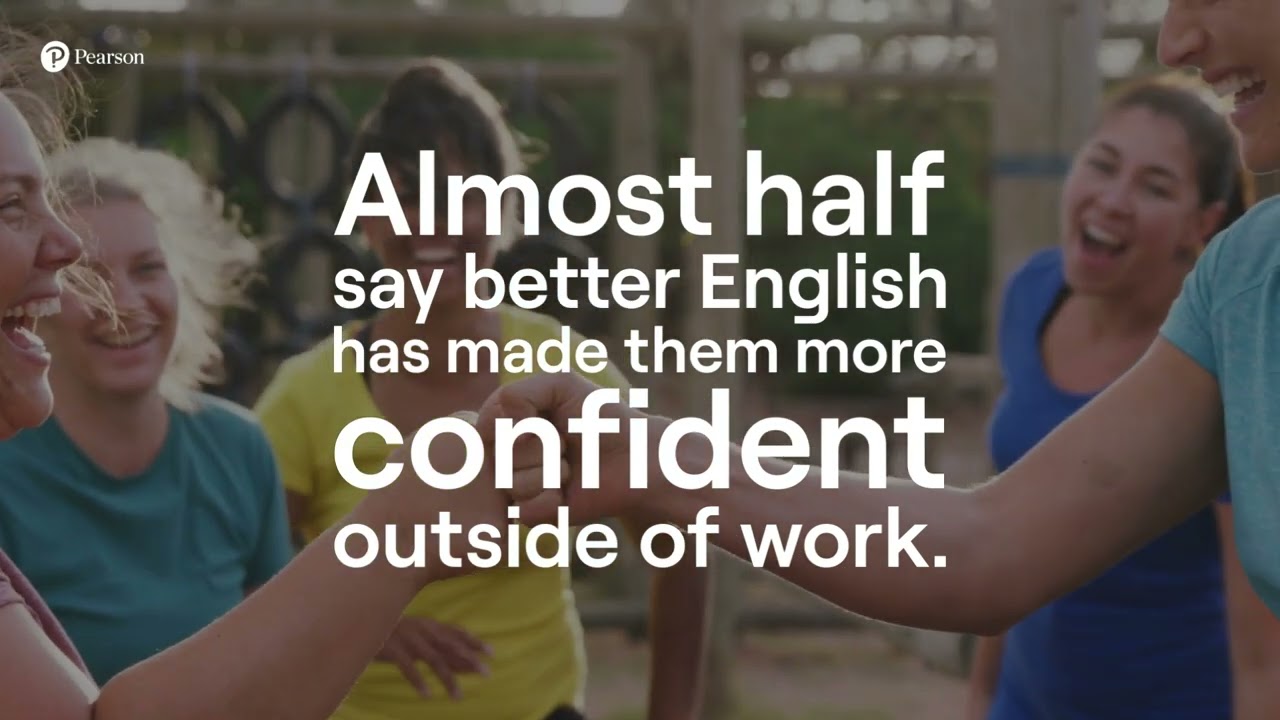
30% of people are learning English to make more friends, and it's no surprise. By being able to speak another language you can communicate clearly to a wider range of people, not only in your personal life but also professionally. This ability fosters deeper, more meaningful relationships and can open doors to understanding another culture and experiencing diverse cultures more intimately. Almost half of the respondents said that improving their English proficiency boosted their confidence levels in other areas of life, not just at work. The more progress you make, the more confident you feel.

Language proficiency enables you to engage in conversations beyond casual conversation, allowing for a richer, more authentic exchange of ideas and traditions from other cultures. The joy of connecting with someone in their first language is a rewarding experience that broadens your perspective and nurtures a global sensibility.

Boosts your confidence

Learning a new language, especially English, requires stepping out of your linguistic comfort zone. It can significantly boost your self-esteem and self-confidence. People with a lower level of proficiency often feel that better English would make them happier in life. The process of learning a language is empowering, and every new word learned and every conversation understood serves as a milestone, reinforcing the learner's belief in their abilities.

Sometimes, unclear communication can be a setback to your confidence, especially in a professional setting. Our research has discovered that 72% of the respondents believe their job would be easier if they had a better grasp of the English language. Furthermore, only 10% of employees with limited English proficiency feel that they can articulate themselves fully at work.

The confidence gained from improving language skills can extend to work and other areas of life, motivating you to take on challenges you may have previously avoided. Essentially, the process of learning a language not only leads to proficiency but also personal growth. This creates a positive feedback loop where increased confidence results in even greater language skills, which, in turn, fosters more confidence.

How English improves lives

We have discussed some examples of how English can assist you in your daily life. However, do not just take our word for it:

“English literally saved my life many times. When I was a student, I struggled with motivation. I didn’t like any subjects, didn’t do homework, and didn’t read books. But then my English tutor helped me fall in love with English. English became an escape for me and a chance to develop a new identity as a curious, passionate and capable learner.

99% of everything I read and learned happened in English. Later, when I came to the US, English helped me survive and move from low-paid, manual jobs to better-paid jobs that required effective communication: server, bartender, and English teacher.

To this day, English is the superpower that helps me work alongside my colleagues and world-class experts and make a difference.”

- Illya Gogin, Director of Product at Pearson

If you're a language learner, a student about to enter the job market, or simply interested in the power and benefits of learning a language, there are a world of resources available. The GSE is an amazing tool that can help you achieve your language goals, make sure to read more about how it can improve your English proficiency here: The Global Scale of English for learners.

Ready to start reaping the benefits of language learning? Read our report to uncover more enlightening statistics and details that could chart the course of your language learning adventure.

Learning a new language isn't just an educational challenge—it's a step toward a more vibrant, connected, and fulfilling life. Embark on this linguistic voyage and watch the world open up in ways you've never imagined.

More blogs from Pearson

  • A man with headphones on listening and smiling while he sits on a sofa
    11 great English-language song lyrics
    By Steffanie Zazulak
    Reading time: 5 minutes

    What is it about music that helps boost your English skills, confidence and pronunciation? A song can provide an emotional connection between the music and the listener, providing learners with new ways to express their feelings. Music and rhythm have also been shown to benefit memorization, which is a key component of learning.
    Here are some of our favorite lyrics to some of our favorite songs:

    1. The Beatles – Blackbird

    The Beatles are the best band to help you learn English. There are many Beatles songs with catchy melodies and simple lyrics, but Blackbird captures the Fab Four at their most poetic:
    Blackbird singing in the dead of night
    Take these broken wings and learn to fly
    All your life
    You were only waiting for this moment to arise

    2. The Cure – Friday I’m In Love

    This song is a great way to help learn the days of the week (that may be obvious). Love is also a very popular English word, so this one is for all the romantics out there.

    Always take a big bite
    It’s such a gorgeous sight
    To see you eat in the middle of the night

    3. Ed Sheeran – Thinking Out Loud

    Another one for the lovers: Ed’s heartfelt lyrics usually do well on the mainstream pop charts; he's one of the world's most popular songwriters. In this ballad, he tells the sweet story of long-time love.

    Take me into your loving arms
    Kiss me under the light of a thousand stars
    Place your head on my beating heart

  • Children and teacher looking at a tablet smiling and laughing in the classroom
    Incorporating reflection activities to kickstart the New Year
    By Charlotte Guest
    Reading time: 5 minutes

    A new calendar year offers a natural reset, an opportunity for your learners to pause, look back and lean forward with purpose. Reflection isn’t just a feel-good exercise; it’s a powerful learning accelerator. It helps students consolidate knowledge, develop metacognition and set actionable goals. It also helps you, the teacher, gain insights into what’s working, what needs adjustment and how to sustain momentum. Below are activities that fit into real classrooms and real schedules, with variations for different age groups and subject areas.

    Why start with reflection?

    Reflection builds self-awareness and agency. When students name what they’ve learned and where they want to grow, they’re more likely to persevere and achieve. For you, structured reflection provides a clearer picture of learning gaps and strengths, enabling intentional planning. Think of these routines as small investments that pay off in greater engagement, clearer goals and smoother instruction all year long.

    Quick wins you can do in one class period

    Rose–Thorn–Bud

    • Purpose: Recognize successes ("rose"), challenges ("thorn") and emerging opportunities ("bud").
    • How-to: Give students three sticky notes or three boxes on a digital form. Prompt: “One thing that went well last term”, “One challenge I faced”, “One idea I want to try”.
    • Teacher moves: Sort responses to identify class-wide trends. Celebrate roses. Normalize thorns with a growth mindset. Turn buds into a short list of new strategies to try together.
    • Variations: Pair-share for younger grades; content-specific (rose = strategy that helped with fractions, thorn = multi-step problems, bud = practice with word problems).

    Start–Stop–Continue

    • Purpose: Turn reflection into immediate behavior and study habits.
    • How-to: Ask students to list one habit to start, one to stop, and one to continue this term. Provide sentence stems: “I will start…”, “I will stop…”, “I will continue… because…”
    • Teacher moves: Have students star the one they’ll commit to this week and set a check-in date. Invite a brief self-assessment after two weeks.
    • Variations: Subject-specific (start annotating texts, stop cramming, continue reviewing notes nightly).

    3–2–1 Learning snapshot

    • Purpose: Capture key learning quickly.
    • How-to: Prompt with “three concepts I understand now”, “two questions I still have” and “one resource or strategy that helped me learn”.
    • Teacher moves: Use the “two questions” to plan mini-lessons or office-hours topics. Share a class list of “one resource” to build a peer-sourced toolkit.
    • Tools: Paper exit tickets or a quick digital form, whatever is easier and quicker for you. 

    Peer reflection interviews

    • Purpose: Build belonging and metacognition through conversation.
    • How-to: In pairs, students ask: “What’s one thing you’re proud of from last term?”, “When did you feel stuck – and how did you get unstuck?”, “What’s a goal you have for this month?”
    • Teacher moves: Teach active listening (eye contact, paraphrasing) and capture themes. Close with a 2-minute write: “One insight I gained from my partner.”
    • Variations: Record short audio or video reflections for classes using multimedia tools.

    Two stars and a wish (Portfolio refresh)

    • Purpose: Reflect using evidence.
    • How-to: Students choose two artifacts from last term to highlight ("stars") and one area to improve ("wish"). They attach a brief reflection: what it shows and why it matters.
    • Teacher moves: Model with your own sample. Provide a rubric for reflective depth (specificity, evidence, next steps).
    • Variations: Early grades can draw or use photos; older students link to digital artifacts.

    Deeper dives for week-one routines

    Personal learning timeline

    • Purpose: See growth over time and connect effort to outcomes.
    • How-to: Students draw a timeline of the term: key topics, pivotal moments, breakthroughs, setbacks and supports that helped. They mark future milestones: “By Week 4, I will…”
    • Teacher moves: Guide students to identify strategies that worked (study groups, retrieval practice), then add them to their plan. Create wall or digital gallery for optional sharing.
    • Extension: Have students revisit the timeline mid-term to add new milestones.

    Goal-setting conferences

    • Purpose: Craft specific, measurable goals with support.
    • How-to: Provide a short goal sheet: “My priority skill”, “Evidence I’ll use”, “Daily/weekly actions”, “Support I need”, “Check-in date”.
    • Teacher moves: Rotate through 3-minute conferences to coach students toward clarity and feasibility. Encourage process goals (such as practicing 10 minutes daily) alongside performance goals.
    • Variations: Small-group coaching if individual conferences aren’t feasible; student-led with peer feedback for time efficiency.

    Class norms refresh (Community agreements)

    • Purpose: Re-center your classroom culture.
    • How-to: Invite students to propose two norms that helped learning and one to adjust. Synthesize into 5–7 concise agreements.
    • Teacher moves: Co-create routines that enact the norms (silent start, exit reflections, peer tutoring). Post and practice with brief weekly check-ins.
    • Equity lens: Ensure norms protect voice and belonging, not just compliance.

    Make it stick: Implementation tips

    • Keep it short and regular. Even just 5–10 minutes a week builds powerful habits.
    • Use sentence stems to reduce cognitive load: “A strategy that helped me was…”, “Next time I’ll try…”
    • Celebrate progress. Highlight student reflections that show growth, not just perfection.
    • Close the loop. Bring reflections back into instruction: “I noticed many of you asked about synthesizing sources—let’s start with a mini-lesson.”
    • Make it visible. A reflection wall or digital board keeps goals at the forefront.

    Inclusive informed considerations

    • Offer multiple modalities: writing, drawing, audio or a private form. Choice increases safety and authenticity.
    • Normalize struggle and curiosity. Use language that validates effort: “Challenges are data, not defects”.
    • Protect privacy. Invite, but don’t require, public sharing. Summarize themes anonymously.

    Using tools you already have

    Many of you use courseware, dashboards and assessment reports. Use them to ground reflection in evidence:

    • Pull a quick progress report to anchor 3–2–1 reflections in actual performance trends.
    • Use item analysis to identify common thorns and plan targeted practice.
    • Invite students to look at their data with you during goal-setting conferences.

    A quick start plan for week one

    • Day 1: Rose–Thorn–Bud plus a short norms refresh.
    • Day 2: 3–2–1 Learning Snapshot tied to last term’s key skills.
    • Day 3–4: Goal-setting conferences; peers do Two Stars and a Wish.
    • Day 5: Personal Learning Timeline and a brief share-out; set check-in dates.

    Reflection is a powerful tool. Begin small, stay consistent and let students’ feedback guide you. With clear prompts, support and the right tools, including Pearson’s, you can turn New Year’s energy into steady progress for your class.

  • University students stood in a class together working on tablets
    How PTE Express helps agents beat admissions deadlines
    By Alice Bazzi
    Reading time: 2 minutes

    For students applying to US universities, timing is everything. Admissions deadlines can be tight, and delays in English proficiency scores can lead to missed opportunities. Your reputation as an agent depends on helping students have a seamless process, which includes meeting timelines.

    Why speed matters for US admissions

    US institutions often require English test scores before issuing offers or processing visas. Traditional testing methods can take days or even weeks for results, creating stress for students and agents. PTE Express changes the game by delivering certified results within 48 hours, ensuring students can submit scores quickly and confidently.