How to motivate and engage students with authentic video

Sue Kay
A teacher holding a tablet in a classroom with students around her also looking at the tablet smiling
Reading time: 4 minutes

Sue Kay has been an ELT materials writer for over 25 years. She is the co-author of Pearson's Focus Second Edition and is one of the co-founders of ELT Publishing Professionals. In this article, Sue takes us through her experience of using video in the classroom and shows us how to motivate and engage students with authentic video.

Videos are no longer a novelty

When I started teaching in the early 80s, video was a novelty in the classroom. We only had one video player for the whole school and had to book it a week in advance. There was very little published material available, but thanks to the rarity factor, the students lapped it up. 

There was no problem with getting them motivated, even if the lessons accompanying the videos were not particularly exciting and consisted mainly of comprehension questions. Lucky for me, our school had a very dynamic Director of Studies who gave great teacher training sessions and I was very taken with a presentation he did on active viewing tasks. 

I was, and still am, a big fan of the Communicative Approach and I embraced the more interactive video tasks enthusiastically: freeze frame and predict, watch with the sound down and guess what people are saying, listen with the screen hidden to guess the action, etc. 

When I’m preparing a video lesson, I still try to include at least one of these activities because the information gap provides an ideal motivation for students to watch the video and check their ideas. 

Motivating students with video
播放
隱私和Cookies

觀看此視頻表示你同意培生可於一年內使用你觀看的數據以作分析及營銷之用。你可以通過清除cookies撤銷設定。

Is video a good motivational tool to use in the classroom today?

In the old days, video could motivate and engage a class because it was something relatively new, but what about nowadays when video has gradually moved from a ‘nice-to-have’ element of new courses to a ‘must-have’? 

We teachers have unlimited access to videos, either those that accompany our course or on the internet. But has this affected motivation? Has video also become harder to use as a motivating factor in the classroom?

Yes and no. 

Teenagers have grown up with a smartphone in their hand. They live their lives through video - filming themselves or one another, uploading and sharing video content on TikTok or other similar platforms, accessing YouTube on a variety of devices, and even aspiring to be like the YouTubers they spend hours and hours watching. 

The importance of this to the way we teach is summed up by this quote from The Age of the Image, “We can’t learn or teach what we can’t communicate – and increasingly that communication is being done through visual media.” 

Video is the ideal medium for teaching 21st-century skills and visual literacy. None of my students bat an eyelid when I ask them to make a video for homework, film themselves telling an anecdote, watch a grammar explanation online, or do some online research.

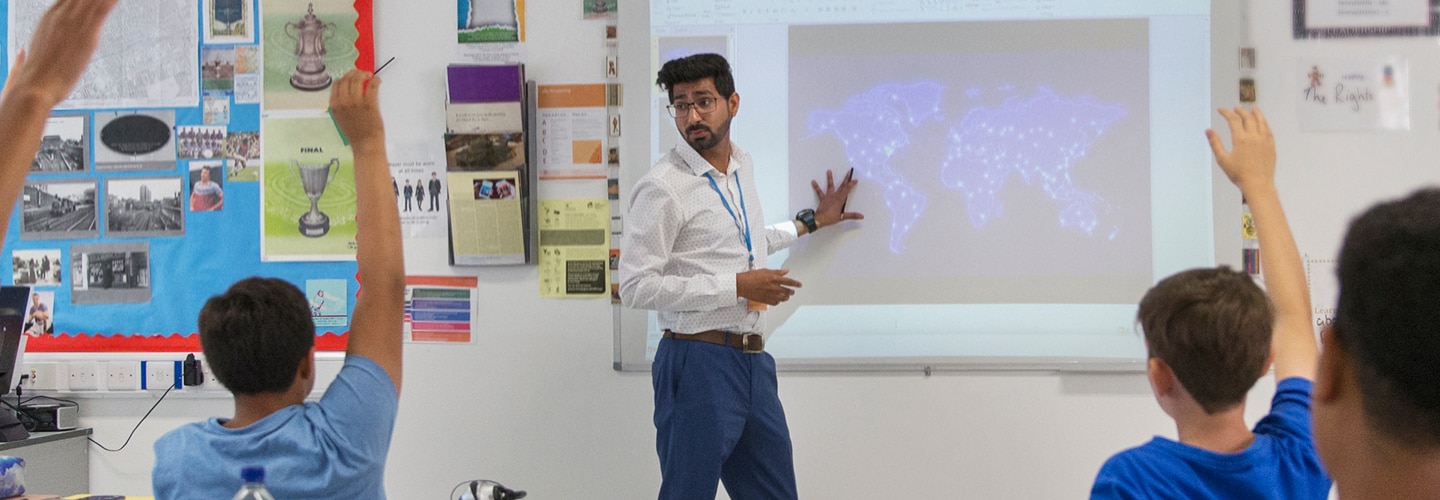
But in terms of what we watch in class, our videos need to work harder than before. In my experience, students won’t tolerate boring or unnatural videos, just because they’re in English. Because they watch so many online films, documentaries and series, students are used to high production values, strong narratives and authentic material. 

What makes a motivating and engaging video?

When we were writing the second edition of Focus, we were lucky enough to have access to the BBC archives. However, just because something has appeared on the BBC it doesn’t mean it is suitable for our students. In my experience, there are certain criteria that needs to be fulfilled in order to motivate and engage students with video. 

The wow factor

First of all, it helps if a video has a visual wow factor. This may be an unusual setting or a location with breathtaking scenery. If there’s no visual interest, you may as well do an audio lesson. However, stunning places and incredible landscapes won’t hold the students’ interest for very long.

Relatability

There also has to be something in the video that the student can relate to their own lives. For instance, one of the clips we chose for Focus Second Edition is set in an amazing place in Turkey, popular with tourists who visit in hot air balloons. The students are unlikely to have visited this place, but to make it relatable and interesting for students, we chose an extract that focuses on the caves that older generations still inhabit, while the younger generation have moved to the nearby cities. The topic of young people leaving the countryside for the big city is a topic that will be familiar anywhere in the world. 

An inspiring story

A generation that have access to endless TV series and films on demand expect a good story. While this can be an episode from a drama - it doesn’t have to be fiction. It can be an inspiring story of human achievement or any kind of human-interest story that follows a journey and has a story arc.

Social relevance

Generation Z and Alpha tend to be very socially engaged and open-minded; they want to change the world. So videos that air social issues are ideal as stimulus for discussion. For example, in Focus Second Edition we’ve included a video clip about a project that’s underway in Holland, where students can have low-priced accommodation in a Care Home in return for some help with the elderly residents. In class, we’ve used this video clip as a springboard for discussing relationships across generations. 

Why are these types of video more motivating?

Videos that fulfil these criteria raise motivation in class because they facilitate more interesting lessons. If the video is visually engaging, it’s easier to write the active viewing tasks I mentioned earlier. If the topic is relatable on some level, the lesson can include personalization and discussion, which wouldn’t work if the content was so far removed from the students’ reality that they have nothing to say about it. 

I’m particularly keen on videos that are engaging enough to facilitate follow-up tasks that might spark the students’ imagination and help to put them in other people’s shoes. For example, in Focus Second Edition, we’ve included a video about window cleaners on the Burj Khalifa in Dubai, the tallest building in the world. 

As you can imagine, the film shots are breathtaking and have not only the wow factor but the ‘agh factor’ too for people who are afraid of heights. The presenter, Dallas, joins the experienced window cleaners, and you can’t help but hold your breath as he climbs out onto the side of the building, which is a sheer drop of 800 meters below him. No wonder he has a dry mouth.

The short clip is so engaging that the lesson practically writes itself. Here are a couple of examples of follow-up tasks that are only possible because the video holds the students’ attention and ignites their imagination:

After you watch

  • You are Dallas and you want to learn more about the daily routine of the window cleaners at the Burj Khalifa. In pairs, decide on a list of five questions you want to ask the window cleaners about their job. 
  • Imagine that you are Dallas and write an article about your work experience on the tallest building in the world. 

All this increased volume and choice of video is great, and video certainly still has the power to motivate our students, but I believe we teachers and materials providers need to focus more on the quality of the videos we use in class than the quantity. 

Find out more about Focus

motivate with video Focus Second Edition

In Focus you can motivate and engage students with authentic video content from the BBC. Throughout the course learners will not only practice and improve their language skills, but also develop important life skills that will prepare them for the future.

Bibliography 

  • Apkon, S. (2013) The Age of the Image. Farrar, Straus and Giroux
  • DLA. Digitallearningassociates.com
  • Donaghy, Kieran (2015) Film in Action. Delta Publishing
  • Goldstein, Ben. & Driver, Paul. (2015) Language Learning with Digital Video. Cambridge University Press
  • Keddie, Jamie. Videotelling and Lessonstream
  • Donaghy, K & Whitcher A., How To Write Film and Video Activities, ELT Teacher 2 Writer 

More blogs from Pearson

  • A man with headphones on listening and smiling while he sits on a sofa
    11 great English-language song lyrics
    提交者 Steffanie Zazulak
    Reading time: 5 minutes

    What is it about music that helps boost your English skills, confidence and pronunciation? A song can provide an emotional connection between the music and the listener, providing learners with new ways to express their feelings. Music and rhythm have also been shown to benefit memorization, which is a key component of learning.
    Here are some of our favorite lyrics to some of our favorite songs:

    1. The Beatles – Blackbird

    The Beatles are the best band to help you learn English. There are many Beatles songs with catchy melodies and simple lyrics, but Blackbird captures the Fab Four at their most poetic:
    Blackbird singing in the dead of night
    Take these broken wings and learn to fly
    All your life
    You were only waiting for this moment to arise

    2. The Cure – Friday I’m In Love

    This song is a great way to help learn the days of the week (that may be obvious). Love is also a very popular English word, so this one is for all the romantics out there.

    Always take a big bite
    It’s such a gorgeous sight
    To see you eat in the middle of the night

    3. Ed Sheeran – Thinking Out Loud

    Another one for the lovers: Ed’s heartfelt lyrics usually do well on the mainstream pop charts; he's one of the world's most popular songwriters. In this ballad, he tells the sweet story of long-time love.

    Take me into your loving arms
    Kiss me under the light of a thousand stars
    Place your head on my beating heart

  • Children and teacher looking at a tablet smiling and laughing in the classroom
    Incorporating reflection activities to kickstart the New Year
    提交者 Charlotte Guest
    Reading time: 5 minutes

    A new calendar year offers a natural reset, an opportunity for your learners to pause, look back and lean forward with purpose. Reflection isn’t just a feel-good exercise; it’s a powerful learning accelerator. It helps students consolidate knowledge, develop metacognition and set actionable goals. It also helps you, the teacher, gain insights into what’s working, what needs adjustment and how to sustain momentum. Below are activities that fit into real classrooms and real schedules, with variations for different age groups and subject areas.

    Why start with reflection?

    Reflection builds self-awareness and agency. When students name what they’ve learned and where they want to grow, they’re more likely to persevere and achieve. For you, structured reflection provides a clearer picture of learning gaps and strengths, enabling intentional planning. Think of these routines as small investments that pay off in greater engagement, clearer goals and smoother instruction all year long.

    Quick wins you can do in one class period

    Rose–Thorn–Bud

    • Purpose: Recognize successes ("rose"), challenges ("thorn") and emerging opportunities ("bud").
    • How-to: Give students three sticky notes or three boxes on a digital form. Prompt: “One thing that went well last term”, “One challenge I faced”, “One idea I want to try”.
    • Teacher moves: Sort responses to identify class-wide trends. Celebrate roses. Normalize thorns with a growth mindset. Turn buds into a short list of new strategies to try together.
    • Variations: Pair-share for younger grades; content-specific (rose = strategy that helped with fractions, thorn = multi-step problems, bud = practice with word problems).

    Start–Stop–Continue

    • Purpose: Turn reflection into immediate behavior and study habits.
    • How-to: Ask students to list one habit to start, one to stop, and one to continue this term. Provide sentence stems: “I will start…”, “I will stop…”, “I will continue… because…”
    • Teacher moves: Have students star the one they’ll commit to this week and set a check-in date. Invite a brief self-assessment after two weeks.
    • Variations: Subject-specific (start annotating texts, stop cramming, continue reviewing notes nightly).

    3–2–1 Learning snapshot

    • Purpose: Capture key learning quickly.
    • How-to: Prompt with “three concepts I understand now”, “two questions I still have” and “one resource or strategy that helped me learn”.
    • Teacher moves: Use the “two questions” to plan mini-lessons or office-hours topics. Share a class list of “one resource” to build a peer-sourced toolkit.
    • Tools: Paper exit tickets or a quick digital form, whatever is easier and quicker for you. 

    Peer reflection interviews

    • Purpose: Build belonging and metacognition through conversation.
    • How-to: In pairs, students ask: “What’s one thing you’re proud of from last term?”, “When did you feel stuck – and how did you get unstuck?”, “What’s a goal you have for this month?”
    • Teacher moves: Teach active listening (eye contact, paraphrasing) and capture themes. Close with a 2-minute write: “One insight I gained from my partner.”
    • Variations: Record short audio or video reflections for classes using multimedia tools.

    Two stars and a wish (Portfolio refresh)

    • Purpose: Reflect using evidence.
    • How-to: Students choose two artifacts from last term to highlight ("stars") and one area to improve ("wish"). They attach a brief reflection: what it shows and why it matters.
    • Teacher moves: Model with your own sample. Provide a rubric for reflective depth (specificity, evidence, next steps).
    • Variations: Early grades can draw or use photos; older students link to digital artifacts.

    Deeper dives for week-one routines

    Personal learning timeline

    • Purpose: See growth over time and connect effort to outcomes.
    • How-to: Students draw a timeline of the term: key topics, pivotal moments, breakthroughs, setbacks and supports that helped. They mark future milestones: “By Week 4, I will…”
    • Teacher moves: Guide students to identify strategies that worked (study groups, retrieval practice), then add them to their plan. Create wall or digital gallery for optional sharing.
    • Extension: Have students revisit the timeline mid-term to add new milestones.

    Goal-setting conferences

    • Purpose: Craft specific, measurable goals with support.
    • How-to: Provide a short goal sheet: “My priority skill”, “Evidence I’ll use”, “Daily/weekly actions”, “Support I need”, “Check-in date”.
    • Teacher moves: Rotate through 3-minute conferences to coach students toward clarity and feasibility. Encourage process goals (such as practicing 10 minutes daily) alongside performance goals.
    • Variations: Small-group coaching if individual conferences aren’t feasible; student-led with peer feedback for time efficiency.

    Class norms refresh (Community agreements)

    • Purpose: Re-center your classroom culture.
    • How-to: Invite students to propose two norms that helped learning and one to adjust. Synthesize into 5–7 concise agreements.
    • Teacher moves: Co-create routines that enact the norms (silent start, exit reflections, peer tutoring). Post and practice with brief weekly check-ins.
    • Equity lens: Ensure norms protect voice and belonging, not just compliance.

    Make it stick: Implementation tips

    • Keep it short and regular. Even just 5–10 minutes a week builds powerful habits.
    • Use sentence stems to reduce cognitive load: “A strategy that helped me was…”, “Next time I’ll try…”
    • Celebrate progress. Highlight student reflections that show growth, not just perfection.
    • Close the loop. Bring reflections back into instruction: “I noticed many of you asked about synthesizing sources—let’s start with a mini-lesson.”
    • Make it visible. A reflection wall or digital board keeps goals at the forefront.

    Inclusive informed considerations

    • Offer multiple modalities: writing, drawing, audio or a private form. Choice increases safety and authenticity.
    • Normalize struggle and curiosity. Use language that validates effort: “Challenges are data, not defects”.
    • Protect privacy. Invite, but don’t require, public sharing. Summarize themes anonymously.

    Using tools you already have

    Many of you use courseware, dashboards and assessment reports. Use them to ground reflection in evidence:

    • Pull a quick progress report to anchor 3–2–1 reflections in actual performance trends.
    • Use item analysis to identify common thorns and plan targeted practice.
    • Invite students to look at their data with you during goal-setting conferences.

    A quick start plan for week one

    • Day 1: Rose–Thorn–Bud plus a short norms refresh.
    • Day 2: 3–2–1 Learning Snapshot tied to last term’s key skills.
    • Day 3–4: Goal-setting conferences; peers do Two Stars and a Wish.
    • Day 5: Personal Learning Timeline and a brief share-out; set check-in dates.

    Reflection is a powerful tool. Begin small, stay consistent and let students’ feedback guide you. With clear prompts, support and the right tools, including Pearson’s, you can turn New Year’s energy into steady progress for your class.

  • University students stood in a class together working on tablets
    How PTE Express helps agents beat admissions deadlines
    提交者 Alice Bazzi
    Reading time: 2 minutes

    For students applying to US universities, timing is everything. Admissions deadlines can be tight, and delays in English proficiency scores can lead to missed opportunities. Your reputation as an agent depends on helping students have a seamless process, which includes meeting timelines.

    Why speed matters for US admissions

    US institutions often require English test scores before issuing offers or processing visas. Traditional testing methods can take days or even weeks for results, creating stress for students and agents. PTE Express changes the game by delivering certified results within 48 hours, ensuring students can submit scores quickly and confidently.