Fostering self-care and wellbeing through the world of reading

Nicola Schofield
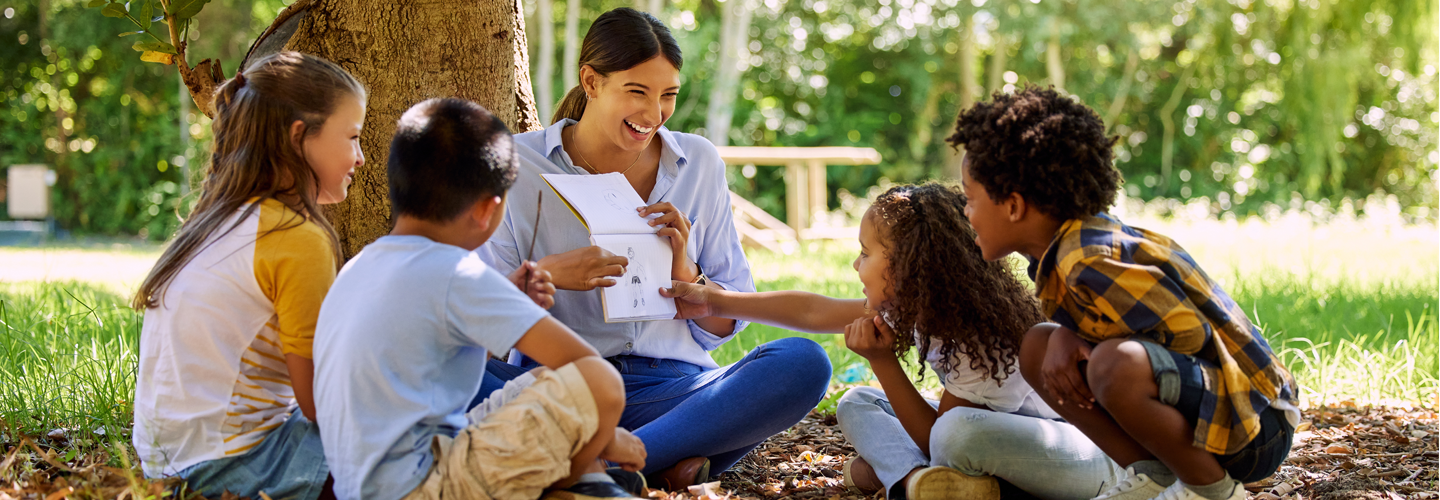
A teacher sat outdoors with young students looking at a book togethr
Reading time: 6 minutes

Growing up is an exciting time. Children are curious and open-minded, and every day welcomes a new thing to learn. They are constantly exploring and discovering themselves and the world around them. But children also have to face many challenging times too as they get older. It is, therefore, important that we teach our young people to be aware of their own wellbeing and self-care, what they can do to lead a balanced and healthy life, and give them the tools they need to help them in difficult times, both mentally and physically.  

Boosting children's wellbeing with reading
播放
隱私和Cookies

觀看此視頻表示你同意培生可於一年內使用你觀看的數據以作分析及營銷之用。你可以通過清除cookies撤銷設定。

What are the key factors to a child’s wellbeing?

Have a look at Maslow’s Hierachy of Needs below. It describes people’s basic needs for good mental and physical wellbeing.

Self-actualization – Children need to be aware of their own feelings and understand how to process them.

Esteem – Children need to grow in confidence, feel valued and receive praise for their achievements. Having hobbies and interests too is key.

Love/belonging – Children need to develop meaningful relationships or feel part of a community. This could be friendships, family, a class, a club or school.

Safety – Children must feel safe in their surroundings.

Physiological – Children must have a home and access to food, water, sleep and exercise.

However, do children know how to look after their wellbeing? 

Ask them to make a list and share your ideas together as a class or as a family. What do they do to look after their mental and physical health? Are there any things that they do lots of or don’t do enough of? What can they start doing or try to do more of?

Alternatively, you could also ask them to put the following items in order of importance. Ask them, ‘What makes you happy?’, ‘What is important to you?’ 

  • Food
  • Water
  • House
  • School
  • Friends
  • Family
  • Exercise
  • Sleep
  • Hobbies 

How can Disney Kids Readers help children’s wellbeing?

Let’s refer back to the hierarchy of needs and see how they can link into reading.

Self-actualization – Disney Kids Readers can help increase empathy and self-awareness through reading about other characters’ emotions and putting ourselves in their shoes. It can help us to understand and process our own emotions too. For example, in Inside Out, we see Riley struggle with her emotions when her family moves to San Francisco. Through the characters of Joy, Sadness, Fear, Anger and Disgust, we can see how normal it is to feel a range of emotions and not feel happy all the time.

Esteem – Disney Kids Readers also help children to develop confidence and self-esteem as they progress through the levels. By completing the wide range of activities at the end of the books, children can see that they are learning and improving their English skills as well as having fun reading a book. 

Readers can also help us navigate difficult moments in life and teach us resilience and strength in challenging times. When we read the stories, we see how the characters overcome obstacles and deal with their problems. This can teach children key lessons and help them tackle their own problems in the real world.

For example, many of the characters go through difficult times to which children can relate. In The Jungle Book, Mowgli is scared but then his friend Baloo comes to help him. In Frozen II, Elsa goes on a difficult journey to restore justice for the people of Arendelle and The Enchanted Forest. 

Love/belonging – Reading Disney Kids Readers as a class, in pairs, or as a family can really strengthen relationships and a sense of belonging, which is such an important part of children’s development. Sharing a book is something special that can allow people to develop common interests and therefore make children feel that they are part of a wider community.

Safety – Children can feel safe and more secure when a parent or a caregiver reads to them before bed. Disney Kids Readers are perfect bedtime stories and help children to fall asleep listening to their favorite Disney characters on exciting adventures. Also, in times of stress, reading can help reduce anxiety, allowing children to enjoy the present moment and escape the real world for a little while.

Physiological – Reading exercises your brain. In addition to physical exercise, reading is an excellent mental workout which is so important to children’s health. Ask the children to memorize some pages from the reader and recite it without looking or ask them to memorize the phonics rhyme on the phonics page. You could also ask them to memorize the key words from the glossary list and see how many they remember.

Activity ideas

Now try out some of the activities below which can be linked to the Readers which will help your children/young learners focus on their wellbeing.

1. Paint a scene

This activity is calm, relaxing and mindful for the children to complete. The world is a busy place, and this activity links in with the idea of self-actualization and esteem. Painting or drawing keeps our mind focused on one task, and reduces stress and anxiety. It can help us process difficult emotions and can cheer us up when we are feeling down.  

Encourage your young learners to paint or draw a peaceful scene that they can imagine themselves in. It could be a beach, a forest, or even outer space. This activity allows children to express their creativity and imagination while also promoting relaxation and mindfulness.

Need: Self-actualization, Esteem

2. Reading emotion diary

Self-awareness is such a useful tool for our wellbeing – through this activity, the children take a moment each day to read a few pages of a book and then look inside themselves to think about how they are feeling before and after reading. This is powerful, as over time the children will understand that reading is a good way to calm the mind and manage emotions – something that can help them improve their own wellbeing and feel safe. 

Encourage your learner to write down their feelings in a diary after reading and reflect on how the reading has affected their emotions. This activity promotes self-awareness and emotional intelligence, which are crucial for maintaining good mental health.

Need: Self-actualization, Safety

3. Reading emotions

Emotional intelligence is such an important part of life. Understanding how someone is feeling through body language, such as facial expressions, gestures and body movements, can be useful when someone is sad, angry or upset. It can help us decide what they need and can help them feel listened to, loved and valued. In this activity, the children practice this by analyzing the characters’ emotions. It will help children build confidence when dealing with difficult or sensitive topics with family and friends. 

Choose a Reader with a diverse range of characters and ask your learner to identify and describe the emotions shown by each character. This activity promotes empathy, communication skills and social-emotional learning.

Need: Love/belonging, Esteem 

4. Guess the scene meditation

This activity is a great exercise for the brain. It helps children to visualize and picture different surroundings in their minds and imagine different smells, sounds and textures, and bring them to life. As the children’s minds are focused on one thing, they begin to relax and feel calm. This activity can be a great tool to use before bedtime to help children fall asleep peacefully.

Guide your learners through a guided meditation where they imagine themselves in different peaceful scenes. You can also ask them to create their own scene and describe it in detail. This activity promotes relaxation, mindfulness and creativity.

Need: Self-actualization, Safety

5. Develop resilience

In every story there is a lesson to be learned, and through this activity children learn how to deal with difficult situations through the characters. It teaches children that although there are hard times in life, if we are patient, work together and show resilience, then we can work through our problems.  

Choose a Reader with characters facing challenges and discuss with your learners how the characters handle the situation. Encourage them to think of ways they can apply this to their own lives when facing difficulties.

Need: Belonging, Esteem 

6. Create an exercise routine

This activity is creative and fun and will get the children moving and laughing at the same time. Physical exercise is so important to our wellbeing, so what is better than doing a workout with your favorite Disney character? The children can do these workouts in small groups, with family or as a class. This activity promotes physical health and social bonding.

Choose a few Disney characters and create simple exercises for each one. You can also use props or make it into a game by having the children take turns being different characters.

Need: Physiological

More blogs from Pearson

  • Children in a classroom with a teacher while they play with a toyhouse
    The importance of teaching values to young learners
    提交者 Katharine Scott
    Reading time: 3 minutes

    Why teaching values matters in early education

    The years children spend in school are about far more than academic success. Alongside literacy, numeracy and subject knowledge, children develop the social and emotional skills needed to thrive in the world around them.

    From sharing ideas to resolving disagreements, these everyday interactions shape how children understand fairness, respect and responsibility. These are more than just learned skills – they are rooted in deeper values that guide behavior over time.

    Without clear guidance, children often learn behaviors simply by observing others. While this can be positive, it can also reinforce negative habits. That’s why schools play a critical role in explicitly teaching values, not just expecting them.

    Social skills vs. Social values

    Although closely related, social skills and values are not the same:

    • Social skills are behaviors (such as taking turns, listening, cooperating)
    • Social values are the principles behind those behaviors (such as fairness, respect, empathy)

    When children understand why something matters—not just what to do—they are more likely to apply those behaviors consistently.

    Core values every child should learn

    Defining values can be complex, but most education systems emphasize a shared set of foundational principles:

    • Respect for others and appreciation of diversity
    • Collaboration and community awareness
    • Environmental responsibility
    • Self-worth and confidence

    Even at a young age, children demonstrate a natural sense of fairness and honesty. With the right support, these instincts can be developed into strong moral foundations.

    Moving beyond “School Rules”

    Too often, values are reduced to simple instructions like:

    • “Don’t be late”
    • “Wait your turn”
    • “Be kind”

    While important, these rules can feel arbitrary if not explained. Without context, children may follow them only when supervised – or break them when they can.

    To truly teach values, educators need to:

    • Explain the reasoning behind rules
    • Encourage discussion and reflection
    • Connect actions to real-world impact

    This transforms rules into meaningful learning experiences.

    Effective school strategies for teaching values

    The most successful approaches to values education involve the entire school community – teachers, students, parents and staff.

    1. Environmental awareness programs

    Schools can foster responsibility through hands-on initiatives such as:

    • Recycling systems
    • School gardens
    • Renewable energy projects
    • Second-hand bookshops

    These activities help children understand their role in protecting the planet.

    2. Anti-bullying initiatives

    Strong anti-bullying programs go beyond policies and focus on prevention through:

    • Empathy-building exercises
    • Peer accountability activities
    • Confidence and self-esteem development

    Helping children recognize and respond to bullying is key to creating a safe environment.

    3. Anti-racism and inclusion programs

    Promoting inclusivity requires a proactive, school-wide approach:

    • Teaching diverse histories and cultures
    • Inviting guest speakers from different communities
    • Challenging stereotypes through discussion
    • Encouraging empathy for marginalized groups

    These efforts help children develop respect for diversity from an early age.

    The role of consistency

    Children learn as much from what adults do as from what they say. For values education to be effective:

    • Teachers must model positive behavior
    • School policies should reflect stated values
    • Parents should be involved where possible

    Consistency across all environments reinforces learning and builds trust.

    Putting values into practice

    Teaching values to young learners is not an “extra” part of education – it is foundational. When children understand respect, empathy and responsibility, they are better equipped to succeed academically, socially and emotionally.

    By embedding values into everyday learning and school culture, educators can help shape thoughtful, responsible individuals who contribute positively to society.

  • A woman smiling working on a laptop
    Studying in the USA? A fast at-home English test is now an option
    提交者 Abi Fordham
    Reading time: 2 minutes

    If you’re a student planning to study in the USA, life probably feels a bit like having too many tabs open at once. University sites. Visa info. Messages from friends already abroad. And a growing list of things that all feel important.

    Somewhere in the middle of that is your English test.

    A test people trust for good reason

    For years, students have chosen PTE because it’s built to be trusted, backed by real expertise, research and quality. That’s why it’s become a familiar name for students planning to study abroad, and why institutions trust it too. That foundation hasn’t changed. What has changed is how students live, learn, and prepare today.

    Same roots, for different routes

    PTE Express originates from the same principles. Same values. Same attention. It’s simply tailored for a different kind of test taker at a specific point in their journey. If you’re aiming to study in the USA and need a quick, at-home English test, PTE Express is made to fit into your life rather than forcing you to reshape everything around a test date. And let’s address test anxiety because it’s a real concern.

    Many students worry about English tests. Not because they don’t know English, but because test situations can make things feel harder than they should be. Speaking to an examiner face‑to‑face can feel intimidating. Worrying about being misunderstood because of your accent is a real concern. Travelling to a test centre adds pressure before you even start. Sitting in an unfamiliar room can make nerves worse.

    That’s not a lack of ability. That’s just being human. While PTE Academic already addresses lots of these worries, we have gone a step further with PTE Express.

    Why at‑home testing can feel different

    One of the quiet benefits of an at‑home test is how much calmer it can feel. You’re in a familiar space. You control your environment. There’s no examiner in front of you, just you and the screen. For many students, that makes it easier to focus and show their real English, without the extra stress that comes from unfamiliar settings or face‑to‑face pressure. PTE Express was designed with this in mind: calm, considered, and supportive, while still being secure and trusted by institutions.

    When the USA is the plan

    If you already know the USA is your destination, things can start to feel more time‑sensitive. Deadlines get closer. Decisions feel heavier. You’re no longer exploring, you’re preparing your next move. PTE Express fits naturally here. It’s a fast, at‑home option for US study, built on the foundations of Pearson that students already trust, and delivered in a way that works for when life is busy and timelines are tight.

    A choice that actually reduces pressure

    The good news is, you don’t have to overthink this. If you want to keep your options open across different countries, there’s a trusted path in PTE Academic that supports that. If you’re focused on studying in the USA and want something fast, familiar and at home, there’s now an option designed for exactly that. No trade‑offs. No feeling like you’re cutting corners. Just choices that match different moments.

    Focus on what really matters

    Studying in the USA is a big step. It’s about independence, growth and starting something new. Your English test should feel like something that supports you quietly in the background, not something that adds more stress to an already intense moment. With PTE Express now live in most countries, including India, students heading to the USA have a calm, trusted at‑home option, built on foundations that have been relied on for years. And sometimes, feeling calm and confident is exactly what helps you do your best.  

  • Man sat outdoors holding a tablet smiling
    Understanding and managing technostress
    提交者 Amy Malloy
    Reading time: 2 minutes

    What is technostress?

    If you find yourself constantly checking social media or feeling pressure to keep up with the latest technology, you may be experiencing technostress. It can show up in different ways, including difficulty focusing on everyday tasks, low motivation or mood, and anxiety around using technology. It even causes some people to avoid digital tools altogether.

    Technostress affects people differently, but at its core is a shared experience, as Chiapetta (2017) defines it: “Technostress is a syndrome that occurs when a person, subjected to information overload and continuous contact with digital devices, develops a state of stress.” This constant exposure to technology has only got more extreme since Chiapetta since defined the syndrome. As a result, technostress is something that more and more people are likely to experience.