Effective classroom management routines for very young learners

Jeanne Perrett
Jeanne Perrett
A teacher with young students sitting at a table looking at flashcards
Reading time: 4 minutes

For very young learners, children aged 3-6, being in a classroom might be a completely new experience. Most of them won’t know any English words at all and might have very little idea of what English is or why they are learning it. Some of them may not yet be completely fluent in their mother tongue. 

At the beginning of the school year, some of them may find it distressing to be separated from their parents and they also have to learn to get along with their new classmates. 

If we want to keep them comfortable and safe and provide a friendly and welcoming environment, we need to establish routines. 

7 ways you can build routines into your classes

Here are some areas where you can easily incorporate classroom management routines into your English language class.

1. Think about your target language

Our target language for each lesson may be one or two short phrases or a few new words. We should always keep the presentation and practice of this simple and clear. 

However, we can use English for all our greetings, praise, instructions and explanations. After a few days, the children will begin to expect it and they will gradually understand what you are saying. 

2. Coming into the class

Take time to greet each child by name when they enter the classroom and encourage them to learn and use each other’s names too. This will change how they perceive themselves and each other and encourage friendly communication. 

Notice the small things about each child. They might have a new T-shirt on or have done their hair specially. They may not tell you that they have made an effort to look nice for their lesson, but they will be pleased when you notice and will feel encouraged to continue. 

3. Circle time

Make circle time the start of every lesson. It gets the children sitting down together and this helps them to get to know each other and feel part of a comfortable group. 

It’s the time where you present the target language for the day. Use a puppet to help you do this. Make the puppet part of the routine by keeping it in a certain place and bringing it out from there every day. The children can call its name. 

The puppet can greet the children by name and the children can answer back. First, use picture cards or objects to present the language to the puppet. Then, the puppet can show that it understands or ask for repetition. 

Let the children call out responses as a group. As they build their confidence in English they will want to speak by themselves. 

Always accept approximations of words and phrases. Rather than correcting the children, continue to model the words and gradually the students will self-correct. Pass this tip on to parents too. 

4. Book time

Give students time to discover pages and images they like in the books they are using. Always leave time to help each child find the correct page and then help them to focus their attention on that page. 

In Circle time you have introduced the language and presented it with flashcards or objects. In Book time, children can look at these images – the content will be familiar and they will start to feel ownership of what they are learning. 

5. Songs, games and miming

Singing, playing games and miming are the main ways in which the students will start to freely use and show they understand the target language. 

In My Disney Stars and Friends each stage of every game is detailed, along with the language you and the students can use. Students might become so involved in the action of the game that they forget to speak in English! That’s okay – continue using the language and eventually they will start to use it too. 

When a game or a song involves physical activity, have drinks of water ready and let them rest and relax afterwards. Always have a ‘sitting down’ activity ready for them to move on to so that they do not become overexcited or tired.

6. Craft and stickers

For any craft work there are four stages: preparation, production, playing with the completed craft work and tidying up. If you're using My Disney Stars and Friends, there is a special Tidy Up song and all the craft projects are press-outs so there is no need for scissors. 

Children of 3 or 4 years old will need to learn how to unpeel and then re-stick a sticker. Allow time for this and encourage them to learn from each other once some of them have mastered this fine motor skill. 

7. Leaving the class

Time your lessons so that the students don’t have to leave in a rush. It takes them a while to collect up their things and find their bags and coats. 

If you want the parents to know something, make sure that the children know where they have put the note. One notebook for such messages is a simple way of doing this, and you can tell parents to check it after every lesson. 

Just as you greeted each child by name when they came in, say goodbye to them individually as they leave. 

Incorporating effective classroom management routines makes young learners feel more comfortable as they know what to expect from their language classes. Familiarity is welcome for children, so exploit these times for more language learning opportunities. 

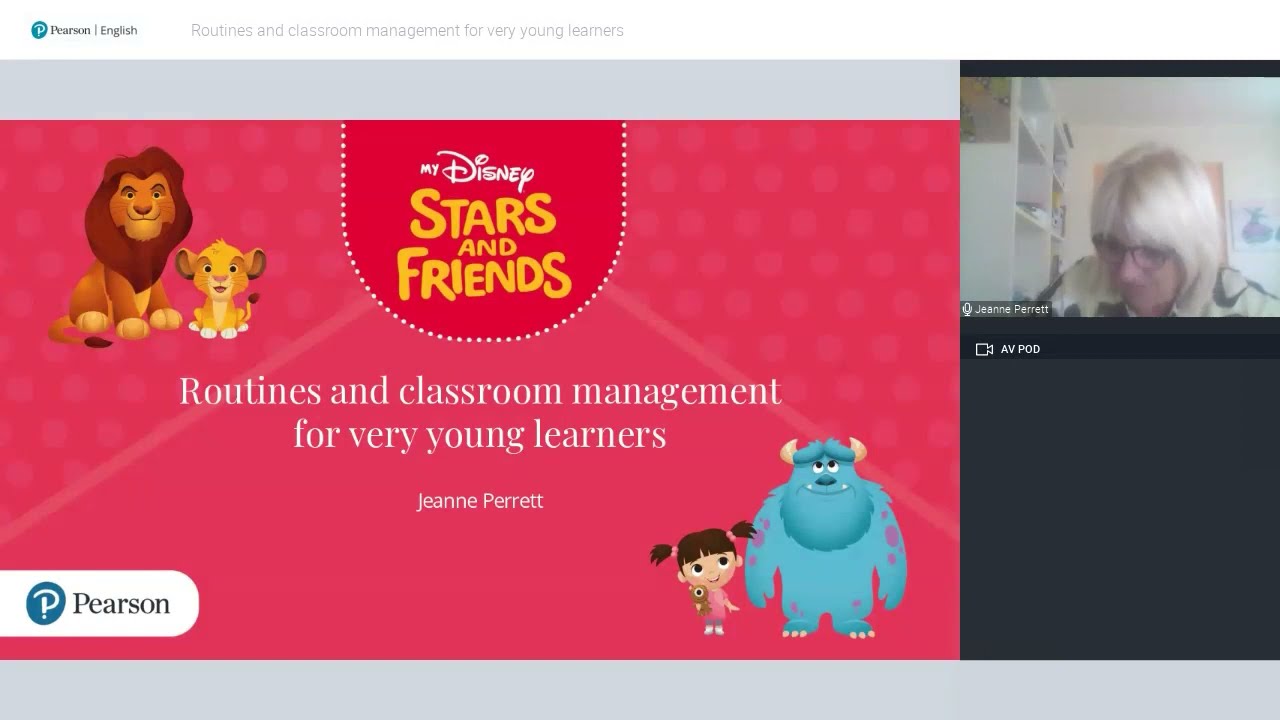
Find more ideas on effective classroom management routines in Jeanne Perrett’s webinar, where she focuses on practical ideas and teaching tips for how we can organise and manage a class of young learners.

Routines and classroom management for very young learners I Pearson English Disney Day
播放
隱私和Cookies

觀看此視頻表示你同意培生可於一年內使用你觀看的數據以作分析及營銷之用。你可以通過清除cookies撤銷設定。

Want to learn more about teaching young learners? Read our post 'Young learners of English deserve more'.

More blogs from Pearson

  • two young women stood outside a phone box posing for the camera
    Understanding slang terms from across the UK
    提交者 Charlotte Guest
    Reading time: 3 minutes

    The English language (British English in particular) is a fascinating mix of regional dialects and unique slang, shaped by centuries of history and cultural influences. Throughout its long history, the UK has had many invasions and visitors. From the Romans in ancient Londinium to the rolling hills of the Saxon heartland, and from the Viking raiders of the north to the Norman conquerors of the south, each wave of historical influence has shaped the dialects of the UK. Each region of the United Kingdom has its own distinct flavor of language and accent. Today, we embark on an English slang tour to explore some of the expressions from different regions.

    1. West Midlands: "Bostin'"

    Let's begin in the heart of England, the West Midlands. Here, you might hear the word "bostin'" thrown around quite a bit. This charming expression simply means "excellent" or "fantastic". So, if someone says your meal was "bostin'," you can rest assured your cooking skills have earned top marks.

    2. East Midlands: "Duck"

    If you head east to the East Midlands region, you might come across a term of endearment that could feel surprising if you're not used to it. Local people often call each other "duck", regardless of gender or age. It's a friendly and informal way of addressing someone, similar to how people in other regions use "mate" or "love". 

  • A teacher stood in front of a whiteboard teaching a class
    Lesson tips for Special Educational Needs
    提交者 Richard Cleeve
    Reading time: 5 minutes

    Creating an inclusive classroom is essential for helping every student reach their full potential. Students with Special Educational Needs (SEN) and neurodiverse learners bring unique strengths, perspectives and ways of thinking to the classroom. However, many teachers feel unsure about how to adapt lesson plans to effectively meet diverse learning needs.

    By implementing inclusive teaching strategies, educators can create engaging learning environments that support students with ADHD, dyslexia, autism spectrum disorder (ASD), anxiety disorders and other learning differences. These approaches not only benefit neurodiverse learners but often improve engagement and outcomes for the entire class.

    Drawing on insights from experienced SEN Coordinator James Laidler, this post explores practical lesson planning strategies that can help teachers create more accessible, supportive and effective learning experiences. Many of these tips are also great for keeping all students engaged, SEN or otherwise.

    Defining Special Educational Needs

    A child has Special Educational Needs (SEN) if they have a learning difficulty or disability that calls for special educational provision. Learners with conditions such as autistic spectrum disorder (ASD), attention deficit hyperactivity disorder (ADHD), dyslexia, dyspraxia or anxiety disorders come under this framework.

    Inclusive lesson tips for neurodiverse students

    Although teachers want to create inclusive lessons, many feel ill-equipped to support neurodiverse students. To help, James offers some tips for lesson planning that aim to turn learning diversities into strengths.

    Attention Deficit Hyperactivity Disorder (ADHD)

    ADHD is a condition that can include symptoms such as inattentiveness, hyperactivity and impulsiveness. Students with this disorder may have a short attention span, constantly fidget or act without thinking.

    Lesson tips for ADHD students:

    Movement breaks – Students with ADHD may struggle to sit still for extended periods of time. Include short breaks in your lessons that offer them the opportunity to get up and move around at regular intervals.

    Group work – To keep learners active and engaged, include group work in class. This means they don’t have to focus on the board for too long.

    Dramatize lessons – A really effective activity is to bring drama into the classroom. For example, students can act out role plays or other fun drama-based activities. It keeps them motivated, holds their attention and can be fun for all of the class.

    Dyslexia

    Dyslexia primarily affects the skills involved in accurate and fluent reading and spelling. It may affect a person’s phonological awareness, verbal memory and verbal processing speed.

    Lesson tips for dyslexic students:

    Visual aids – Learners with dyslexia tend to have excellent visual memories. Try bringing in pictures to illustrate ideas or add them to lengthy texts to help students when doing reading comprehension exercises.

    Font and spacing – When setting reading tasks, simply changing the font, enlarging the font size and double-spacing are hugely beneficial to dyslexic students. Simply adapting the text can make their learning experience much easier.

    Text-to-speech software – Using specialized text-to-speech software often provides significant support to those who struggle with reading or digesting text on computer screens. Tools such as ClaroRead or Kurzweil 3000 can help improve accessibility.

    Autism Spectrum Disorder (ASD)

    ASD is a developmental condition that involves challenges in social interaction, speech and nonverbal communication, as well as restricted or repetitive behaviors. The severity of symptoms is different in each person.

    Lesson tips for ASD students:

    Encourage systematic skills – Often students with ASD may be more systematic than other students. This means they favor routines, regular processes and predictable activities. Try bringing out these skills by asking students to spot patterns, analyze numbers or evaluate data.

    Talk about interests – Autistic students may have specific interests they love to research. Engage them by getting them to talk about their hobbies or ask students to create projects on a topic they choose that they can present to the class.

    Teaching online or blended learning – If you have a learner who is struggling socially at school, it may be an option to include hybrid or blended learning. This takes away some of the social and emotional challenges of school and people interaction, which can benefit ASD students.

    Anxiety Disorders

    Anxiety disorders differ from normal feelings of nervousness or anxiousness. They involve intense fear or anxiety that can significantly affect a student’s ability to learn. This condition has become increasingly common in young people and can impact concentration, participation and confidence in the classroom.

    Lesson tips for students with anxiety disorders:

    Changing language and terminology – Our education system is often highly exam-driven, which can create stress for students. By offering reassurance, guidance and motivation, teachers can help reduce feelings of anxiety.

    Talk openly – Encourage learners to discuss their feelings if they are struggling. They can do this with you, a classmate or a support worker at the school. If they open up to you, focus on strategies to combat negative feelings and emotions.

    Mindfulness techniques – Try adding five minutes at the start of the day for guided meditation or breathing exercises. This can help students begin the day in a calm and relaxed manner.


  • Teenage students looking at a phone together outside
    Six easy ways to learn English
    提交者 Steffanie Zazulak
    Reading time: 3 minutes

    Learning English can open doors to better career opportunities, travel experiences and global communication. However, staying motivated while learning a new language can sometimes be challenging. The good news is that there are many easy ways to learn English that fit into your daily routine.

    Whether you're a beginner or looking to improve your fluency, these practical English learning tips will help you build confidence and develop your speaking, listening, reading and vocabulary skills faster.

    1. Play word games to build your English vocabulary

    One of the most enjoyable ways to learn English is through word games. Games like Scrabble, Words With Friends, crossword puzzles and word search apps can help you expand your English vocabulary while having fun.

    Word games encourage you to think in English, recognize spelling patterns and learn new words naturally. If you're studying with friends or classmates, make it a regular activity to practice together and challenge each other's vocabulary skills.

    Benefits:

    • Improves vocabulary retention
    • Enhances spelling skills
    • Makes learning English enjoyable