Action Potentials definitions Flashcards

Action Potentials definitions
1 student found this helpful
Control buttons has been changed to "navigation" mode.
1/15
  • Action Potential
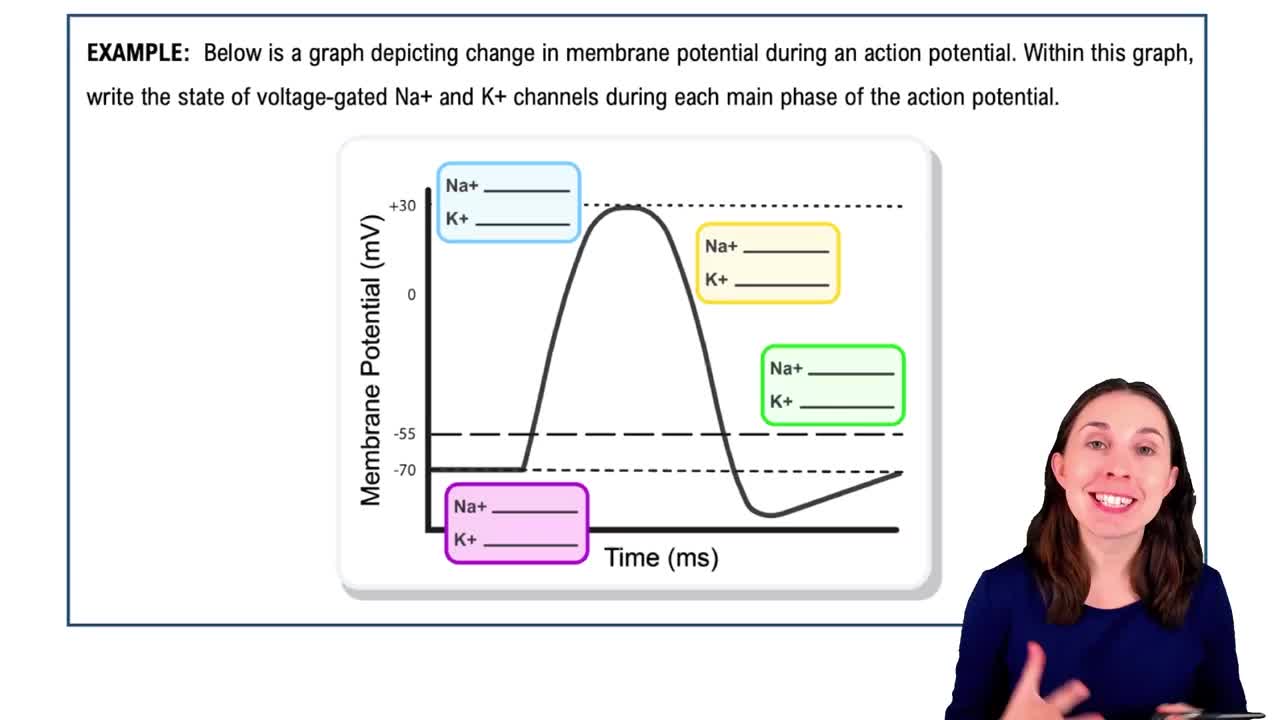
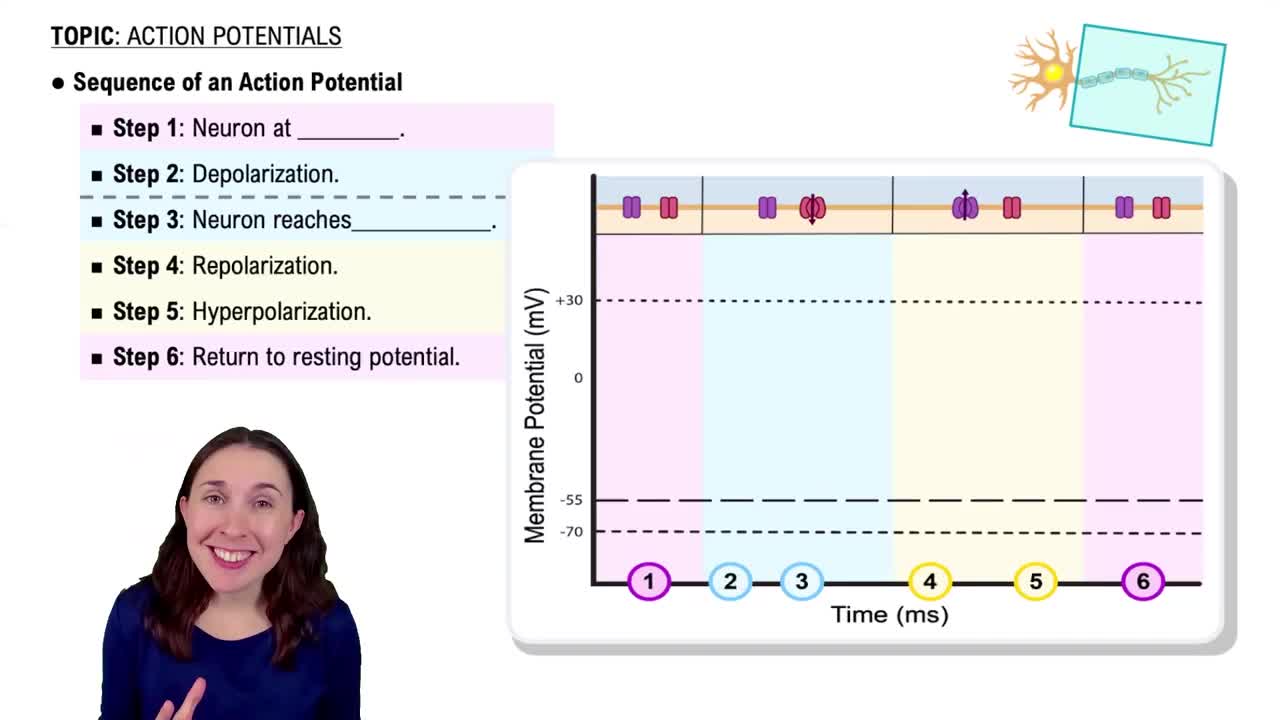
    A rapid rise and fall in membrane potential across a neuron's axon, crucial for nerve signal transmission.
  • Resting Potential
    The stable, negative charge of a neuron at rest, typically around -70 millivolts.
  • Depolarization
    The process where a neuron's membrane potential becomes more positive, moving towards zero.
  • Threshold
    The critical level of membrane depolarization, around -55 millivolts, needed to trigger an action potential.
  • Voltage-gated Sodium Channels
    Protein channels that open in response to membrane depolarization, allowing sodium ions to enter the neuron.
  • Voltage-gated Potassium Channels
    Protein channels that open during depolarization, allowing potassium ions to exit the neuron, aiding repolarization.
  • Repolarization
    The process of returning the membrane potential to a negative value after depolarization.
  • Hyperpolarization
    A state where the membrane potential becomes more negative than the resting potential.
  • Sodium-Potassium Pump
    A cellular mechanism that restores resting potential by moving sodium out and potassium into the neuron.
  • Electrochemical Gradient
    The combined effect of an ion's concentration gradient and electrical charge across a membrane.
  • Graded Potentials
    Small changes in membrane potential that can initiate an action potential if they reach threshold.
  • Excitatory Postsynaptic Potentials (EPSPs)
    Postsynaptic potentials that make a neuron more likely to fire an action potential.
  • Membrane Potential
    The voltage difference across a cell's plasma membrane, crucial for action potential generation.
  • Ion Channels
    Proteins that allow specific ions to pass through the membrane, essential for action potential dynamics.
  • Neurons
    Nerve cells that transmit information via electrical and chemical signals, fundamental to the nervous system.