Cell Cycle Regulation definitions Flashcards

Cell Cycle Regulation definitions
Control buttons has been changed to "navigation" mode.
1/15
  • Cell Cycle
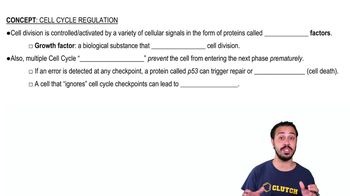
    A series of phases that cells go through to divide and produce new cells, highly regulated by signals and checkpoints.
  • Growth Factors
    Proteins that act as signals to promote cell division, ensuring cells divide only when necessary.
  • Checkpoints
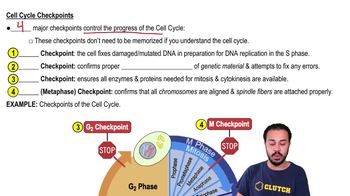
    Regulatory stop points in the cell cycle that ensure conditions are met before proceeding to the next phase.
  • p53 Protein
    A protein that repairs DNA errors or triggers apoptosis if errors are irreparable, preventing cancer.
  • Apoptosis
    Programmed cell death that prevents the accumulation of errors, crucial for maintaining healthy cell populations.
  • G1 Checkpoint
    Ensures DNA integrity before replication in the S phase, preventing the propagation of errors.
  • S Checkpoint
    Confirms proper DNA replication, ensuring genetic material is accurately duplicated.
  • G2 Checkpoint
    Verifies the presence of necessary enzymes and proteins for mitosis, ensuring readiness for cell division.
  • M Checkpoint
    Ensures correct chromosome alignment during metaphase, crucial for accurate cell division.
  • Mitosis
    A phase of the cell cycle where replicated chromosomes are separated into two new nuclei.
  • Cytokinesis
    The process following mitosis where the cell cytoplasm divides, forming two daughter cells.
  • Chromosome Alignment
    The arrangement of chromosomes at the cell's equator during metaphase, essential for proper division.
  • Spindle Fibers
    Structures that attach to chromosomes during cell division, ensuring their proper segregation.
  • Cancer
    A disease caused by unregulated cell cycle progression, often due to checkpoint failures.
  • DNA Replication
    The process of duplicating the cell's DNA, occurring during the S phase of the cell cycle.