Cellular Respiration: Glycolysis definitions Flashcards

Cellular Respiration: Glycolysis definitions
Control buttons has been changed to "navigation" mode.
1/15
  • Glycolysis
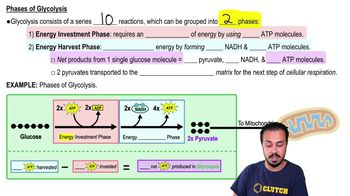
    The first step of cellular respiration, breaking down glucose into two pyruvate molecules in the cytoplasm.
  • Glucose
    A six-carbon sugar molecule that is broken down during glycolysis into two three-carbon pyruvate molecules.
  • Pyruvate
    A three-carbon molecule produced from glucose during glycolysis, later transported to mitochondria.
  • Cytoplasm
    The location within a cell where glycolysis occurs, outside of the mitochondria.
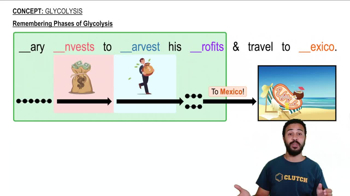
  • Energy Investment Phase
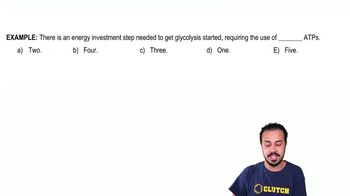
    The initial phase of glycolysis requiring the input of 2 ATP molecules to start the process.
  • Energy Harvest Phase
    The second phase of glycolysis where 4 ATP and 2 NADH molecules are produced.
  • ATP
    A molecule used as an energy currency in cells, with a net gain of 2 ATP during glycolysis.
  • NADH
    An electron carrier molecule produced during glycolysis, used in later stages of cellular respiration.
  • Carbon Dioxide
    A gas produced from carbon atoms of glucose during later stages of cellular respiration.
  • Aerobic Respiration
    A process of cellular respiration that requires oxygen, unlike glycolysis.
  • Mitochondria
    The organelle where stages following glycolysis occur, such as the Krebs cycle and electron transport chain.
  • Carbon Atoms
    The primary focus in glucose breakdown during glycolysis, resulting in pyruvate molecules.
  • Electron Carriers
    Molecules like NADH that transport electrons during cellular respiration.
  • Net Gain
    The total energy yield from glycolysis, resulting in 2 ATP after accounting for initial investment.
  • Chemical Reactions
    The series of 10 reactions that constitute the process of glycolysis.