Endosymbiotic Theory definitions Flashcards

Endosymbiotic Theory definitions
Control buttons has been changed to "navigation" mode.
1/15
  • Endosymbiotic Theory
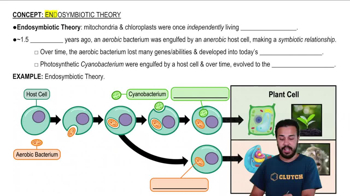
    A theory suggesting mitochondria and chloroplasts were once independent bacteria engulfed by host cells.
  • Mitochondria
    Organelles in eukaryotic cells that evolved from aerobic bacteria engulfed by host cells.
  • Chloroplasts
    Organelles in plant cells that evolved from photosynthetic cyanobacteria engulfed by host cells.
  • Aerobic Bacterium
    Bacteria that use oxygen in metabolism, believed to be the ancestors of mitochondria.
  • Anaerobic Host Cell
    Cells that do not use oxygen in metabolism, which engulfed aerobic bacteria.
  • Cyanobacterium
    Photosynthetic bacteria believed to be the ancestors of chloroplasts.
  • Symbiotic Relationship
    A mutually beneficial relationship between two different organisms.
  • Prokaryotes
    Single-celled organisms without a nucleus, similar to mitochondria and chloroplasts.
  • Circular DNA
    DNA structure found in mitochondria, chloroplasts, and prokaryotes.
  • 70S Ribosomes
    Type of ribosome found in mitochondria, chloroplasts, and prokaryotes.
  • Binary Fission
    A method of replication used by mitochondria, chloroplasts, and prokaryotes.
  • Outer Membrane
    The external membrane of mitochondria and chloroplasts, consistent with engulfment.
  • Inner Membrane
    The internal membrane of mitochondria and chloroplasts, consistent with engulfment.
  • Engulfment
    The process by which a host cell engulfs another cell, leading to a symbiotic relationship.
  • Plant Cells
    Cells containing both mitochondria and chloroplasts, allowing for complex life forms.