Fermentation & Anaerobic Respiration definitions Flashcards

Fermentation & Anaerobic Respiration definitions
Control buttons has been changed to "navigation" mode.
1/15
  • Fermentation
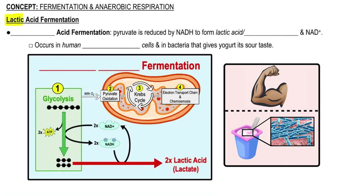
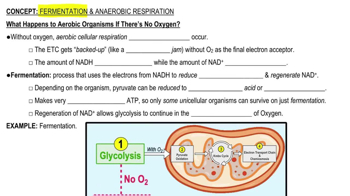
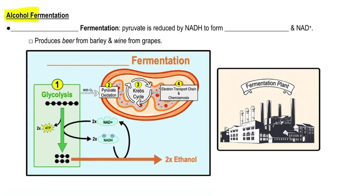
    A process that regenerates NAD+ from NADH, allowing glycolysis to continue in the absence of oxygen.
  • Anaerobic Respiration
    Respiration using alternative electron acceptors instead of oxygen, producing more ATP than fermentation.
  • NAD+
    An electron carrier that is regenerated during fermentation, enabling glycolysis to continue.
  • NADH
    An electron carrier that accumulates when oxygen is absent, leading to fermentation.
  • Glycolysis
    The first step of cellular respiration that continues in the absence of oxygen due to fermentation.
  • Lactic Acid
    A product of lactic acid fermentation, formed by reducing pyruvate, regenerating NAD+.
  • Ethanol
    A type of alcohol produced during alcohol fermentation by reducing pyruvate.
  • Electron Transport Chain
    A series of complexes that transfer electrons, requiring a final electron acceptor like oxygen.
  • Pyruvate
    A key intermediate in metabolism, reduced to lactic acid or ethanol during fermentation.
  • Krebs Cycle
    A stage in aerobic respiration that does not occur without oxygen.
  • Chemiosmosis
    A process in aerobic respiration for ATP production, halted without oxygen.
  • Nitrate
    An alternative electron acceptor used in anaerobic respiration.
  • Sulfate
    Another alternative electron acceptor used in anaerobic respiration.
  • Oxidative Phosphorylation
    ATP production process in aerobic respiration, requiring oxygen as the final electron acceptor.
  • ATP
    The energy currency of the cell, produced in small amounts during fermentation.