Skip to main content
Anatomy & Physiology
My Course
Learn
Exam Prep
AI Tutor
Study Guides
Textbook Solutions
Flashcards
Explore
Try the app
My Course
Learn
Exam Prep
AI Tutor
Study Guides
Textbook Solutions
Flashcards
Explore
Try the app
Back
Glandular Epithelial Tissue definitions
You can tap to flip the card.
Glandular Epithelial Tissue
You can tap to flip the card.
👆
Glandular Epithelial Tissue
Forms glands specialized in secretion, categorized into exocrine and endocrine types.
Track progress
Control buttons has been changed to "navigation" mode.
1/15
Related flashcards
Related practice
Recommended videos
Glandular Epithelial Tissue quiz
Glandular Epithelial Tissue
10 Terms
Glandular Epithelial Tissue quiz #1
Glandular Epithelial Tissue
17 Terms
Glandular Epithelial Tissue
4. Tissues & Histology
4 problems
Topic
Bruce
Introduction to Connective Tissue
4. Tissues & Histology
5 problems
Topic
Bruce
4. Tissues & Histology - Part 1 of 2
9 topics
14 problems
Chapter
Bruce
4. Tissues & Histology - Part 2 of 2
12 topics
16 problems
Chapter
Bruce
01:53
Glandular Epithelial Tissue Example 1
6187
views
101
rank
1
comments
04:39
Unicellular Exocrine Glands - Goblet Cells
6744
views
147
rank
6
comments
05:35
Modes of Secretion: Merocrine, Holocrine & Apocrine
7695
views
124
rank
2
comments
Terms in this set (15)
Hide definitions
Glandular Epithelial Tissue
Forms glands specialized in secretion, categorized into exocrine and endocrine types.
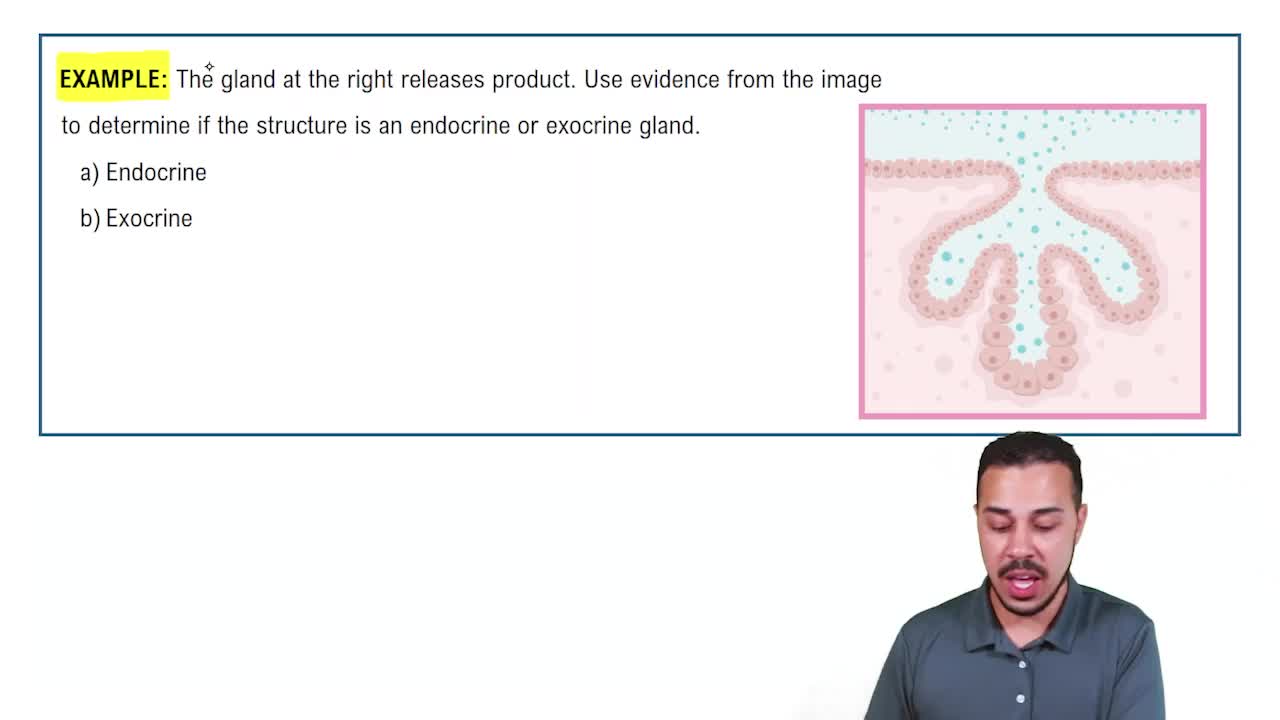
Exocrine Glands
Secrete products onto body surfaces or cavities using ducts.
Endocrine Glands
Release hormones directly into the bloodstream without using ducts.
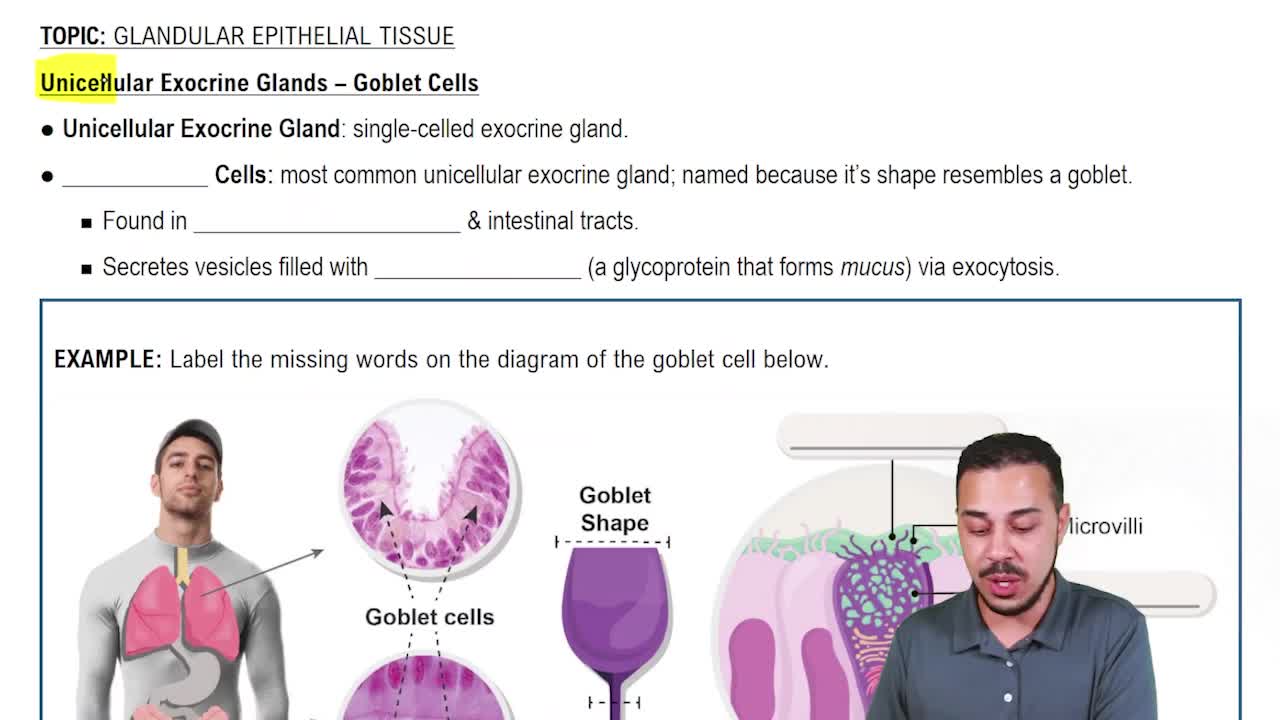
Goblet Cells
Unicellular exocrine glands that secrete mucin, found in respiratory and intestinal tracts.
Mucin
A glycoprotein secreted by goblet cells that forms mucus for lubrication and protection.
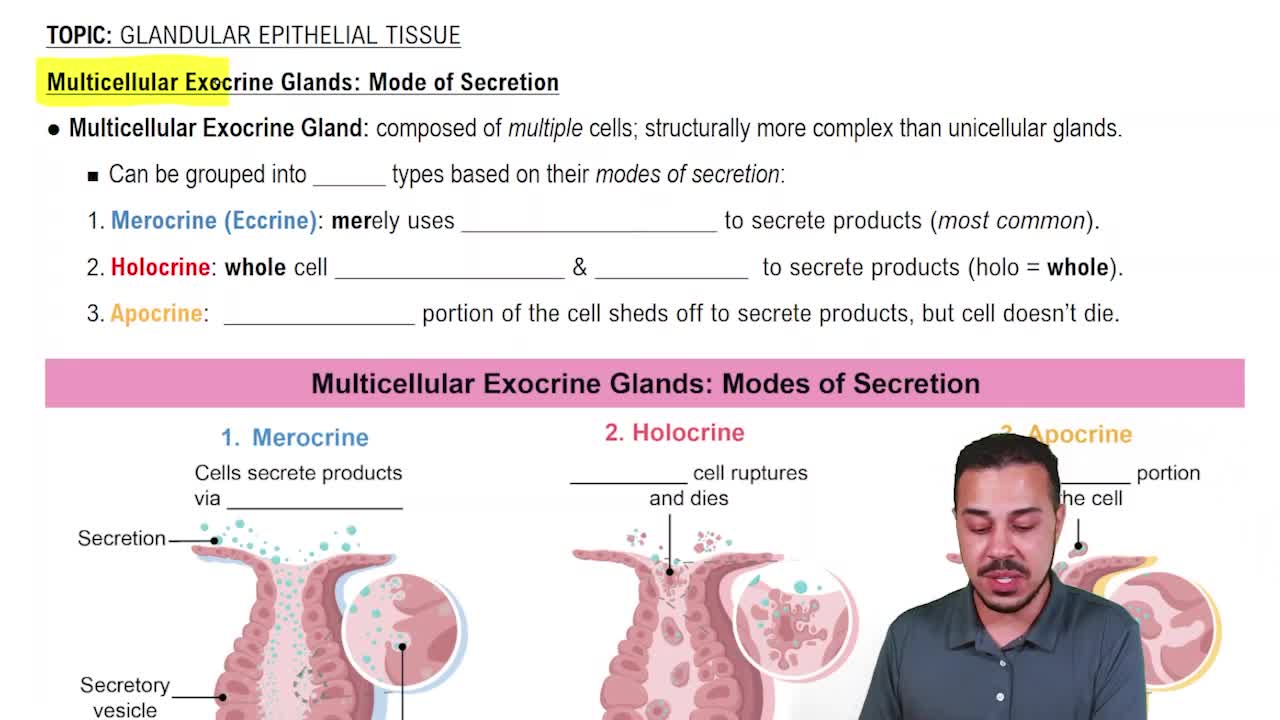
Merocrine Secretion
Mode of secretion where products are released via exocytosis without cell damage.
Holocrine Secretion
Mode of secretion where the whole cell ruptures and dies to release its product.
Apocrine Secretion
Mode of secretion where the apical portion of the cell sheds off without cell death.
Ducts
Structures used by multicellular exocrine glands to release products onto surfaces or cavities.
Hormones
Chemical messengers released by endocrine glands affecting distant organs.
Sebaceous Glands
Glands that use holocrine secretion to release oil.
Mammary Glands
Glands that use apocrine secretion to release milk.
Salivary Glands
Glands that use merocrine secretion to produce saliva.
Microvilli
Projections on goblet cells important for absorption.
Bloodstream
The network through which endocrine secretions travel to affect distant organs.
 BackBack
 01:53
01:53