Homeostasis definitions Flashcards

Homeostasis definitions
Control buttons has been changed to "navigation" mode.
1/15
  • Homeostasis
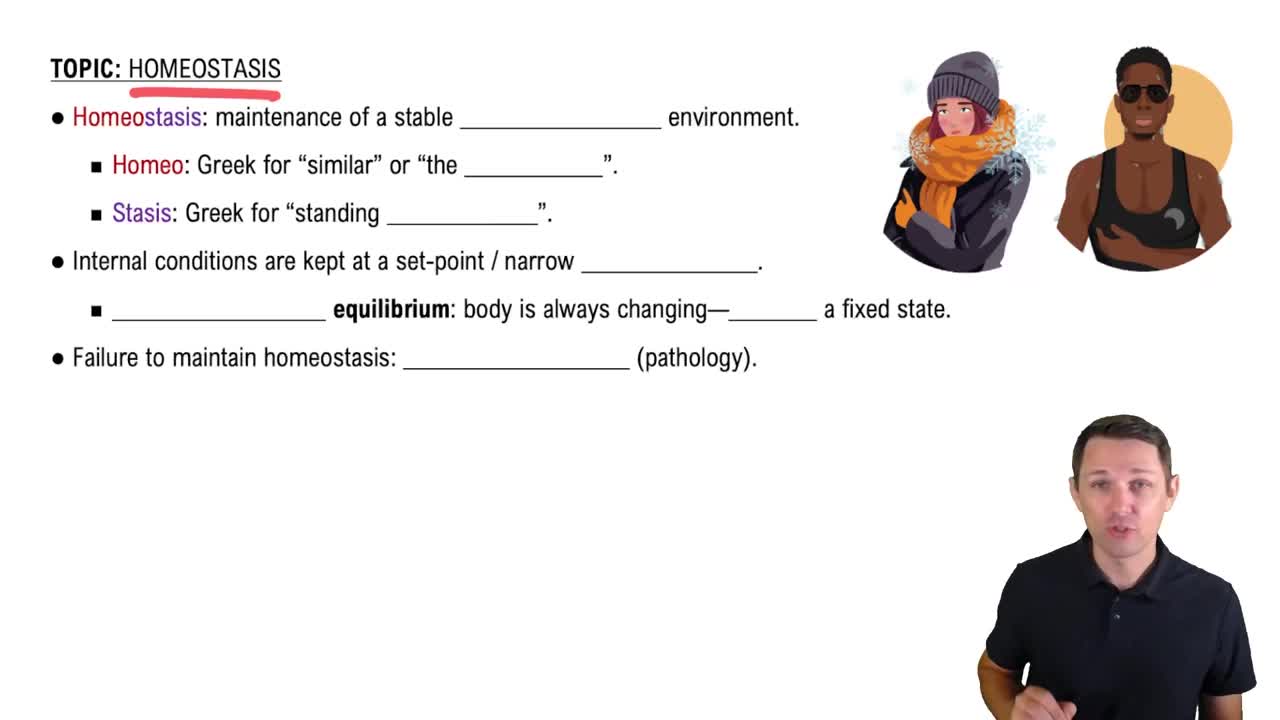
    Maintenance of a stable internal environment, crucial for physiological processes, despite external changes.
  • Fluid levels
    Regulation of the amount of water and other fluids within the body to maintain balance.
  • Nutrient levels
    Control of the concentration of essential nutrients in the body to support cellular functions.
  • Body chemistry
    Balance of chemical substances in the body, including electrolytes and pH levels.
  • Waste levels
    Management of the accumulation and removal of metabolic waste products from the body.
  • Oxygen levels
    Regulation of oxygen concentration in the blood and tissues to support cellular respiration.
  • Body temperature
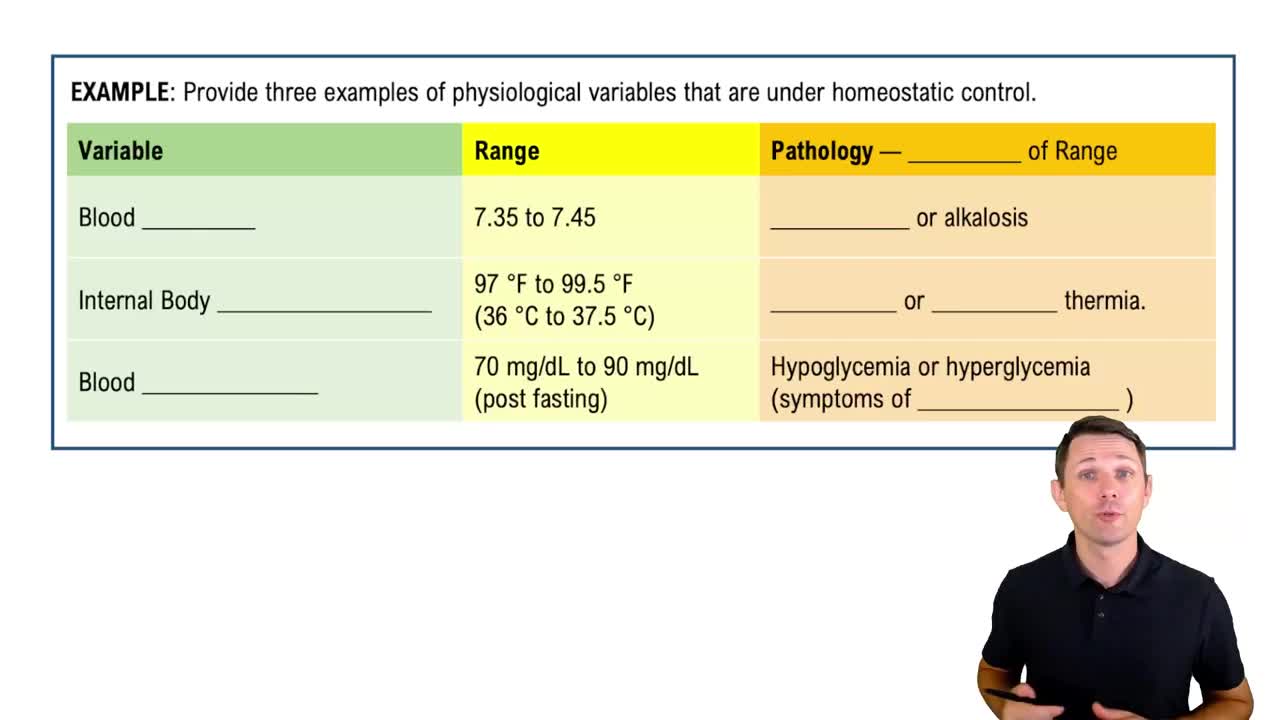
    Maintenance of a consistent internal temperature despite external temperature variations.
  • Dynamic equilibrium
    State of balance within the body where internal conditions are constantly adjusted to maintain stability.
  • Set point
    Target value or narrow range within which a physiological parameter is maintained.
  • External conditions
    Environmental factors outside the body that can influence internal physiological states.
  • Disease state
    Condition resulting from the failure to maintain homeostasis, leading to pathology.
  • Pathology
    Study of disease states and the structural and functional changes they cause in the body.
  • Physiology
    Branch of biology that deals with the normal functions of living organisms and their parts.
  • Internal environment
    Conditions within the body that are regulated to maintain homeostasis.
  • Greek
    Language from which the term 'homeostasis' is derived, combining 'homeo' (similar) and 'stasis' (standing still).