Introduction to Chemical Bonding definitions Flashcards

Introduction to Chemical Bonding definitions
Control buttons has been changed to "navigation" mode.
1/15
  • Chemical Bonds
    Attractive forces that hold atoms together to form molecules or compounds.
  • Molecules
    Substances containing at least two chemically bound atoms, which can be of the same or different elements.
  • Compounds
    Specific molecules composed of at least two different elements.
  • Chemical Formula
    Notation revealing the number and type of atoms in a molecule or compound.
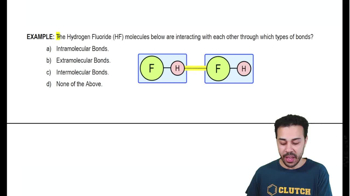
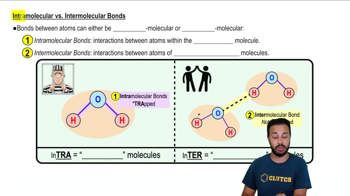
  • Intramolecular Bonds
    Interactions between atoms within the same molecule.
  • Intermolecular Bonds
    Interactions between atoms of different molecules.
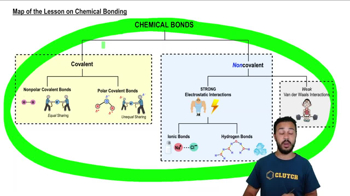
  • Covalent Bonds
    Chemical bonds formed by the sharing of electron pairs between atoms.
  • Nonpolar Covalent Bonds
    Covalent bonds where electrons are shared equally between atoms.
  • Polar Covalent Bonds
    Covalent bonds where electrons are shared unequally, creating partial charges.
  • Ionic Bonds
    Strong electrostatic interactions between oppositely charged ions.
  • Hydrogen Bonds
    Weak bonds between a hydrogen atom and an electronegative atom.
  • Van der Waals Interactions
    Weak attractions between molecules due to temporary dipoles.
  • Electrostatic Interactions
    Forces between charged particles, significant in ionic and hydrogen bonds.
  • Oxygen Gas
    A molecule consisting of two oxygen atoms chemically bound together.
  • Glucose
    A compound with the chemical formula C6H12O6, consisting of carbon, hydrogen, and oxygen.