Skip to main content
Anatomy & Physiology
My Course
Learn
Exam Prep
AI Tutor
Study Guides
Textbook Solutions
Flashcards
Explore
Try the app
My Course
Learn
Exam Prep
AI Tutor
Study Guides
Textbook Solutions
Flashcards
Explore
Try the app
Back
Introduction to Joints quiz #2
You can tap to flip the card.
What part of the radius articulates with the humerus?
You can tap to flip the card.
👆
What part of the radius articulates with the humerus?
The head of the radius
Track progress
Control buttons has been changed to "navigation" mode.
1/40
Related flashcards
Related practice
Recommended videos
Introduction to Joints definitions
Introduction to Joints
15 Terms
Introduction to Joints quiz #1
Introduction to Joints
39 Terms
Introduction to Joints quiz #3
Introduction to Joints
40 Terms
Introduction to Joints
8. Joints
4 problems
Topic
Jason
Classification of Joints
8. Joints
4 problems
Topic
Bruce
8. Joints
6 topics
14 problems
Chapter
Bruce
Guided course
04:06
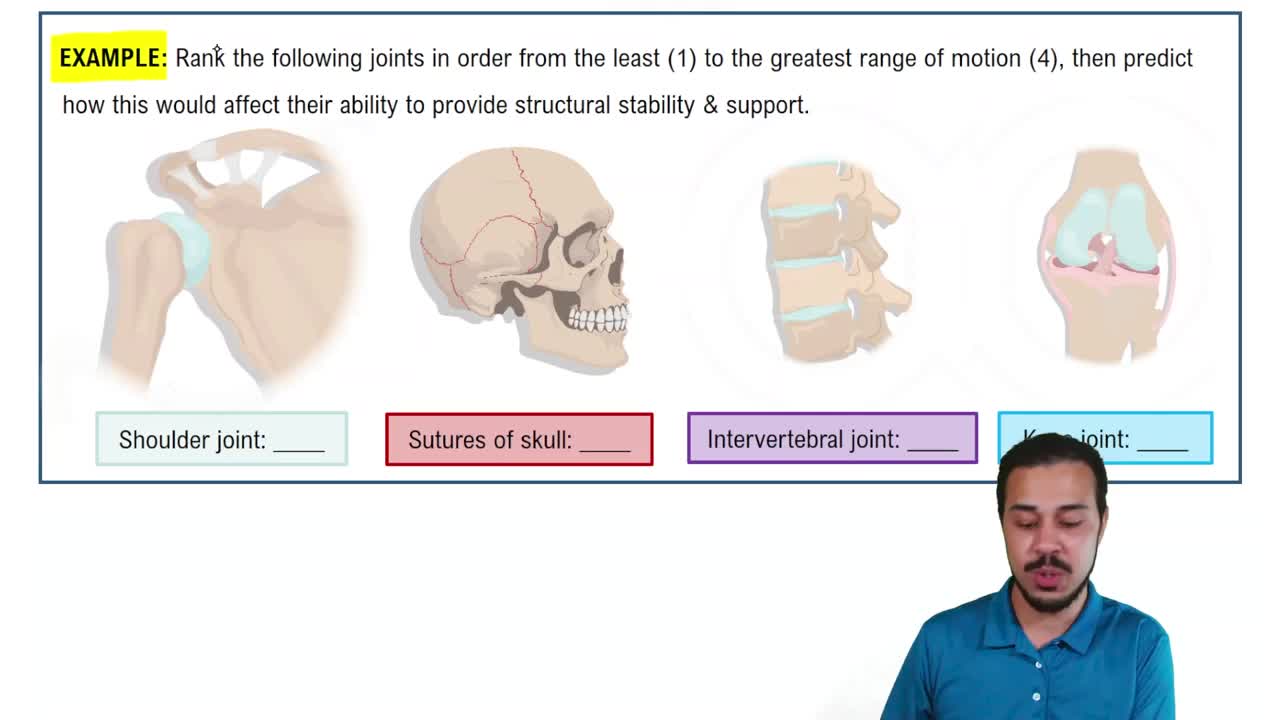
Introduction to Joints Example 1
11398
views
258
rank
Guided course
05:29
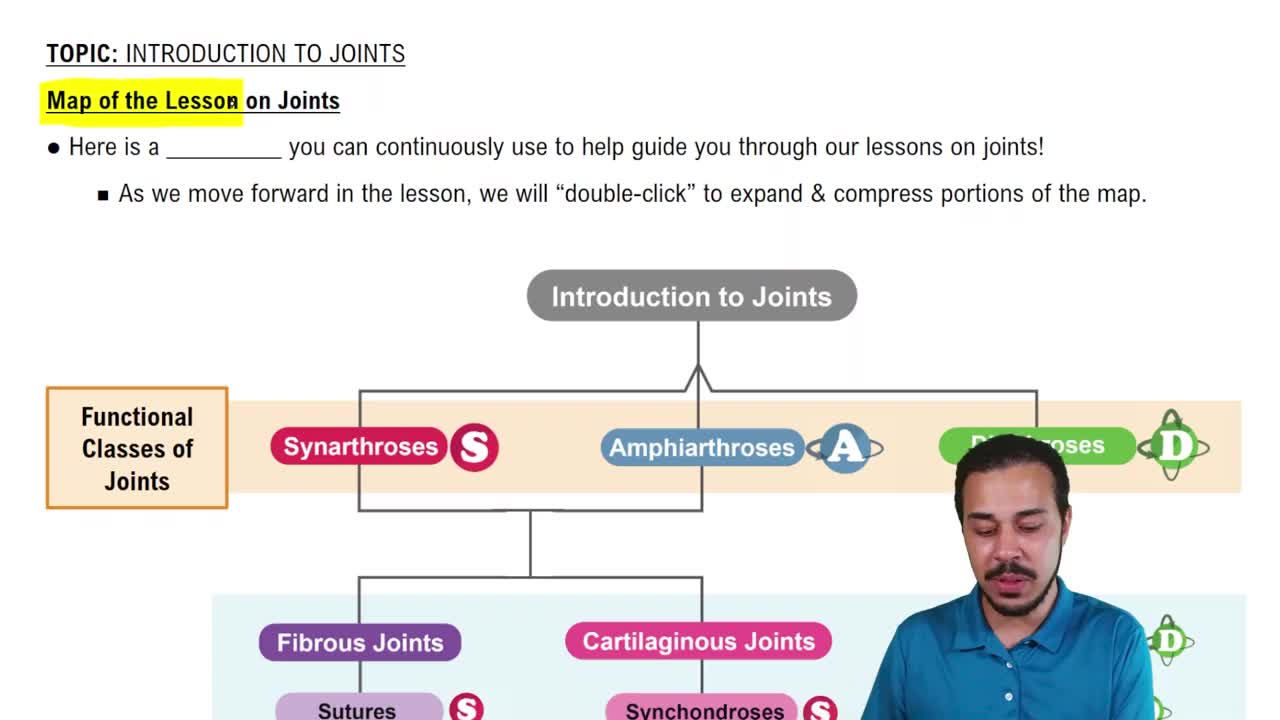
Map of the Lesson on Joints
11921
views
255
rank
1
comments
Guided course
05:39
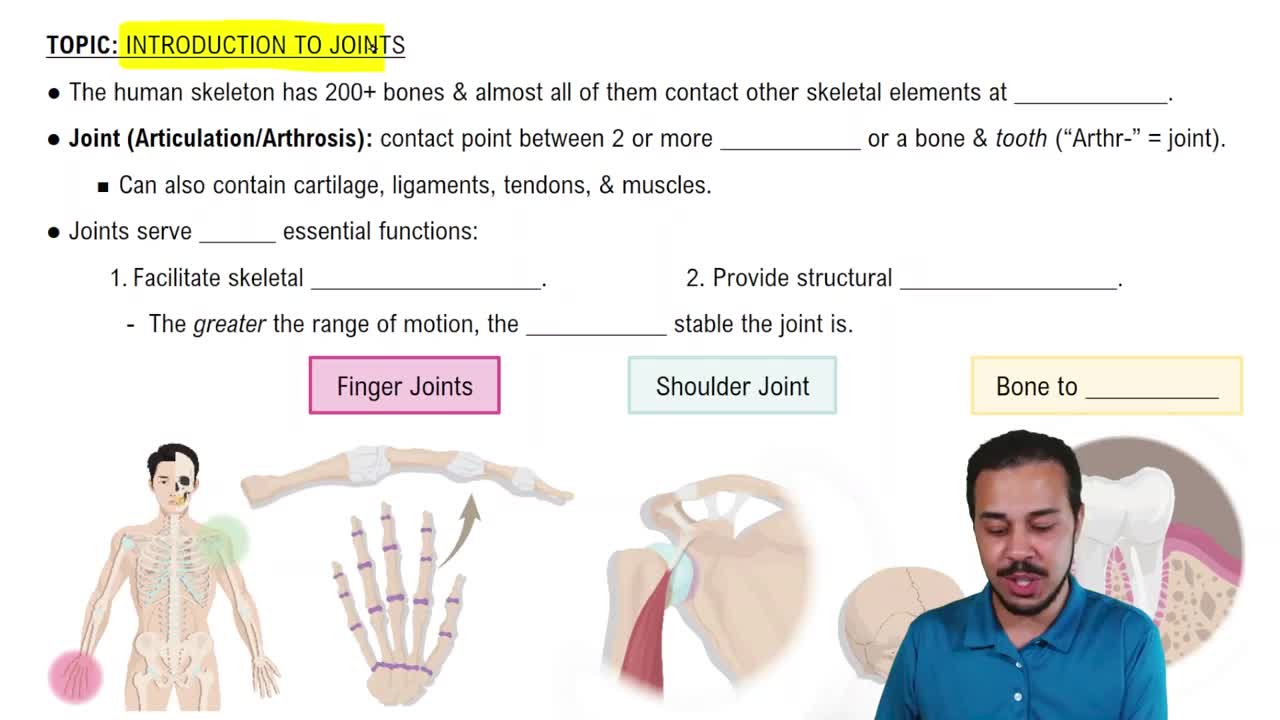
Introduction to Joints
16034
views
410
rank
Terms in this set (40)
Hide definitions
What part of the radius articulates with the humerus?
The head of the radius
What is the name of the connective tissue membrane found lining the joint cavities?
Synovial membrane
The epiphyseal plate in a growing bone is an example of what type of joint?
A synchondrosis, which is a type of cartilaginous joint
Which bone is a carpal bone?
a) Scaphoid
In a ball and socket shoulder joint, which bones are involved?
The humerus and the scapula
Each wrist contains how many carpal bones?
Eight
What part of the humerus articulates with the scapula to form the shoulder joint?
The head of the humerus
What is a joint, and what are its alternative names?
A joint is a contact point between two or more bones, or between a bone and a tooth. It is also known as an articulation or an arthrosis.
How does the relationship between joint mobility and stability work?
Joint mobility and stability are inversely related; greater mobility means less stability, and greater stability means less mobility.
What structures can be found in or around joints?
Joints may contain cartilage (such as hyaline or fibrocartilage), ligaments, tendons, and muscles.
What is the functional classification of joints based on?
Functional classification of joints is based on the amount of movement they allow.
What is a synarthrosis joint?
A synarthrosis is an immovable joint that does not allow any movement.
What is a diarthrosis joint?
A diarthrosis is a freely movable joint that allows for a wide range of movement.
What are examples of fibrous joints?
Examples of fibrous joints include sutures, gomphoses, and syndesmoses.
What is a synovial joint?
A synovial joint is a type of joint that allows for dynamic, free movement and is always classified as a diarthrosis.
Which structural class of joint includes sutures, gomphoses, and syndesmoses?
Fibrous joints include sutures, gomphoses, and syndesmoses.
Which type of fibrous joint is classified as an amphiarthrosis?
Syndesmoses are fibrous joints classified as amphiarthroses (slightly movable).
Which type of cartilaginous joint is classified as an amphiarthrosis?
Symphyses are cartilaginous joints classified as amphiarthroses (slightly movable).
What is the function of ligaments in joints?
Ligaments connect bone to bone and help stabilize joints.
What is the difference between a ligament and a tendon?
Ligaments connect bone to bone, while tendons connect muscle to bone.
Why are teeth not considered bones?
Teeth are not considered bones because they have a different composition.
Which joint is an example of a highly stable but less mobile joint?
The tooth-to-bone (gomphosis) joint is highly stable but less mobile.
What is the role of cartilage in joints?
Cartilage provides cushioning and reduces friction between bones at joints.
What is a suture joint?
A suture is a type of fibrous joint found between bones of the skull, classified as a synarthrosis (immovable).
What is a syndesmosis joint?
A syndesmosis is a fibrous joint where bones are connected by a ligament, allowing slight movement (amphiarthrosis).
What is a symphysis joint?
A symphysis is a cartilaginous joint where bones are joined by fibrocartilage, allowing slight movement (amphiarthrosis).
What is the function of synovial fluid?
Synovial fluid lubricates the joint, reducing friction and allowing smooth movement.
What is the main function of amphiarthroses?
Amphiarthroses provide limited movement while maintaining some stability.
What is the main function of diarthroses?
Diarthroses allow for dynamic, free movement between bones.
What is the significance of the map or table of contents in the lesson on joints?
The map serves as a guide to the functional and structural classes of joints, helping organize and navigate the lesson content.
What is the difference between a bone-to-bone and a bone-to-tooth joint?
Bone-to-bone joints connect two bones, while bone-to-tooth joints connect a bone to a tooth; both are considered joints.
What is the importance of joint mobility?
Joint mobility is important for allowing movement and flexibility in the skeleton.
What is an example of a freely movable joint?
The shoulder joint is an example of a freely movable joint (diarthrosis).
What is the function of fibrocartilage in joints?
Fibrocartilage provides strength and shock absorption in joints such as symphyses.
What is the difference between a plane joint and a ball-and-socket joint?
A plane joint allows gliding movements, while a ball-and-socket joint allows movement in multiple directions, including rotation.
What is the function of the finger joints?
Finger joints allow flexion and extension, enabling hand movement and dexterity.
What is the function of the knee joint?
The knee joint allows flexion and extension of the leg, supporting walking and running.
What is the function of the elbow joint?
The elbow joint allows flexion and extension of the forearm.
What is the function of the vertebral joints?
Vertebral joints allow flexibility and movement of the spine while protecting the spinal cord.
What is the function of the interphalangeal joints?
Interphalangeal joints allow bending and straightening of the fingers and toes.
 BackBack

 04:06
04:06