Introduction to the Integumentary System definitions Flashcards

Introduction to the Integumentary System definitions
5 students found this helpful
Control buttons has been changed to "navigation" mode.
1/15
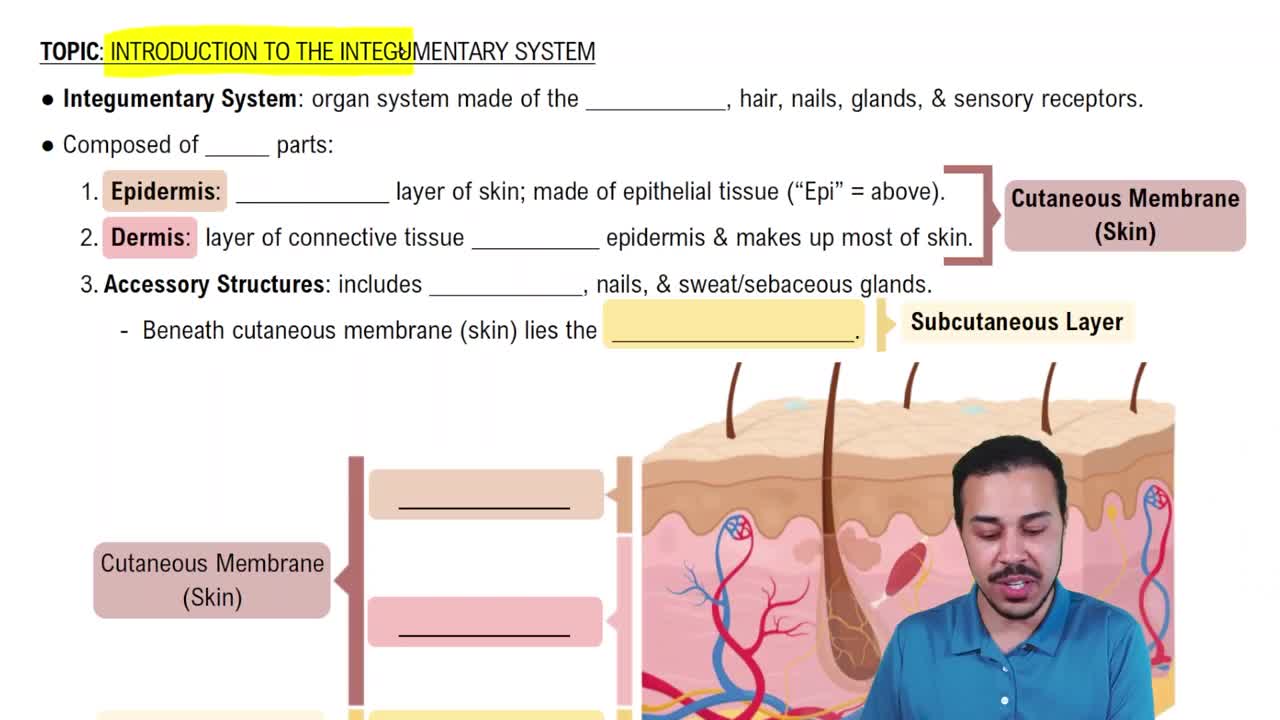
  • Integumentary System
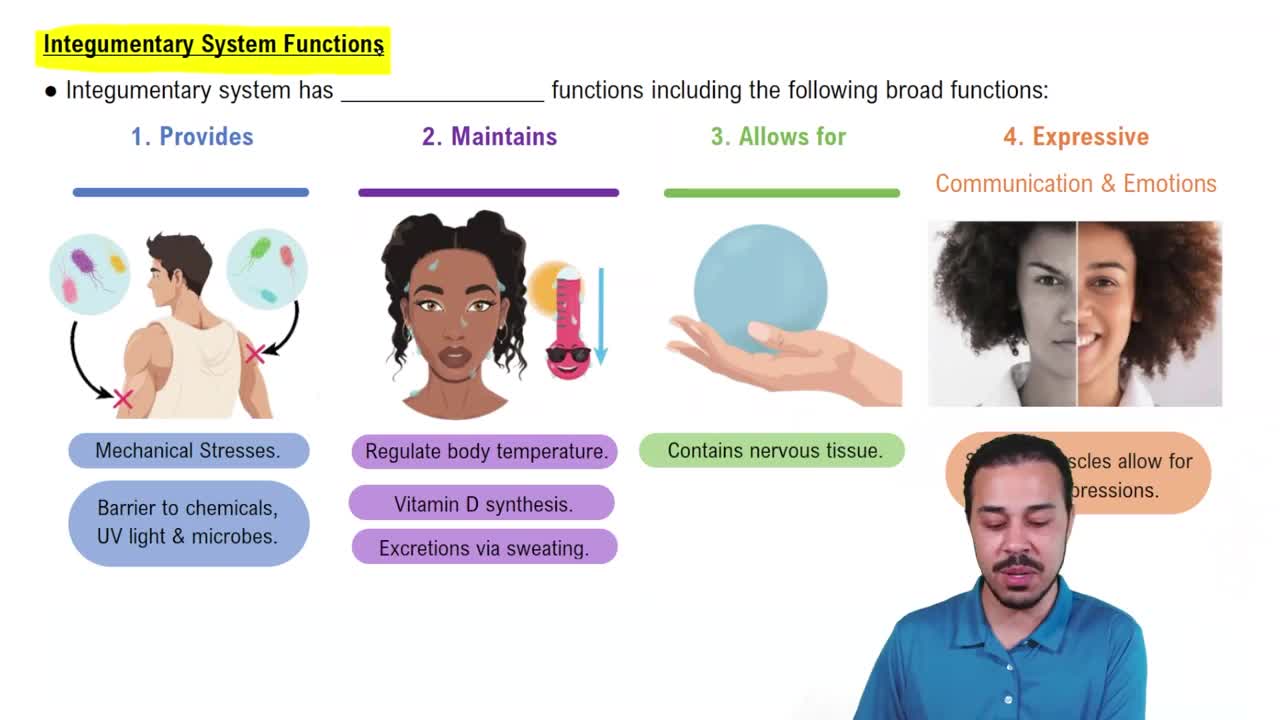
    Comprises skin, hair, nails, glands, and sensory receptors, providing protection, sensation, and homeostasis.
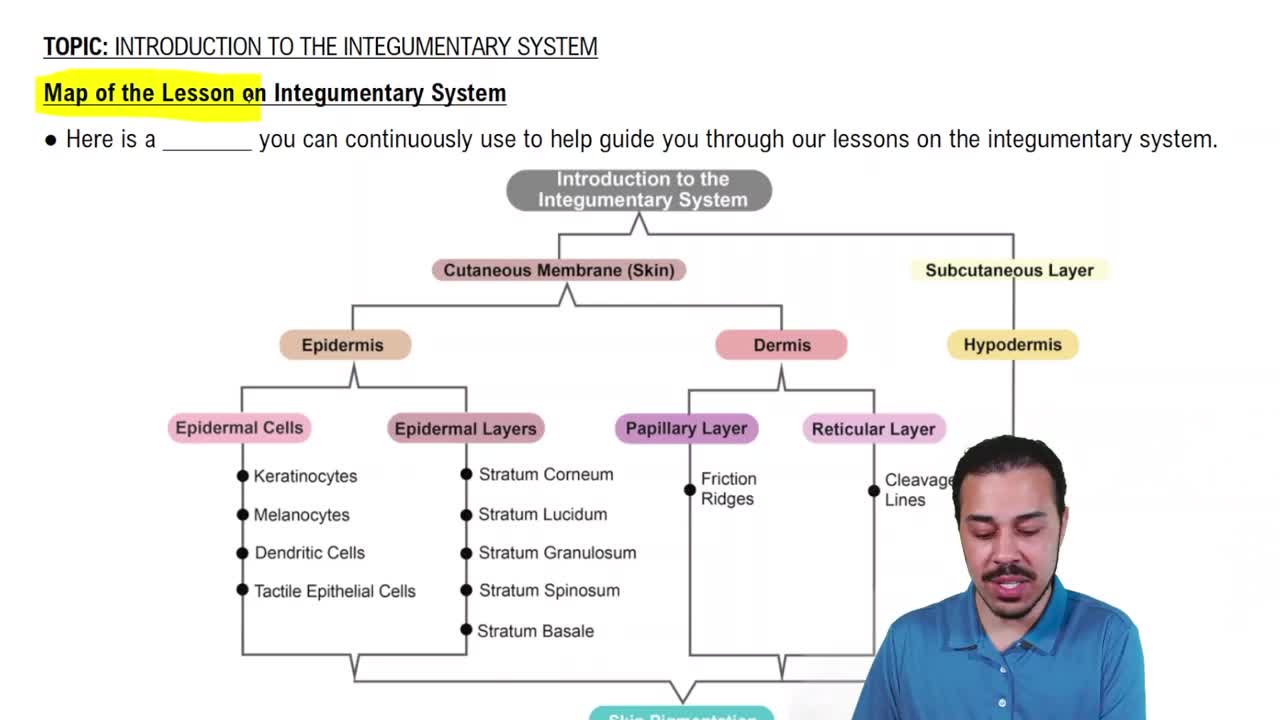
  • Epidermis
    Outermost skin layer made of stratified squamous epithelial tissue, providing a barrier to the external environment.
  • Dermis
    Layer beneath the epidermis, composed mainly of connective tissue, housing blood vessels, nerves, and glands.
  • Hypodermis
    Subcutaneous layer beneath the skin, consisting of fat and connective tissue, providing insulation and cushioning.
  • Cutaneous Membrane
    Another term for skin, consisting of the epidermis and dermis, serving as a protective barrier.
  • Accessory Structures
    Includes hair, nails, sweat glands, and sebaceous glands, contributing to the skin's functions.
  • Stratified Squamous Epithelium
    Type of epithelial tissue in the epidermis, consisting of multiple layers of flat cells.
  • Homeostasis
    Process of maintaining stable internal conditions despite external changes, aided by the integumentary system.
  • Keratinocytes
    Cells in the epidermis responsible for producing keratin, a protein that strengthens the skin.
  • Melanocytes
    Cells in the epidermis that produce melanin, contributing to skin pigmentation and UV protection.
  • Sebaceous Glands
    Oil-producing glands in the skin, helping to lubricate and waterproof the skin and hair.
  • Sweat Glands
    Glands in the skin responsible for producing sweat, aiding in temperature regulation and waste excretion.
  • Sensory Receptors
    Nerve endings in the skin that detect sensations such as touch, temperature, and pain.
  • Vitamin D Synthesis
    Process initiated in the skin under UV light, crucial for bone health and calcium regulation.
  • Nonverbal Communication
    Expression of emotions through facial expressions, facilitated by the skin and underlying muscles.