Laws of Thermodynamics definitions Flashcards
Laws of Thermodynamics definitions
You can tap to flip the card.
Control buttons has been changed to "navigation" mode.
1/15
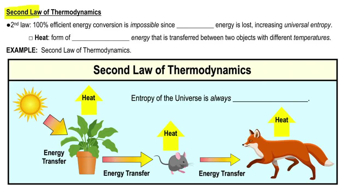
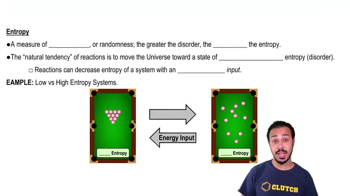
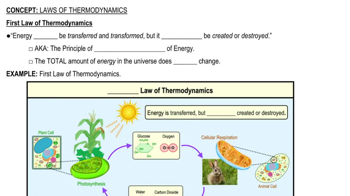
First Law of ThermodynamicsStates that energy can be transferred or transformed but not created or destroyed, ensuring energy conservation.Conservation of EnergyPrinciple stating the total energy in a closed system remains constant, as energy cannot be created or destroyed.PhotosynthesisProcess by which plants convert solar energy into chemical energy, producing glucose and oxygen.Cellular RespirationProcess in which cells convert glucose into ATP, releasing energy for cellular activities.EntropyMeasure of disorder or randomness in a system, with natural processes tending to increase it.Second Law of ThermodynamicsStates that energy conversions are not 100% efficient, leading to increased entropy due to heat loss.Kinetic EnergyEnergy possessed by an object due to its motion, often transferred as heat between objects.Chemical EnergyEnergy stored in chemical bonds, such as glucose, which can be transformed into other energy forms.Solar EnergyEnergy from the sun, which is the primary source of energy for life on Earth.ATPMolecule that stores and transfers energy within cells, used for various cellular processes.HeatForm of kinetic energy transferred between objects of different temperatures, often lost in energy transfers.Universal EntropyOverall disorder of the universe, which increases with every energy transfer due to heat loss.Energy TransferMovement of energy from one object or system to another, often accompanied by heat loss.Energy TransformationConversion of energy from one form to another, such as solar to chemical energy in photosynthesis.DisorderState of randomness in a system, associated with higher entropy and less organization.