Levels of Organization definitions Flashcards
Levels of Organization definitions
12 students found this helpful You can tap to flip the card.
Control buttons has been changed to "navigation" mode.
1/15
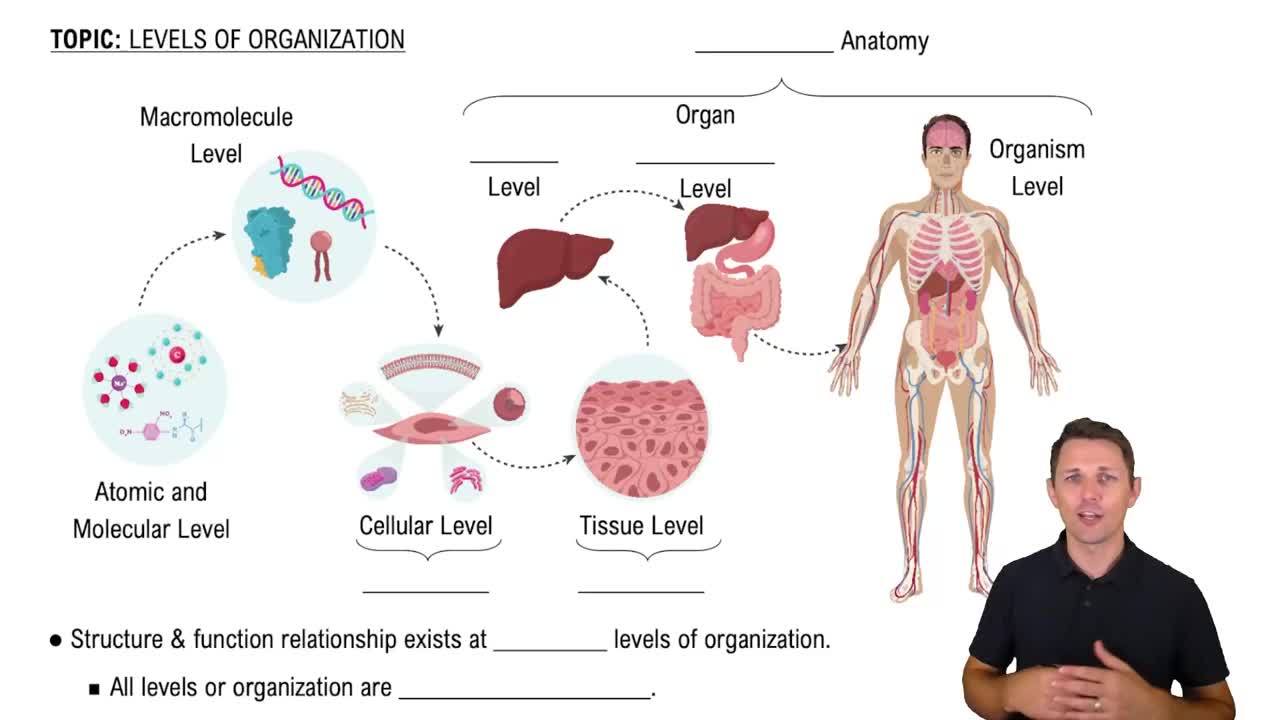
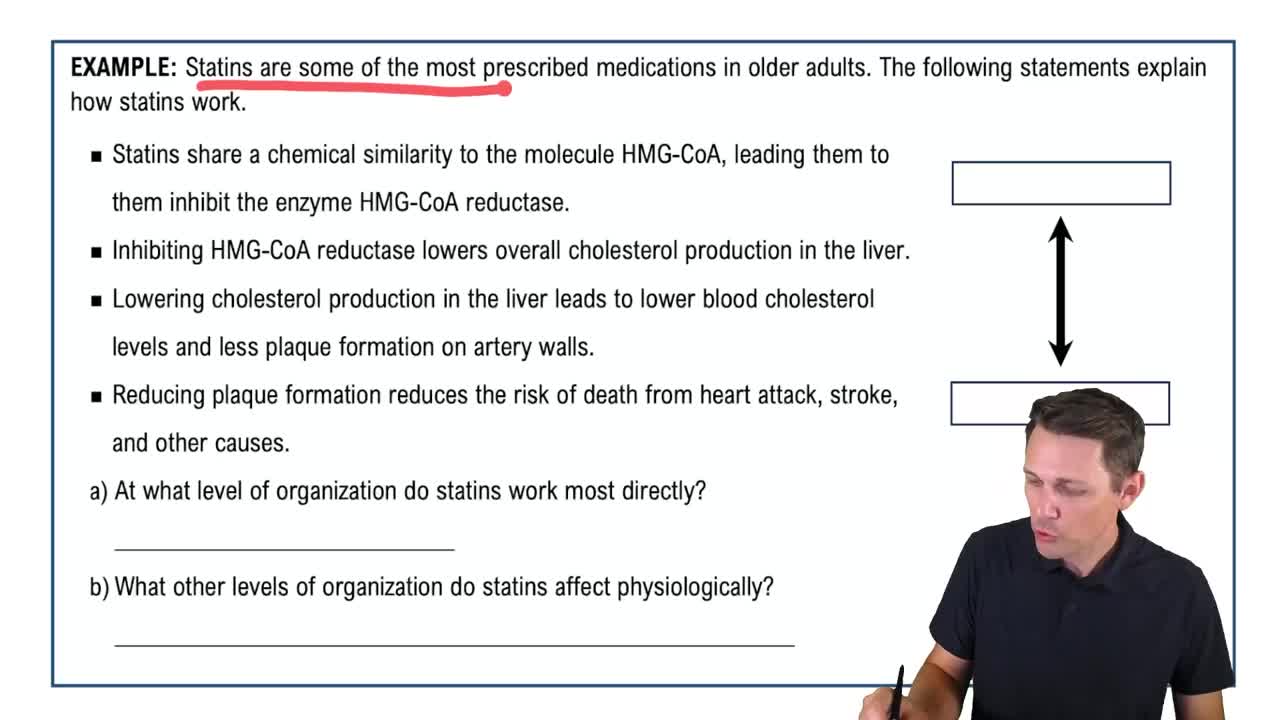
Atomic levelThe smallest level of organization, focusing on the chemistry of the body.Molecular levelInvolves the chemistry of the body, including the properties of ions.Macromolecule levelThe biochemistry of life, including large biomolecules like proteins, enzymes, lipids, DNA, and RNA.Cellular levelThe basic unit of life, including organelles and cell parts.Tissue levelGroups of cells performing a common function.Organ levelGroups of tissues working together to perform a common function.Organ system levelA group of organs working together to perform one common function.Organismal levelThe highest level of organization, encompassing the entire organism.CytologyThe study of cells and their functions.HistologyThe study of tissues and their structures.Gross anatomyThe study of anatomy that does not require a microscope, often involving dissections.Structure-function relationshipThe concept that the structure of a biological entity determines its function.IonsCharged particles that are essential for various physiological processes.Lipid bilayersStructures that form the basis of cell membranes, crucial for cellular function.EnzymesProteins that catalyze biochemical reactions, essential for metabolism.