What are the main components of the respiratory mucosa, and what is its function in the body's first line of defense?
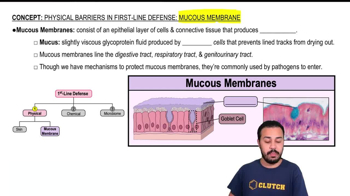
The respiratory mucosa consists of an epithelial layer and connective tissue, with goblet cells producing mucus. Its function is to trap microbes and prevent the respiratory tract from drying out, serving as a physical barrier in the body's first line of defense.
What type of fluid is mucus and which cells are primarily responsible for its production?
Mucus is a slightly viscous glycoprotein fluid. Goblet cells are primarily responsible for producing its components.
Which body tracts are lined by mucous membranes to provide protection?
Mucous membranes line the digestive, respiratory, and genitourinary tracts. These linings help protect these areas from drying out and from pathogen entry.
How do mucous membranes contribute to the elimination of trapped microbes?
Mucous membranes trap microbes in mucus, which can then be moved out of the body. This movement helps eliminate microbes before they can cause harm.
What is the role of cilia in the mucociliary escalator?
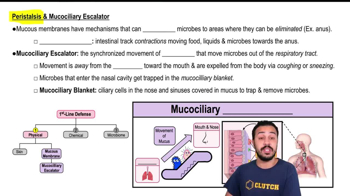
Cilia are small hair-like projections that move in a coordinated fashion to transport mucus and trapped microbes out of the respiratory tract. This action directs them toward the mouth or nose for expulsion or swallowing.
What happens to microbes that are swallowed after being moved by the mucociliary escalator?
Swallowed microbes enter the digestive tract. They can then be eliminated from the body through peristalsis.
What is the mucociliary blanket and where is it found?
The mucociliary blanket is a layer of mucus and ciliated cells found in the nasal cavity and sinuses. Its function is to trap and remove microbes that enter through the nose.
How does peristalsis aid in the body's first line of defense?
Peristalsis involves muscle contractions in the intestinal tract that move ingested substances and microbes toward the anus. This process helps eliminate potentially harmful microbes from the body.
Why are mucous membranes considered common entry points for pathogens despite their protective role?
Mucous membranes are exposed surfaces that line body tracts, making them accessible to pathogens. Even though they trap and remove microbes, some pathogens can still use these membranes to enter the body.
What are two ways microbes trapped in mucus can be expelled from the respiratory tract?
Microbes trapped in mucus can be expelled by coughing or sneezing. Alternatively, they can be swallowed and eliminated through the digestive system.