Propagation of Action Potentials definitions Flashcards

Propagation of Action Potentials definitions
Control buttons has been changed to "navigation" mode.
1/15
  • Propagation
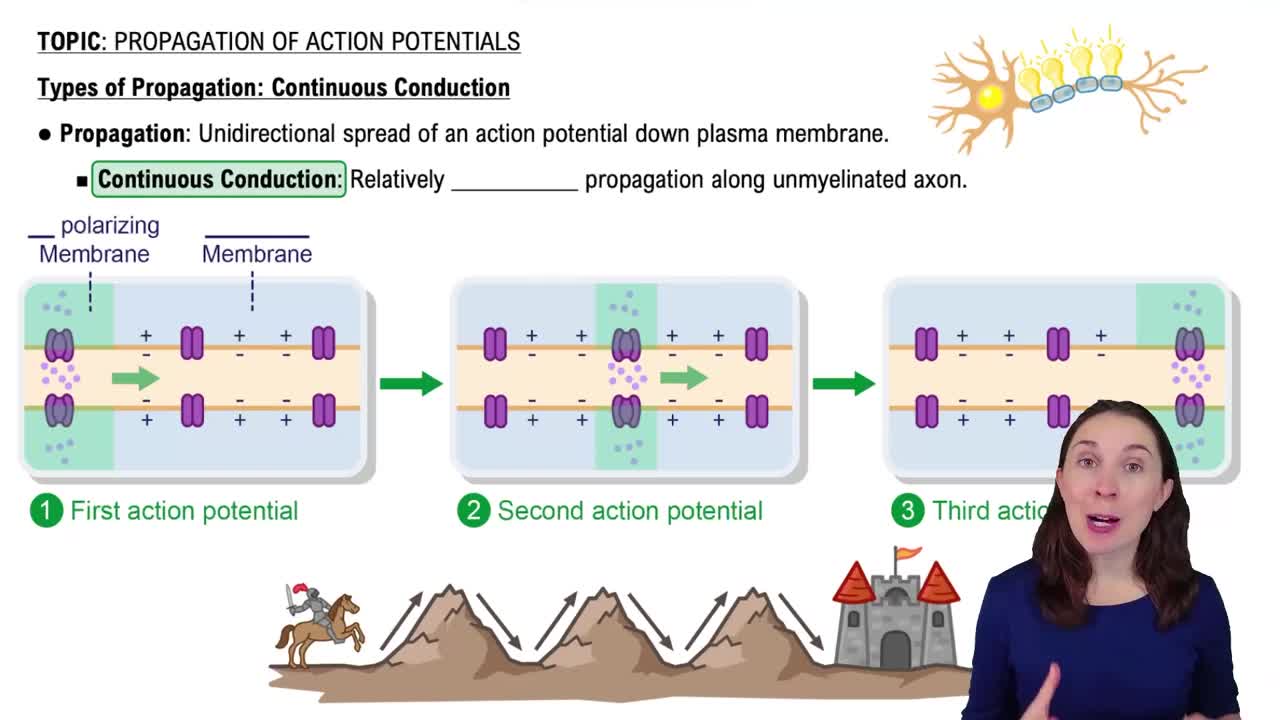
    The unidirectional spread of an action potential down the axon membrane.
  • Action Potential
    A series of events involving depolarization and repolarization of the axon membrane.
  • Continuous Conduction
    A slow propagation along unmyelinated axons where each segment depolarizes sequentially.
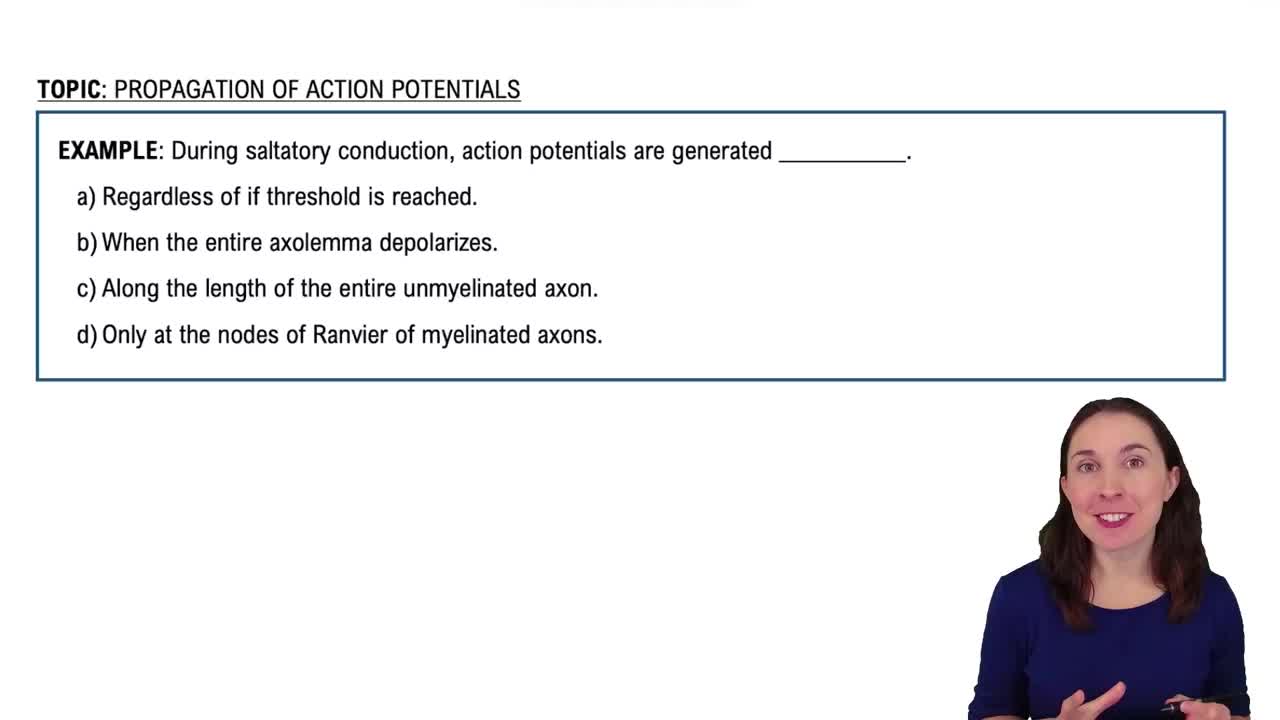
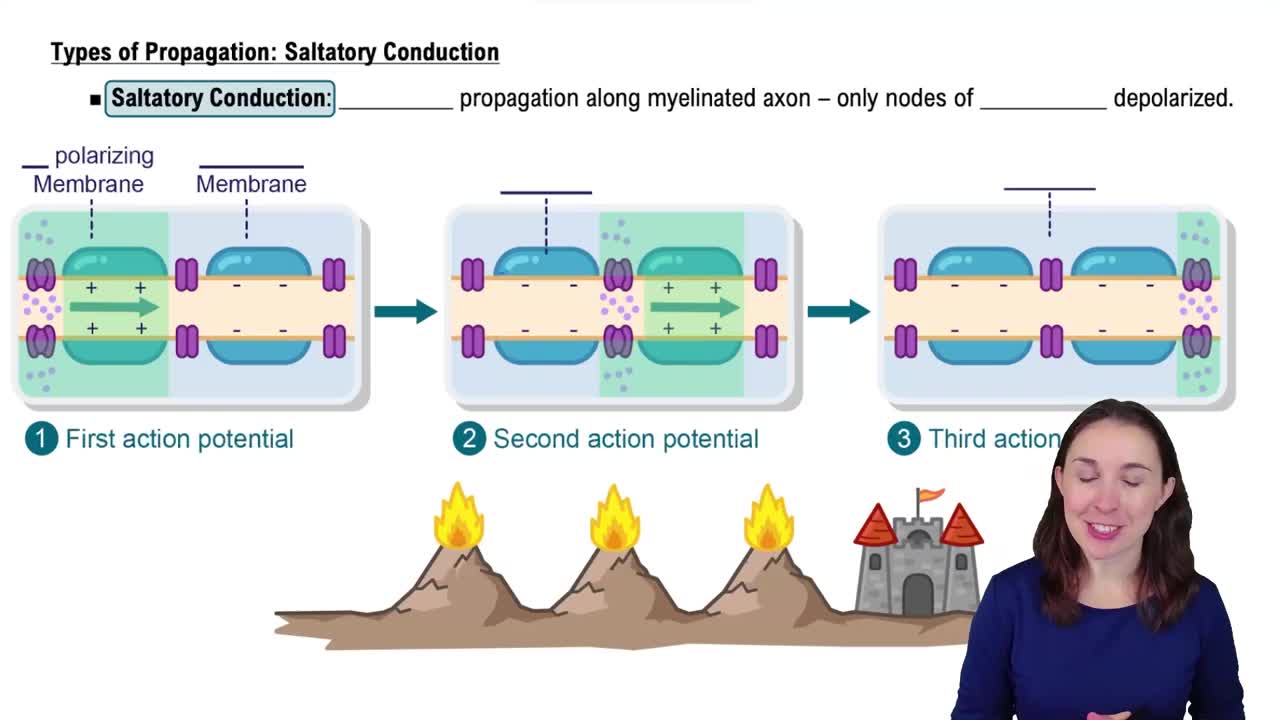
  • Saltatory Conduction
    A rapid propagation along myelinated axons where action potentials leap between nodes of Ranvier.
  • Depolarization
    The process where voltage-gated sodium channels open, allowing sodium ions to enter the axon.
  • Refractory Period
    A period following an action potential during which the axon cannot be depolarized again.
  • Myelin
    An insulating layer around axons that speeds up neural communication by preventing current leakage.
  • Nodes of Ranvier
    Gaps between myelin sheaths where depolarization occurs during saltatory conduction.
  • Voltage-Gated Sodium Channels
    Channels that open in response to changes in membrane potential, allowing sodium ions to enter.
  • Membrane Potential
    The electrical potential difference across the axon membrane, crucial for action potential propagation.
  • Sodium Ions
    Positively charged ions that enter the axon during depolarization, contributing to action potential propagation.
  • Current Leakage
    The loss of electrical current from the axon, prevented by myelin in saltatory conduction.
  • Unmyelinated Axons
    Axons lacking myelin, resulting in slower continuous conduction of action potentials.
  • Myelinated Axons
    Axons covered with myelin, allowing for faster saltatory conduction of action potentials.
  • Latin 'Saltare'
    The origin of the term 'saltatory', meaning to leap, describing the action potential's movement.