Properties of Graded and Action Potentials definitions Flashcards
Properties of Graded and Action Potentials definitions
You can tap to flip the card.
Control buttons has been changed to "navigation" mode.
1/15
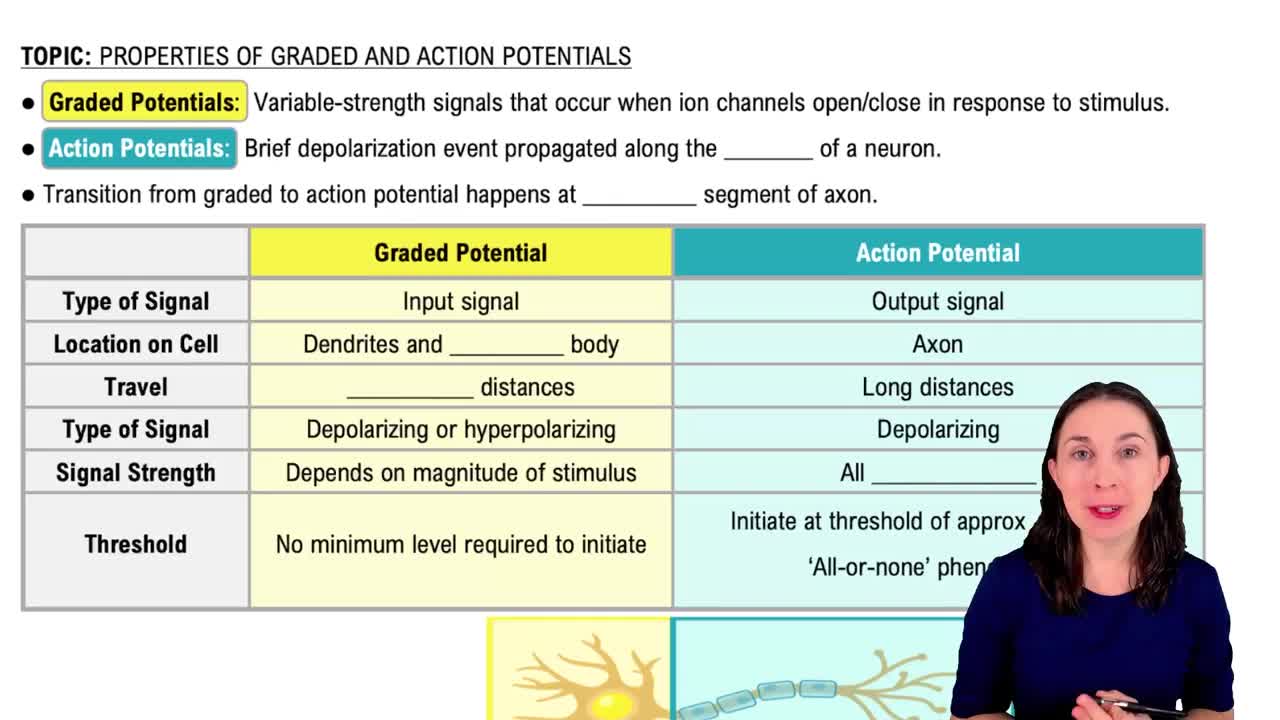
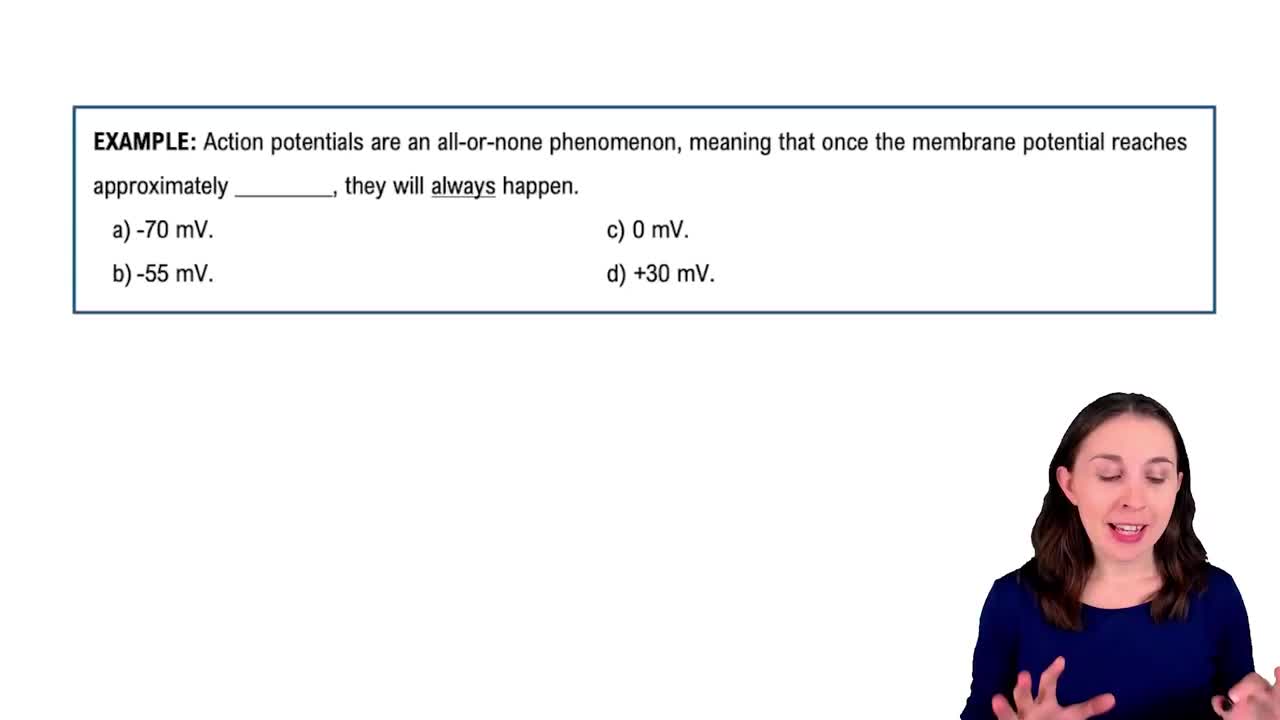
Graded PotentialsVariable strength signals occurring on dendrites or cell body in response to a stimulus.Action PotentialsBrief, uniform depolarization events propagating along the axon, triggered at the initial segment.DepolarizationA process making the membrane more positive, crucial in action potentials.HyperpolarizationA process making the membrane more negative, possible in graded potentials.Initial SegmentThe axon region where graded potentials transition to action potentials.ThresholdThe membrane potential of approximately -55 millivolts required to trigger an action potential.All-or-None PrincipleA concept where action potentials fire only if the threshold is reached, with identical magnitude.DendritesNeuron structures receiving signals, where graded potentials typically occur.AxonNeuron structure sending signals, where action potentials propagate.StimulusAn external factor causing ion channels to open or close, initiating graded potentials.Membrane PotentialThe electrical potential difference across a cell's membrane, crucial for neuron signaling.Resting PotentialThe baseline membrane potential of a neuron, typically around -70 millivolts.Signal StrengthThe magnitude of a stimulus affecting the strength of graded potentials.PropagationThe process of action potentials traveling along the axon.NeuronA nerve cell responsible for receiving and transmitting signals through graded and action potentials.