Properties of Water- Thermal definitions Flashcards
Properties of Water- Thermal definitions
You can tap to flip the card.
Control buttons has been changed to "navigation" mode.
1/15
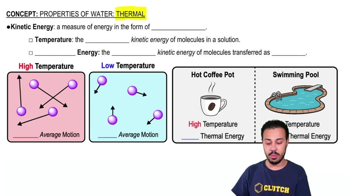
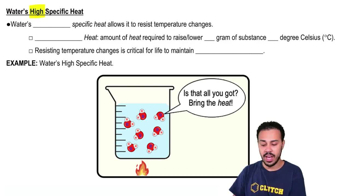
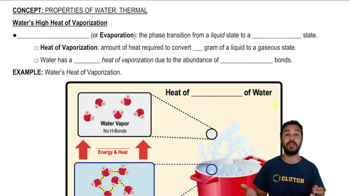
Kinetic EnergyEnergy in the form of motion; substances in motion possess this type of energy.TemperatureAverage kinetic energy of molecules in a sample, indicating the average motion of the molecules.Thermal EnergyTotal kinetic energy of molecules transferred as heat, dependent on both temperature and volume.Specific HeatAmount of heat energy required to raise or lower the temperature of 1 gram of a substance by 1 degree Celsius.HomeostasisMaintenance of stable internal conditions in living organisms despite external environmental changes.Heat of VaporizationAmount of heat energy required to convert 1 gram of a liquid into its gaseous state.Hydrogen BondsStrong intermolecular forces between water molecules, contributing to water's high specific heat and heat of vaporization.EvaporationPhase transition from liquid to gas, requiring significant energy to break intermolecular bonds.Water VaporGaseous form of water, characterized by widely spaced molecules and absence of hydrogen bonds.Liquid WaterState of water where molecules are densely packed and hydrogen bonds are present.VolumeAmount of space occupied by a substance, influencing its thermal energy.Heat EnergyForm of energy transferred between substances due to temperature differences.MoleculesSmallest units of a chemical compound that can take part in a chemical reaction.Phase TransitionChange of a substance from one state of matter to another, such as from liquid to gas.Internal ConditionsStable conditions within an organism necessary for maintaining life processes.