Review of Aerobic Cellular Respiration definitions Flashcards
Review of Aerobic Cellular Respiration definitions
You can tap to flip the card.
Control buttons has been changed to "navigation" mode.
1/15
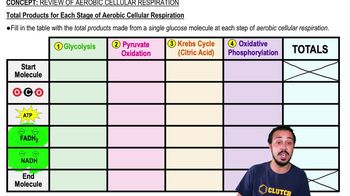
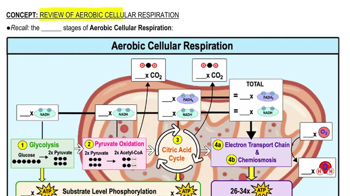
GlycolysisThe first stage of aerobic respiration, breaking down glucose into 2 pyruvates, producing 2 ATP and 2 NADH.Pyruvate OxidationConverts pyruvates into acetyl CoA, yielding 2 NADH and releasing 2 CO2.Krebs CycleA cycle that generates 2 ATP, 6 NADH, and 2 FADH2, releasing 4 CO2 from acetyl CoA.Oxidative PhosphorylationFinal stage producing 26-34 ATP and water, using electron carriers in the electron transport chain.MitochondriaThe organelle where the majority of aerobic cellular respiration occurs.CytoplasmThe cell area where glycolysis occurs, outside the mitochondria.Electron Transport ChainA series of complexes that transfer electrons, building a hydrogen ion gradient for ATP production.ChemiosmosisThe process of ATP generation using a hydrogen ion gradient across a membrane.NADHAn electron carrier produced in glycolysis, pyruvate oxidation, and the Krebs cycle.FADH2An electron carrier produced in the Krebs cycle, used in oxidative phosphorylation.Acetyl CoAA molecule formed from pyruvate, entering the Krebs cycle for further energy extraction.Substrate Level PhosphorylationA method of ATP production occurring in glycolysis and the Krebs cycle.Carbon DioxideA waste product released during pyruvate oxidation and the Krebs cycle.WaterA product formed when oxygen acts as the final electron acceptor in the electron transport chain.ATPThe main energy currency of the cell, produced in various stages of aerobic respiration.