Sensory Receptor Classification by Location definitions Flashcards
Sensory Receptor Classification by Location definitions
You can tap to flip the card.
Control buttons has been changed to "navigation" mode.
1/15
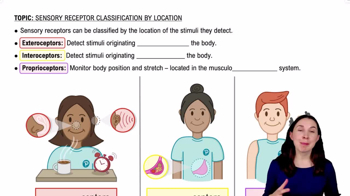
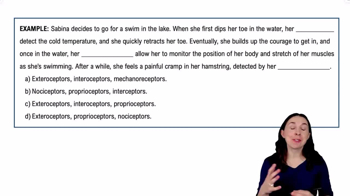
ExteroceptorsDetect external stimuli such as pressure, temperature, and pain on the skin, as well as senses like vision, hearing, and smell.InteroceptorsMonitor internal conditions including pain, chemical composition of fluids, organ stretch, and internal temperature.ProprioceptorsLocated in the musculoskeletal system, they monitor body position and stretch, providing a sense of proprioception.VisceroceptorsAnother term for interoceptors, focusing on monitoring internal organ conditions and visceral stretch.HomeostasisThe body's ability to maintain stable internal conditions despite external changes.Musculoskeletal systemThe organ system that includes muscles, tendons, joints, and connective tissues, crucial for body movement and support.Visceral stretchThe expansion or stretching of internal organs, often detected by interoceptors.ProprioceptionThe sense of body position and movement in space, informed by proprioceptors.StimuliExternal or internal changes that are detected by sensory receptors, triggering a response.PressureA type of external stimulus detected by exteroceptors, often felt on the skin.TemperatureA measure of heat or cold, detected by exteroceptors externally and interoceptors internally.PainAn unpleasant sensation detected by both exteroceptors and interoceptors, indicating potential harm.Chemical compositionThe makeup of internal fluids, monitored by interoceptors to maintain balance and function.Body positionThe orientation of the body in space, monitored by proprioceptors for movement coordination.StretchThe extension or elongation of muscles or tissues, detected by proprioceptors and interoceptors.