Variation in Anatomy & Physiology definitions Flashcards

Variation in Anatomy & Physiology definitions
Control buttons has been changed to "navigation" mode.
1/15
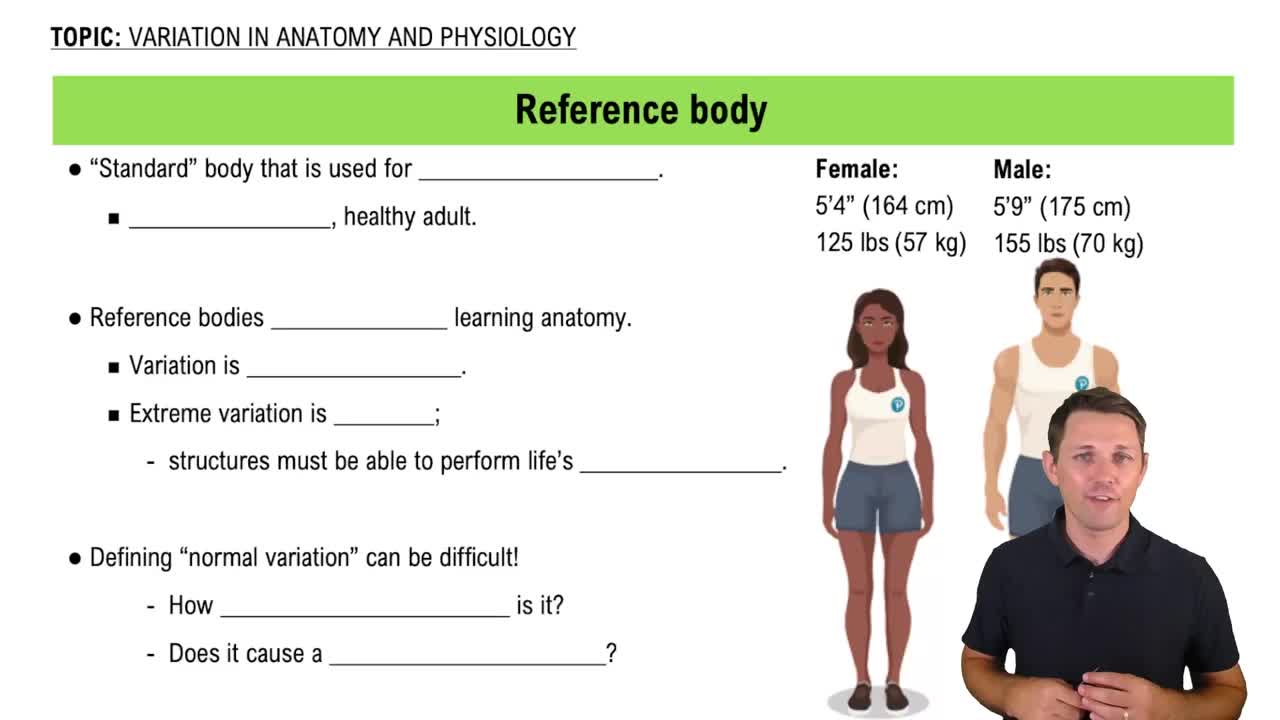
  • Anatomical reference body
    A theoretical, average standard body used for comparison in anatomy and physiology, representing a young, healthy adult.
  • Normal variation
    Differences in anatomical structures that are common and do not cause any problems or impair functions.
  • Abnormal variation
    Differences in anatomical structures that cause problems or impair functions, such as cancer.
  • Vertebrae
    Bones forming the spinal column, with most people having 5 in the lower back, though some may have 4 or 6.
  • Structure-function relationship
    The concept that anatomical structures must be able to perform life's functions, limiting extreme variations.
  • Body fat
    The amount of fat tissue in the body, with the reference body having relatively low levels.
  • Physiology
    The study of how the body and its parts work or function.
  • Cancer
    A disease characterized by abnormal cell growth, considered an abnormal variation due to its severe impact on health.
  • Lower back
    The region of the spine where most people have 5 vertebrae, though some may have 4 or 6.
  • Healthy adult
    An individual without physiological issues, used as a standard in the anatomical reference body.
  • Aging
    The process of becoming older, with the reference body representing someone who hasn't experienced its effects.
  • Body hair
    Hair that grows on the human body, varying in amount and distribution among individuals.
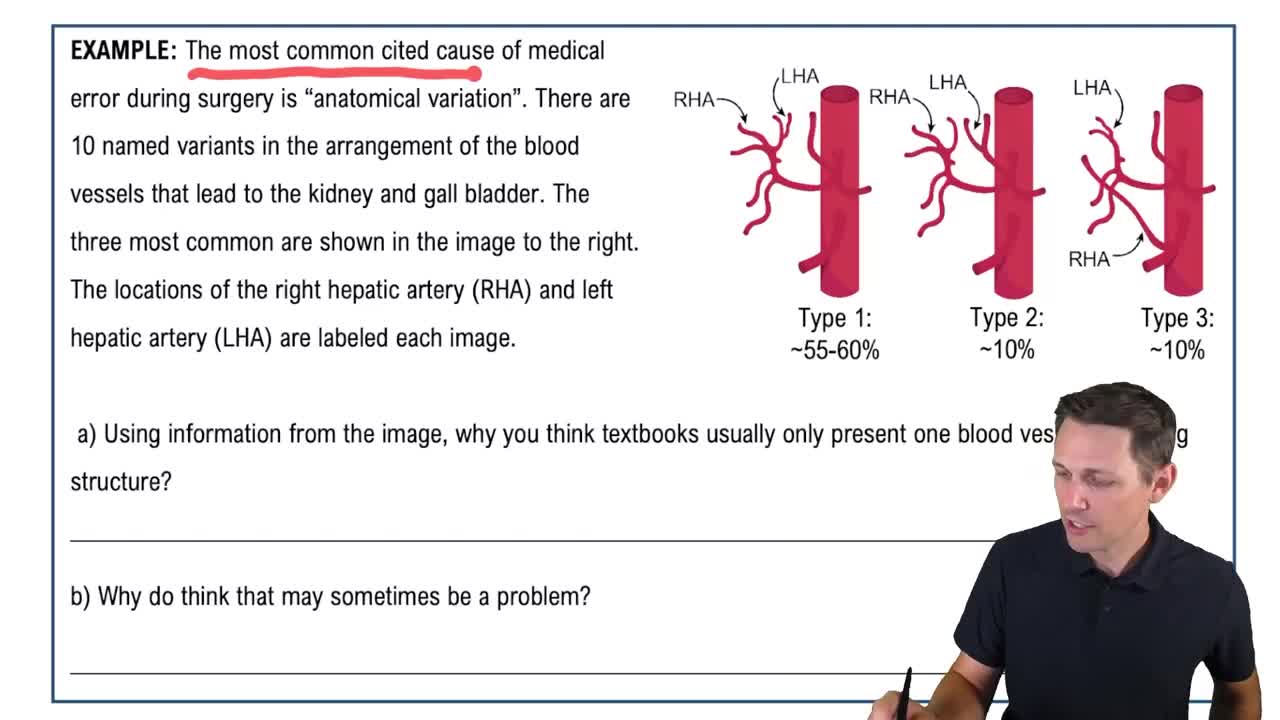
  • Blood vessels
    Tubes in the body through which blood flows, with variations in branching and location among individuals.
  • Skin color
    The pigmentation of the skin, which varies widely among individuals.
  • Hair texture
    The physical feel and appearance of hair, which varies among individuals.