 Back
8B-LE3-Anatomy & Physiology
 04:06

Terms in this set (20)
A synovial joint is a freely movable joint where articulating bones are separated by a fluid-filled cavity called the synovial cavity.
Articular cartilage, synovial membrane, joint capsule, ligaments, and bursae.
The TMJ is a modified hinge joint allowing hinge and gliding movements between the mandible and temporal bone.
Hinge movements (depression and elevation of mandible) and gliding movements (side-to-side grinding).
Because of its structural features allowing both hinge and gliding movements and a relatively weak lateral ligament.
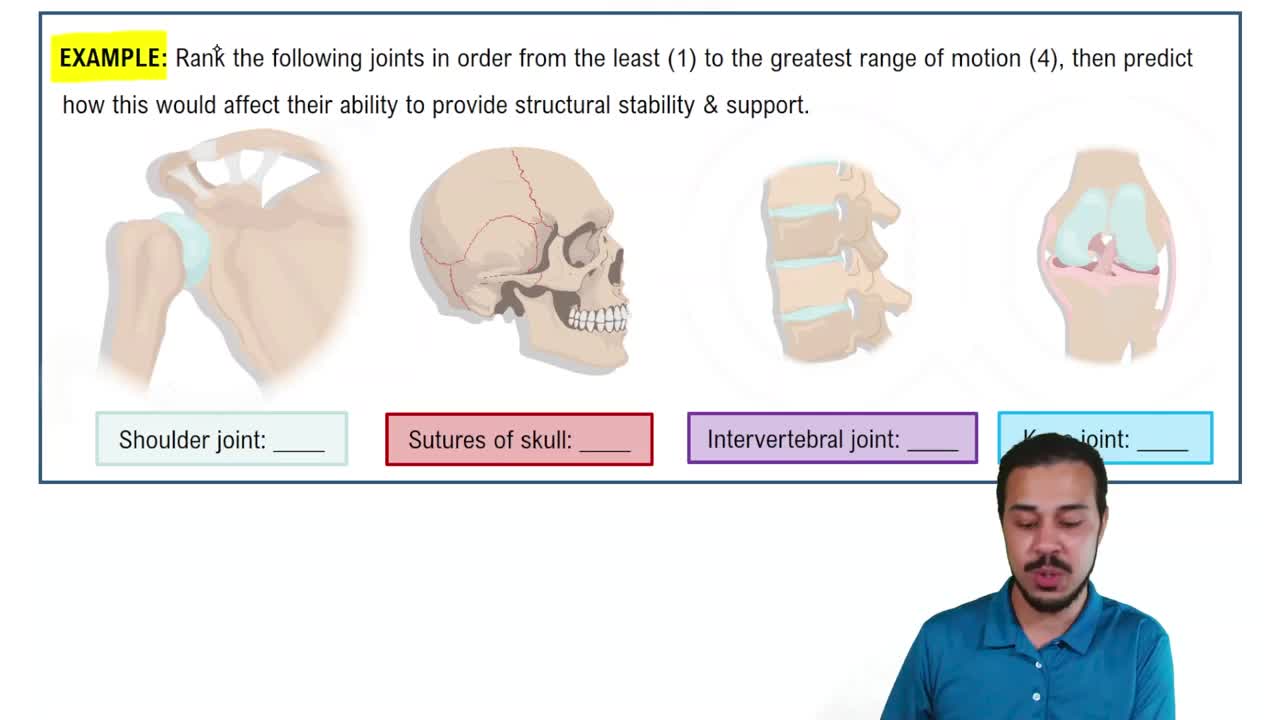
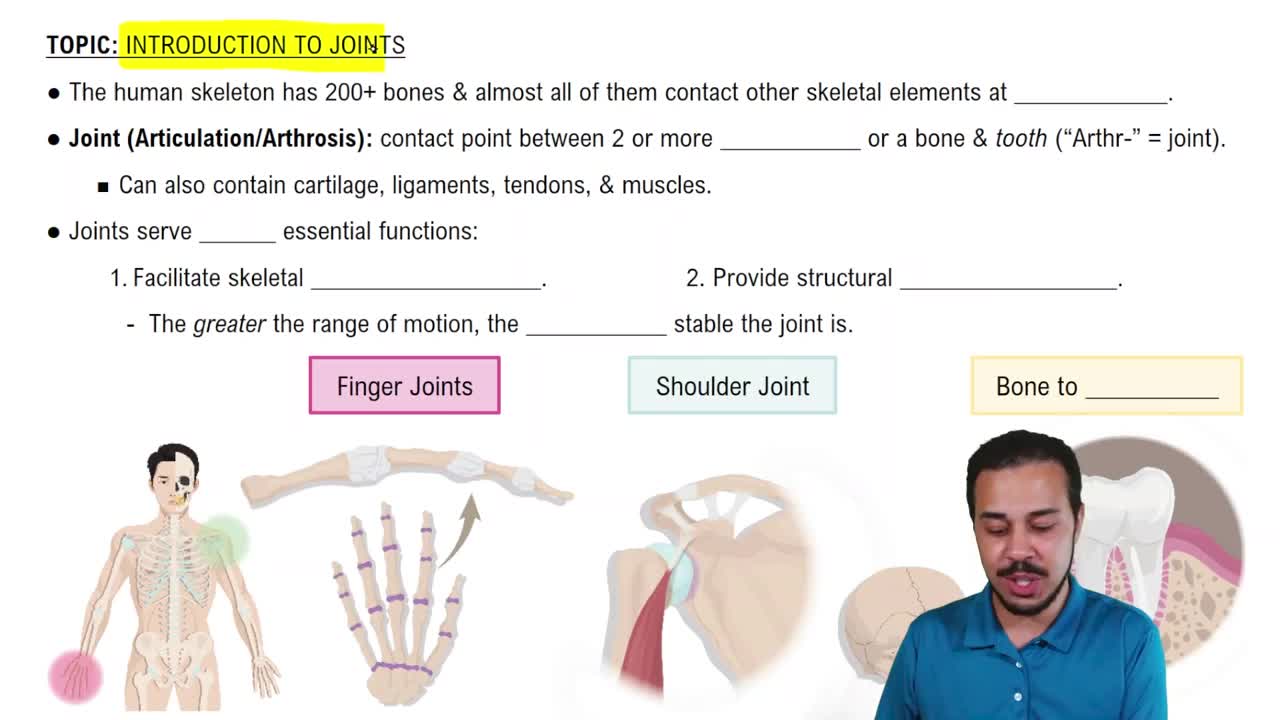
The shoulder joint is a ball-and-socket joint allowing the most extensive range of motion in the body.
Coracohumeral and glenohumeral ligaments, tendon of the long head of biceps brachii, and the four rotator cuff tendons.
Flexion, extension, abduction, adduction, rotation, and circumduction.
The elbow is a hinge joint primarily between the trochlear notch of the ulna and the trochlea of the humerus.
Flexion and extension only, with ligaments restricting side-to-side movement.
Anular ligament, ulnar collateral ligament, and radial collateral ligament.
The hip joint is a ball-and-socket joint with a deep socket providing more stability than the shoulder.
The acetabular labrum is a rim of fibrocartilage that deepens the socket and enhances joint stability.
Iliofemoral, pubofemoral, ischiofemoral ligaments, and ligamentum teres.
Because of the deep acetabulum socket and strong surrounding ligaments.
The knee consists of three joints (femoropatellar and two tibiofemoral joints) within a single cavity, stabilized by ligaments and menisci.
Flexion, extension, and limited rotation when partly flexed.
Anterior cruciate ligament (ACL), posterior cruciate ligament (PCL), fibular and tibial collateral ligaments, oblique and arcuate popliteal ligaments.
Menisci are crescent-shaped fibrocartilage pads that provide cushioning and stability.
Bursae are fluid-filled sacs that reduce friction between tissues around joints.