 Back
A&P Exam 4
 04:06

Terms in this set (51)
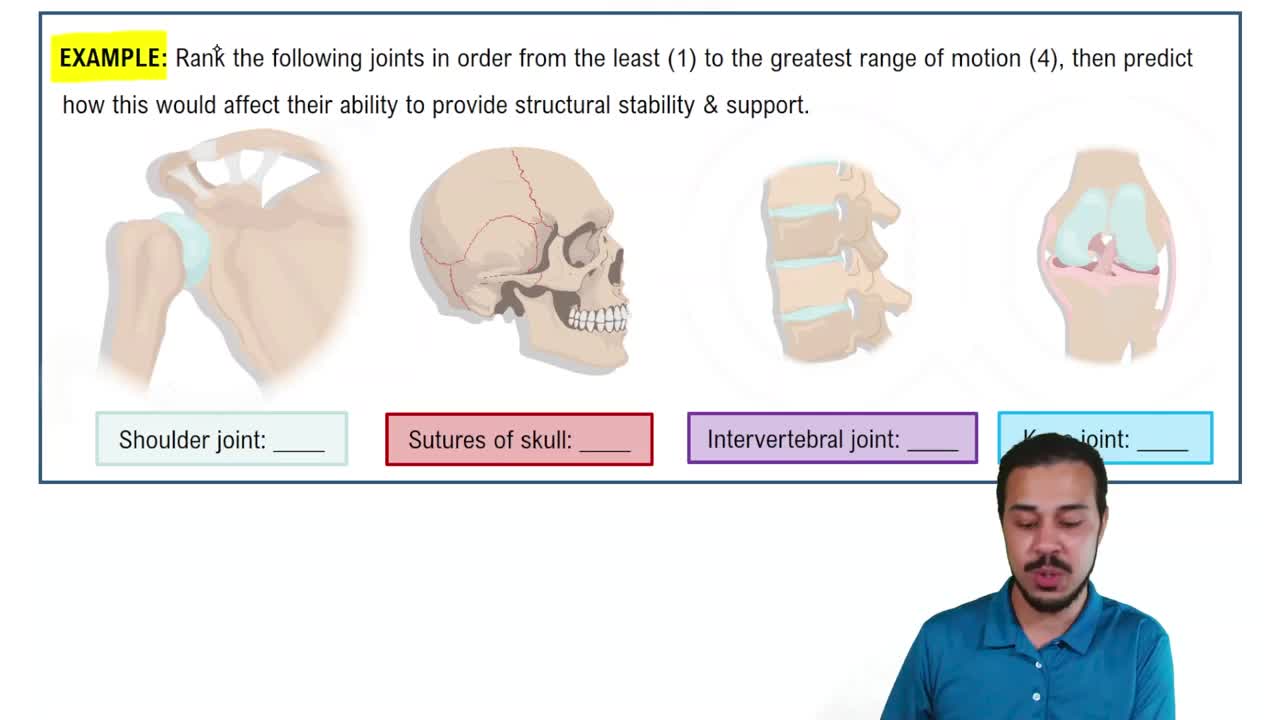
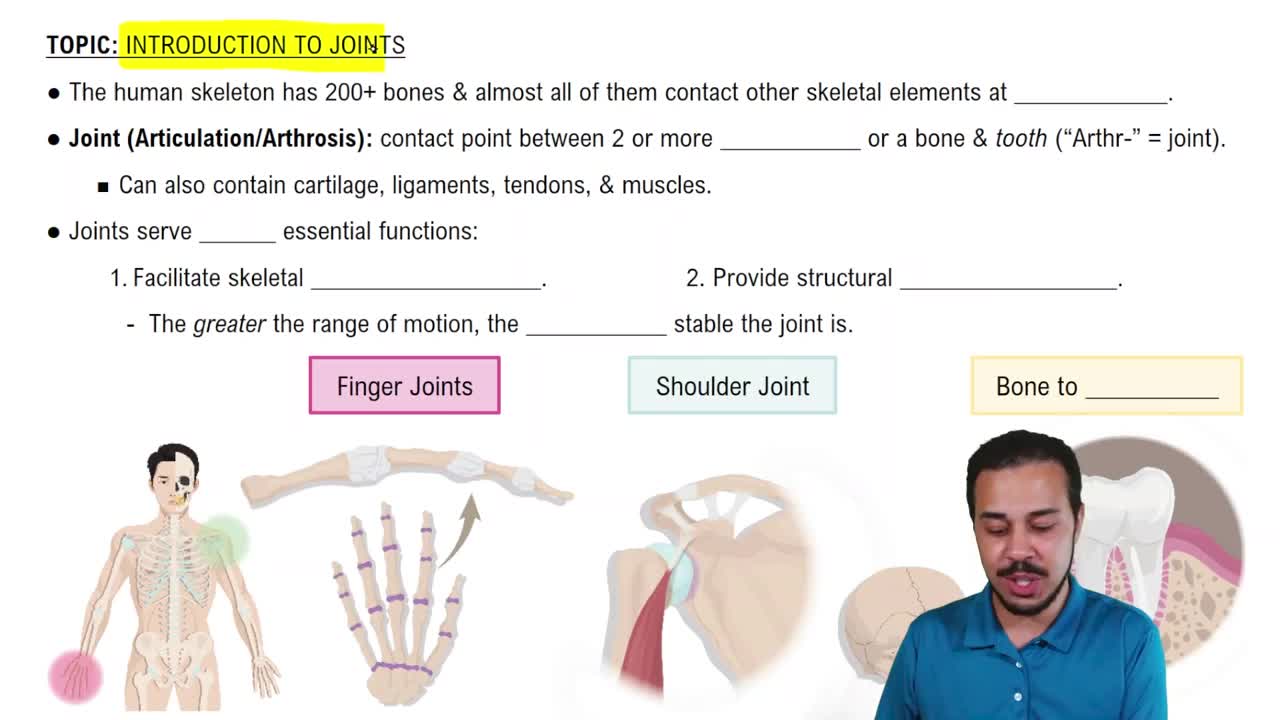
where two or more bones meet
joint
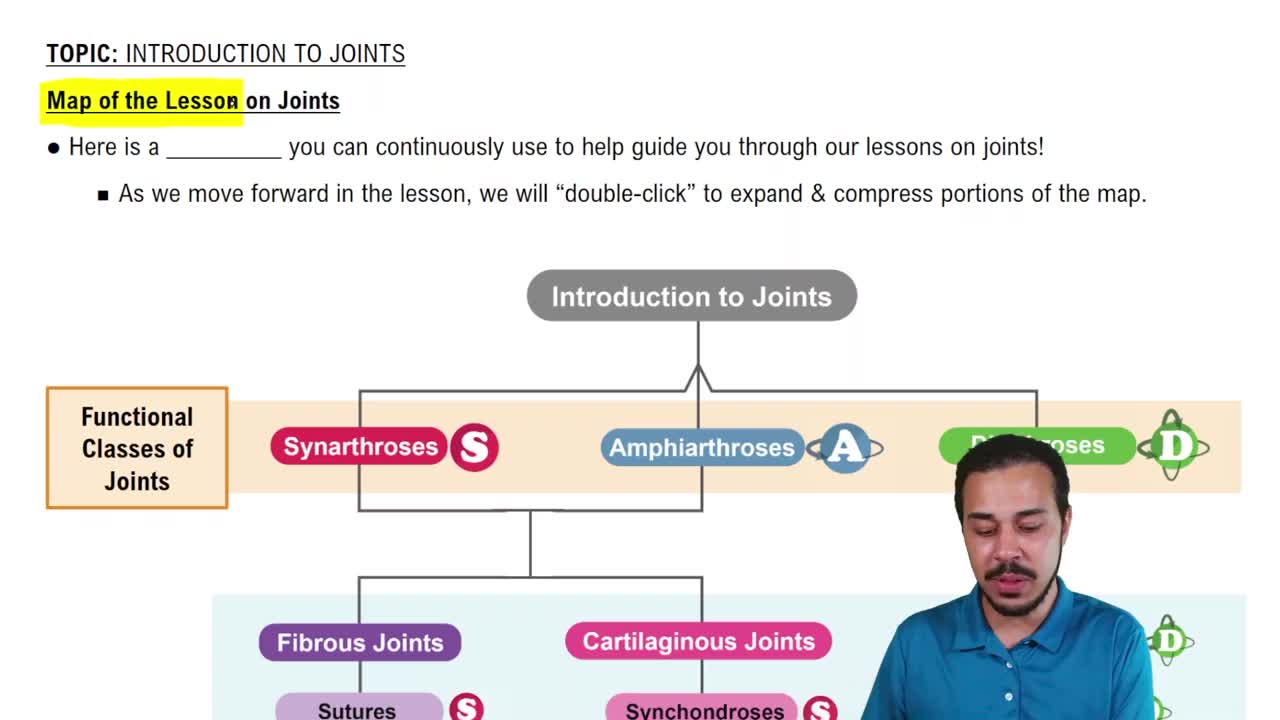
Synarthrosis, Amphiarthrosis, Diarthrosis
What are the three structural classifications of joints?
Suture, Cartilaginous symphysis, Synovial joint
Lubricates the joint, reduces friction, nourishes cartilage, and helps absorb shock.
synovial fluid
Name the six types of synovial joints
Plane, Hinge, Pivot, Condyloid , Saddle, Ball-and-socket
Turns sole of foot inward
Inversion
Site where a motor neuron communicates with a muscle fiber; releases acetylcholine to trigger muscle contraction.
neuromuscular junction
Actin filaments slide past myosin filaments, shortening the sarcomere without filaments themselves shortening.
sliding filament theory
Inability to maintain force during continued activity due to ion imbalance, energy depletion, or muscle function changes.
muscle fatigue
One motor neuron and all the muscle fibers it controls.
motor unit
What are the three muscle fiber types?
Slow oxidative (Type I), Fast oxidative-glycolytic (Type IIa), Fast glycolytic (Type IIx)
What is origin
less movable attachment
functional catagory of joints: immovable
synarthrosis
functional catagory of joints: slightly movable
amphiarthrosis
functional catagory of joints: freely movable
diarthrosis
which type of muscle is striated
skeletal
which type of muscle is voluntary
cardiac
which type of muscle is involuntary
smooth/non striated
what is a more movable attachment
insertion
what is the main mover
agonist
what opposes movement
antagonist
what assists agonist
synergist
structural classifications of joints: fibrous joint connecting skull bones
suture
structural classification of joints: bones joined by fibrocartilage like the pubic system
cartilaginouse symphysis
structural classification of joints: freely movable such as the knee
synovial joints
muscle fiber properties: slow, fatigue-resistant
slow oxidative( type 1)
muscle fiber properties: fast, moderate fatigue resistance
fast oxifative-glycolytic( type IIa )
muscle fiber properties: very fast, fatigues quickly
fast glycolytic (type IIx )
synovial joint ex: flat surfaces slide past each other such as wrist bones
plane(grinding) joint
synovial joint ex: move back and forth in one direction such as the elbow
hinge joint
synovial joint ex: one bone roatated around another such as the atlas and axis in the neck
pivot joints
synovial joints ex: allows movement back and forth and side to side like the knuckles
condyloid joints
synovial joints ex: allows movement in almost all directions including roatation such as shoulder or hip
ball-and-socket joint
synovial joint ex: allows movement in two direction such as the base of the thumb
saddle joint
Turns sole of foot outward.
Eversion