 Back
Anatomical Position Terms
 02:40

Terms in this set (20)
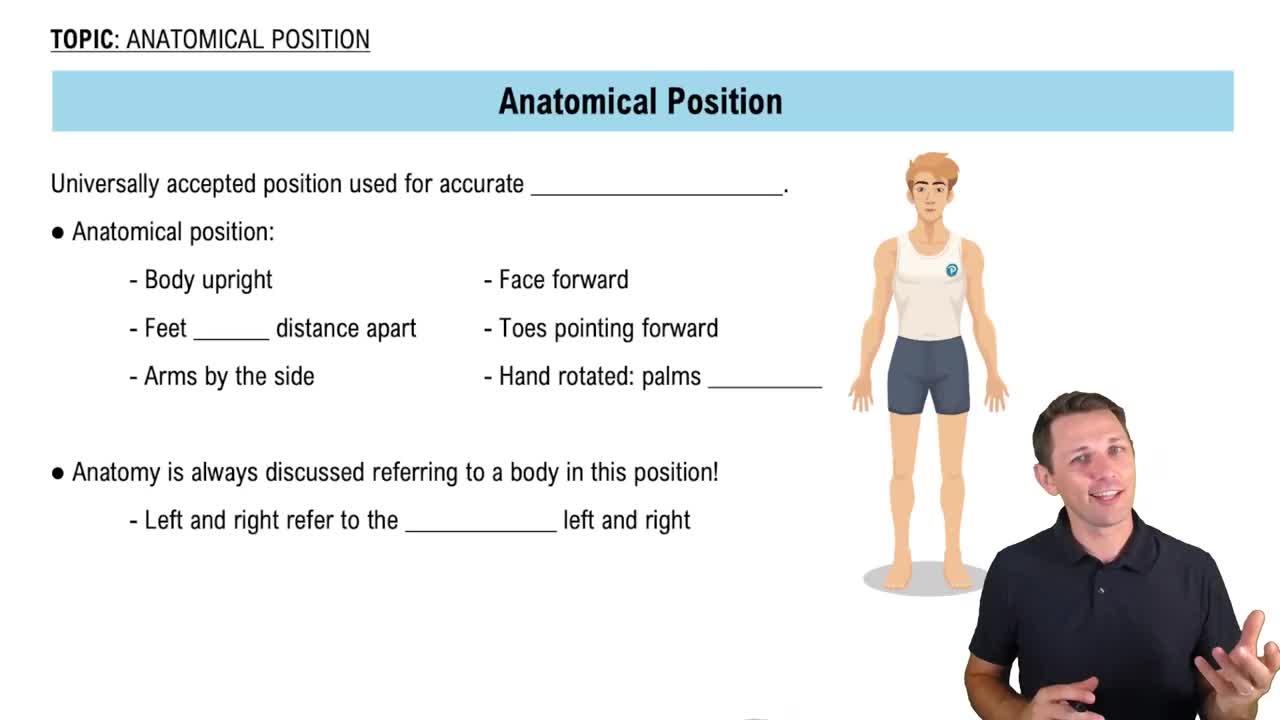
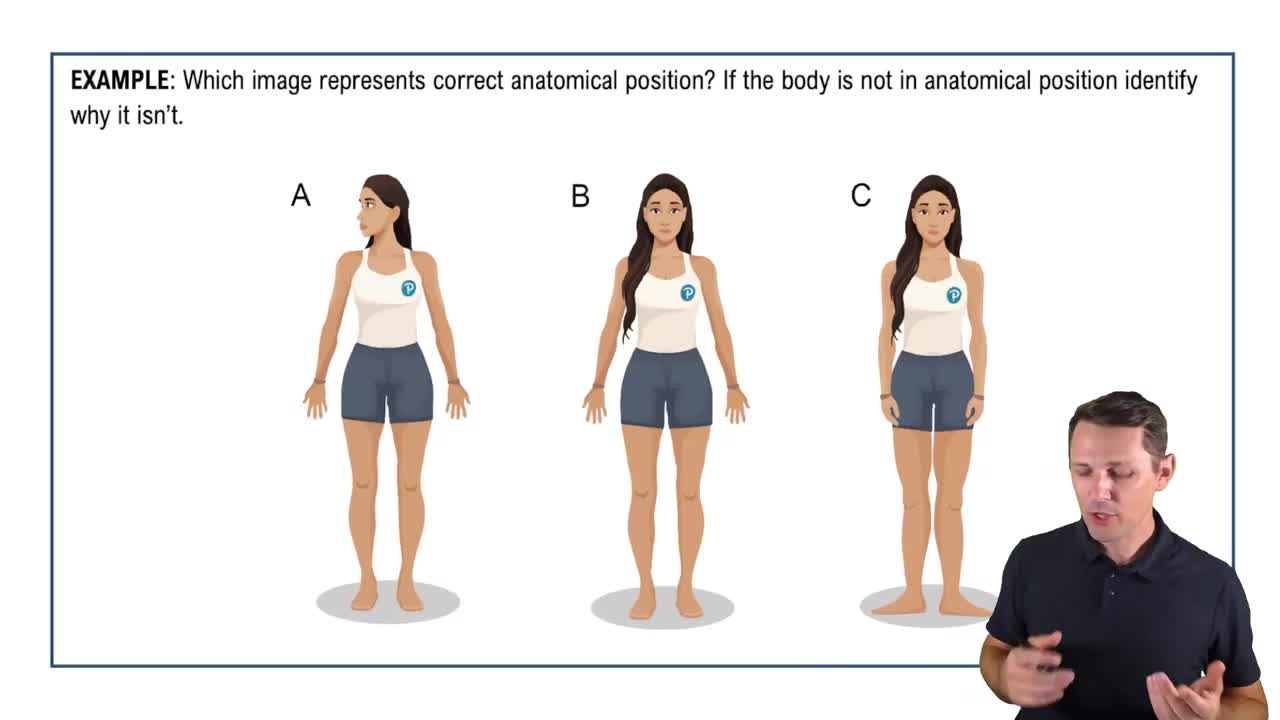
The standard reference position in anatomy where the body stands upright, facing forward, arms at the sides, and palms facing forward.
Refers to a body part being above or higher than another part.
Refers to a body part being below or lower than another part.
Refers to the front of the body or nearer to the front.
Refers to the back of the body or nearer to the back.
Closer to the midline of the body.
Farther from the midline of the body.
Closer to the point of attachment or origin of a limb.
Farther from the point of attachment or origin of a limb.
Closer to or on the surface of the body.
Farther from the surface of the body.
On the same side of the body as another structure.
On the opposite side of the body from another structure.
Divides the body into left and right parts.
Divides the body into equal left and right halves.
Divides the body into anterior (front) and posterior (back) parts.
Divides the body into superior (upper) and inferior (lower) parts.
Spaces within the body that contain and protect internal organs.
Includes the cranial cavity and vertebral (spinal) cavity.
Includes the thoracic and abdominopelvic cavities.