 Back
Anatomical Terminology and Body Organization
 02:40

Terms in this set (28)
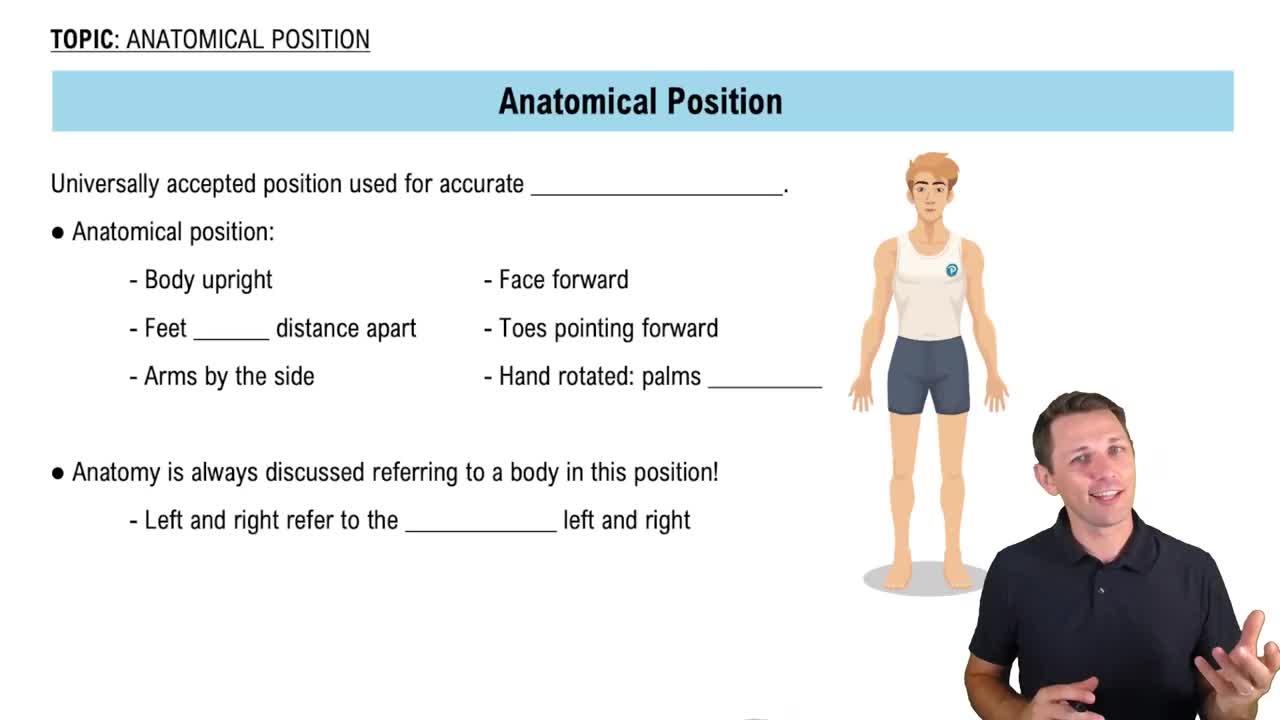
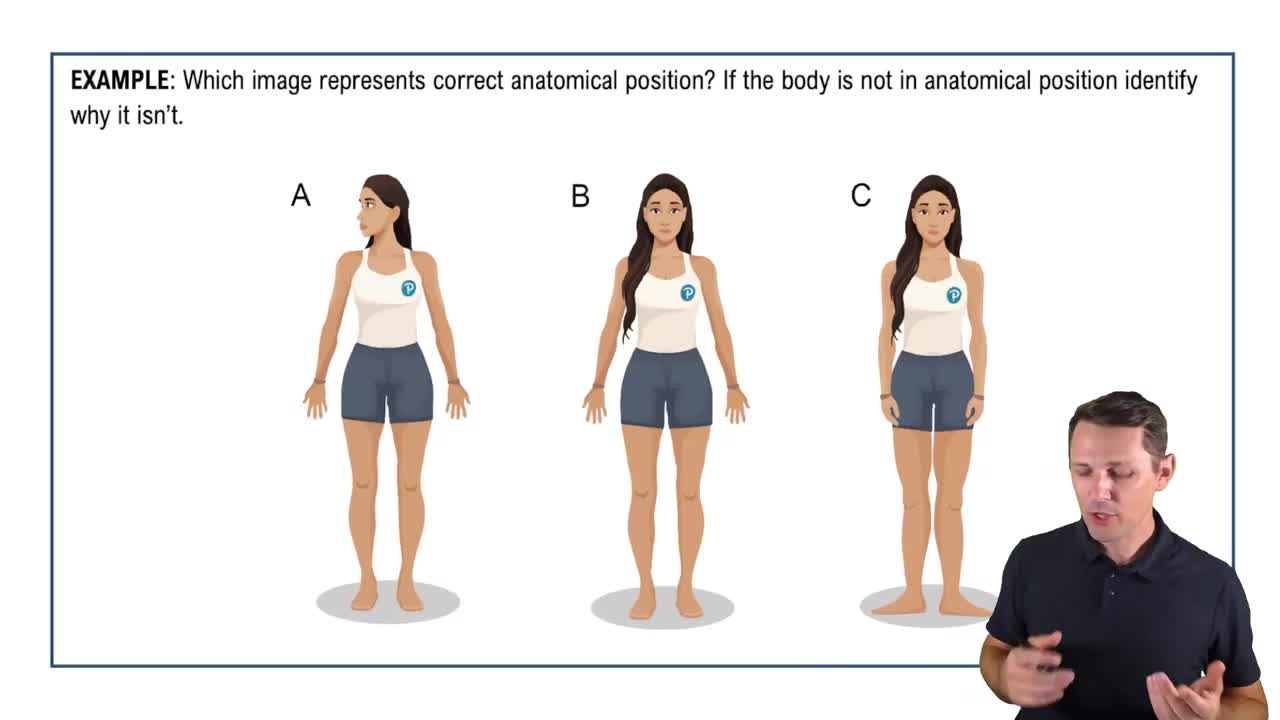
The standard reference posture for anatomical descriptions: standing erect, feet parallel and forward, face and eyes forward, arms at sides, palms facing forward with thumbs away from the body.
Body lying face up.
Body lying face down.
Includes cephalic (head), cervical (neck), thoracic (chest), abdominal (abdomen), pelvic (pelvis), brachial (arm), and femoral (thigh) regions.
Includes cephalic (head), cervical (neck), scapular (shoulder blade), lumbar (lower back), gluteal (buttocks), popliteal (back of knee), and calcaneal (heel) regions.
Toward the head or upper part of a structure. Example: The head is superior to the abdomen.
Away from the head or toward the lower part of a structure. Example: The navel is inferior to the chin.
Toward the front of the body. Example: The breastbone is anterior to the spine.
Toward the back of the body. Example: The heart is posterior to the breastbone.
Toward the midline of the body. Example: The heart is medial to the arm.
Away from the midline of the body. Example: The arms are lateral to the chest.
Between a medial and lateral structure. Example: The collarbone is intermediate between the breastbone and shoulder.
Closer to the origin or point of attachment. Example: The elbow is proximal to the wrist.
Farther from the origin or point of attachment. Example: The knee is distal to the thigh.
Toward or at the body surface. Example: The skin is superficial to the skeletal muscles.
Away from the body surface, more internal. Example: The lungs are deep to the skin.
On the same side of the body. Example: The right hand and right foot are ipsilateral.
On opposite sides of the body. Example: The right hand and left foot are contralateral.
Divides the body into anterior and posterior portions.
Divides the body into right and left portions.
Divides the body into equal right and left portions.
Divides the body into unequal right and left portions.
Divides the body into superior and inferior portions.
Includes the cranial cavity (brain) and vertebral cavity (spinal cord).
Includes the thoracic cavity and abdominopelvic cavity.
Right upper (RUQ), left upper (LUQ), right lower (RLQ), and left lower (LLQ) quadrants used for clinical localization.
Moist membranes surrounding organs in ventral cavities, consisting of visceral (on organ) and parietal (cavity wall) layers with serous fluid in between.
Pericardium (heart), pleura (lungs), and peritoneum (abdominal organs).