 Back
Anatomy & Physiology: Anatomical Terminology and Body Cavities
 02:40

Terms in this set (21)
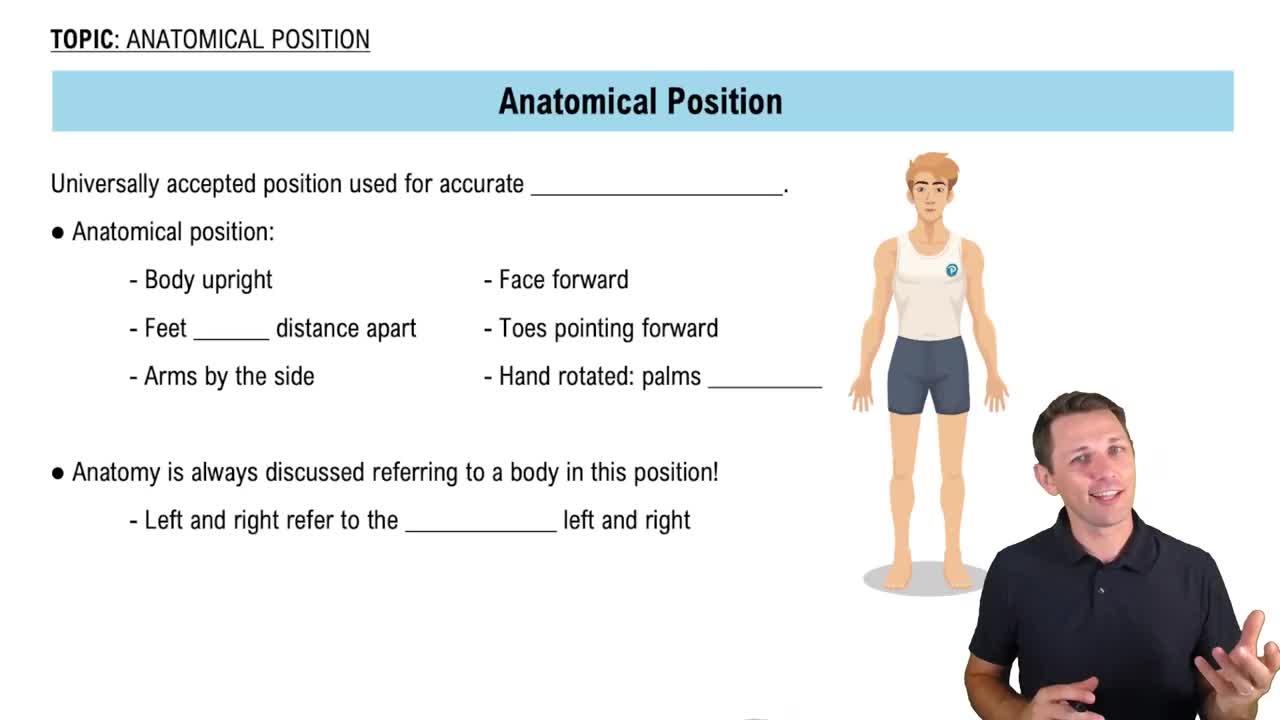
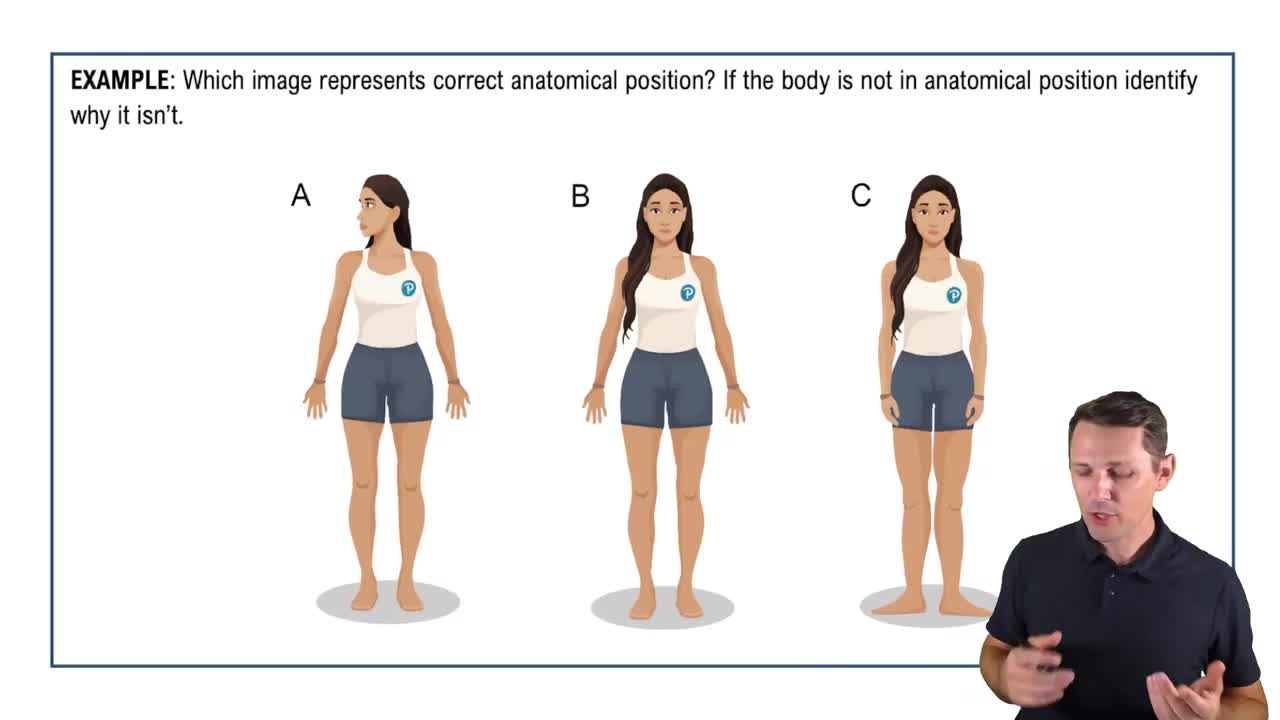
The standard reference position where the person stands erect, feet parallel and flat, face and eyes forward, arms at the sides, and palms facing forward with thumbs away from the body.
Supine is lying face up; prone is lying face down.
Superior means toward the head or upper part of the body; inferior means away from the head or toward the lower part of the body.
Anterior means toward or at the front of the body; posterior means toward or at the back of the body.
Ipsilateral means on the same side of the body; contralateral means on opposite sides.
Proximal means closer to the origin or point of attachment of a limb to the trunk; distal means farther from the origin or point of attachment.
Superficial means toward or at the body surface; deep means away from the body surface, more internal.
Coronal (frontal) plane divides body into anterior and posterior; sagittal plane divides into right and left; transverse (horizontal) plane divides into superior and inferior.
Midsagittal divides the body into equal right and left halves; parasagittal divides into unequal right and left parts.
The dorsal cavity includes the cranial cavity (contains brain) and vertebral cavity (contains spinal cord).
The ventral cavity includes the thoracic cavity and the abdominopelvic cavity, separated by the diaphragm.
The thoracic cavity contains the lungs (in pulmonary cavities) and the mediastinum, which includes the heart, trachea, esophagus, thymus, and major blood vessels.
The abdominopelvic cavity is divided into the abdominal cavity and the pelvic cavity, with no physical separation between them.
It is divided into four quadrants by a midsagittal and a transverse line through the umbilicus, or into nine regions using two sagittal and two transverse lines.
A moist, slippery membrane that surrounds some ventral cavity organs, consisting of a parietal layer lining the cavity and a visceral layer covering the organ, with a fluid-filled serous cavity between.
Pericardial membrane (around the heart), pleura (around the lungs), and peritoneum (around abdominal organs).
The parietal pericardium forms the outer wall around the heart; the visceral pericardium adheres to the heart surface; the pericardial cavity between contains fluid.
The parietal pleura lines the thoracic cavity; the visceral pleura covers the lungs; the pleural cavity between contains pleural fluid.
The parietal peritoneum lines the abdominal cavity; the visceral peritoneum covers abdominal organs; the peritoneal cavity between contains fluid.
Refers to something occurring on only one side of the body.
Right and left always refer to the patient's right and left, not the observer's.