 Back
BackAnatomy & Physiology: Anatomical Terminology, Body Planes, and Cavities
 02:40
02:40
Terms in this set (19)
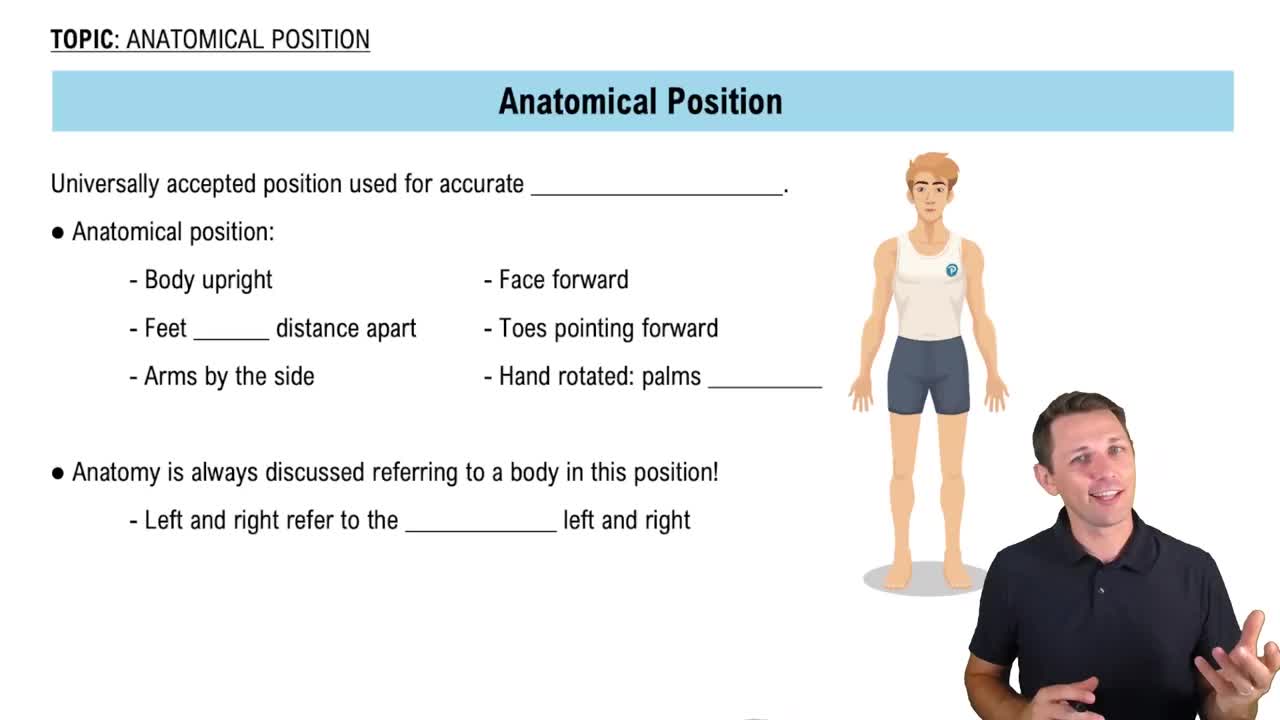
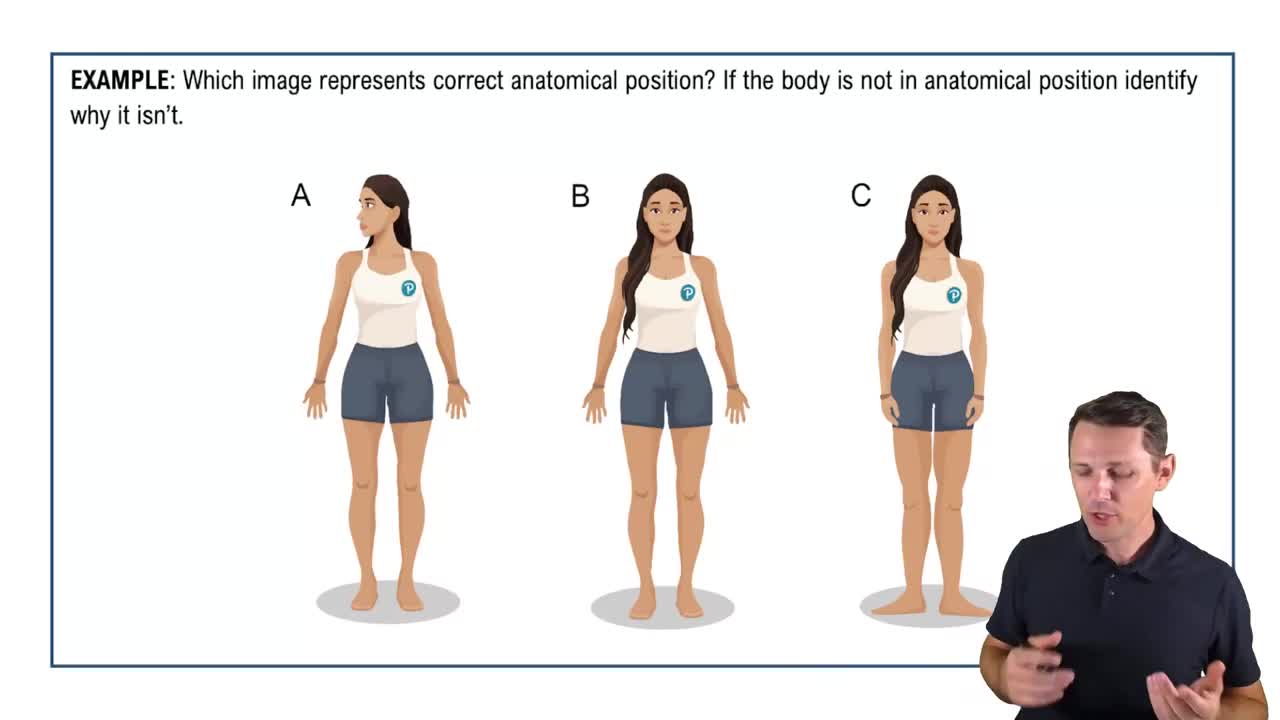
The standard reference position where a person stands upright with feet slightly apart and arms at the sides, palms facing forward. It is used as a reference point for directional terms.
They refer to the right and left sides of the body from the person's own perspective, not the observer's.
Axial: head, neck, and trunk (main axis of the body).
Appendicular: limbs or appendages attached to the axial region.
Superior means toward the upper part of the body or above. Example: The chin is superior to the abdomen.
Inferior means away from the upper part, toward the lower part or below. Example: The knees are inferior to the navel.
Anterior means toward or at the front of the body.
Posterior means toward or at the back of the body.
Medial: toward the midline of the body.
Lateral: away from the midline, on the outer side.
Proximal: closer to the point where a limb attaches to the trunk.
Distal: farther from the point of attachment.
Superficial (external): toward or at the body surface.
Deep (internal): away from the body surface.
A vertical plane dividing the body into left and right sections. If it divides exactly at the midline, it is called a midsagittal or median plane.
A vertical plane dividing the body into anterior (front) and posterior (back) sections.
A horizontal plane dividing the body into superior (upper) and inferior (lower) sections.
Dorsal cavity: protects nervous system organs.
Ventral cavity: houses visceral organs and allows more mobility.
Cranial cavity: holds the brain.
Vertebral (spinal) cavity: holds the spinal cord.
Thoracic cavity: holds heart and lungs.
Abdominopelvic cavity: holds abdomen and pelvis organs.
Pleural cavities: each holds a lung.
Pericardial cavity: holds the heart, esophagus, and trachea within the mediastinum.
Stomach, intestines, spleen, liver, and other digestive organs.
Bladder, some reproductive organs, and rectum, protected by the pelvis.
Oral cavity, digestive cavity, nasal cavity, orbital cavities, middle ear cavities, and synovial (joint) cavities.