 Back
Anatomy & Physiology: Atomic Structure and Chemical Bonding Basics
 02:13

Terms in this set (30)
An atom is the smallest unit of matter that retains the properties of an element.
The electron was discovered as a negatively charged subatomic particle.
Millikan's Oil Drop Experiment determined the charge of the electron.
Gold Foil Experiment discovered the nucleus and that atoms are mostly empty space.
Electron, proton, and neutron
Electron has a charge of -1.
Proton has a charge of +1.
Neutron has a charge of 0 (neutral).
The nucleus contains protons and neutrons.
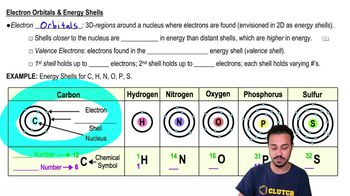
Electrons are located in the electron shells surrounding the nucleus.
The atomic number equals the number of protons in an atom.
Mass number = number of protons + neutrons.
Atoms of the same element with the same number of protons but different numbers of neutrons.
Same chemical properties; different mass and some physical properties.
Horizontal rows; there are 7 periods total.
Vertical columns; also called groups or families.
1A: Alkali metals; 2A: Alkaline earth metals; 7A: Halogens; 8A: Noble gases.
Left and center; metals are lustrous, malleable, ductile, and good conductors.
Right side; nonmetals are brittle, dull, and poor conductors.
Elements along the stair-step line; have properties intermediate between metals and nonmetals.
By the period number (row) on the periodic table.
Electrons in the outermost shell involved in chemical bonding.
Maximum of 2 electrons.
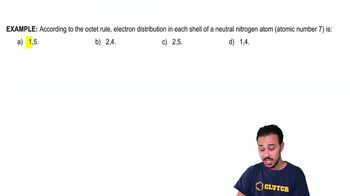
Maximum of 8 electrons.
A group of two or more atoms chemically bonded together.
A molecule composed of exactly two atoms.
An atom or molecule with a net electric charge due to loss or gain of electrons.
A positively charged ion formed by losing electrons.
A negatively charged ion formed by gaining electrons.
Atoms tend to gain, lose, or share electrons to have 8 electrons in their valence shell.