 Back
BackAnatomy & Physiology: Basic Concepts and Body Systems
 02:40
02:40
Terms in this set (20)
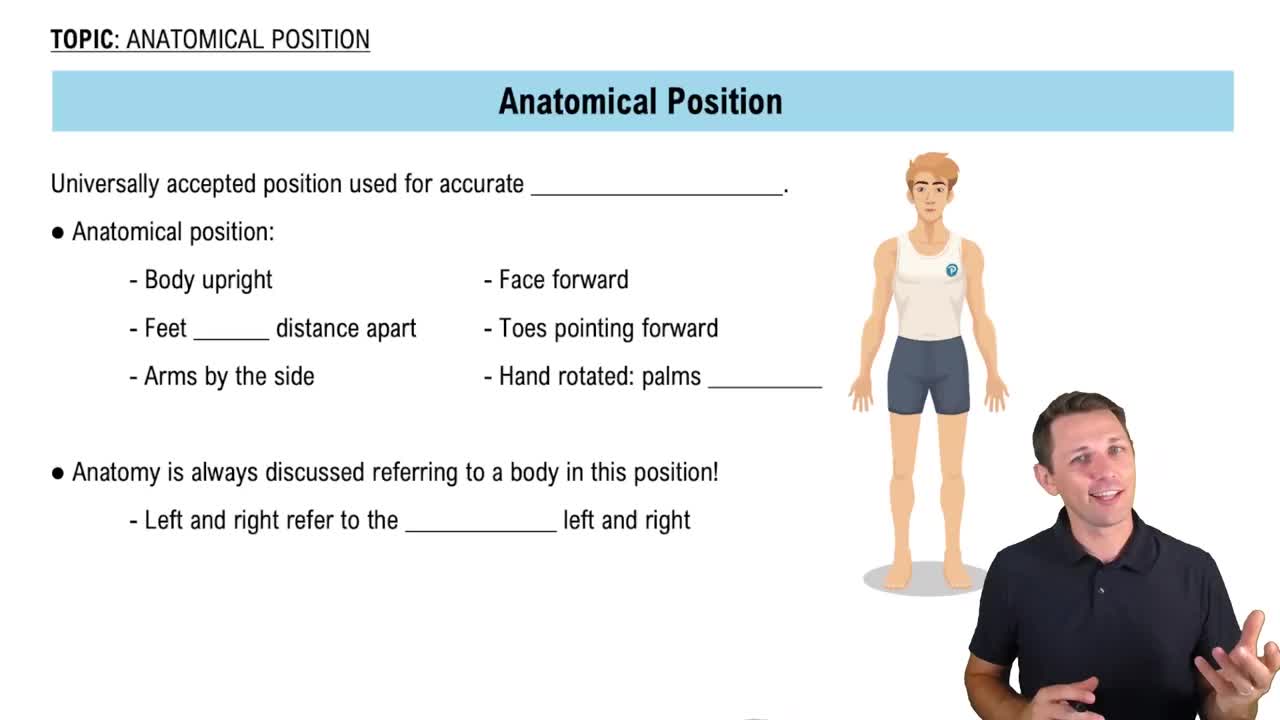
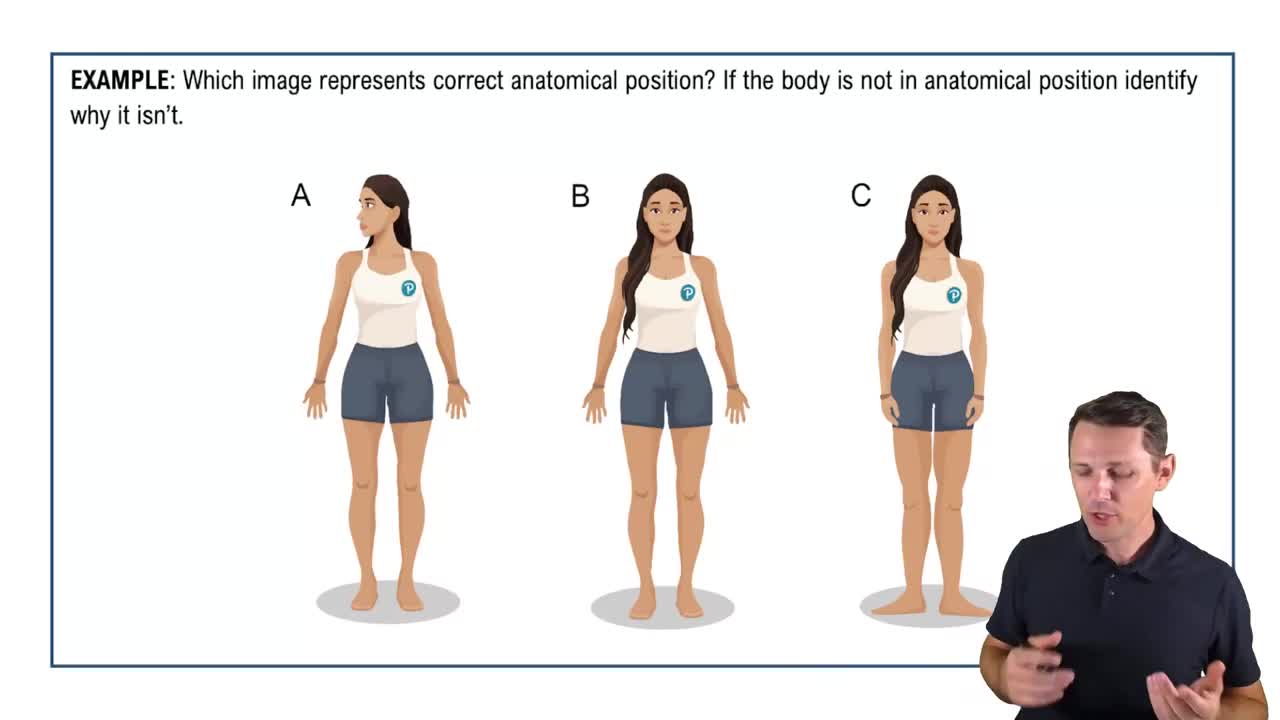
The standard reference position of the body used in anatomy where the person stands upright, facing forward, arms at the sides, and palms facing forward.
Coronal (frontal), sagittal (left and right), and transverse (horizontal) planes used to divide the body for study.
Longitudinal (vertical), transverse (horizontal), and anteroposterior (front to back) axes used to describe movement and orientation.
The detailed study and description of the structure and organization of organs and systems in the body.
Skeletal, muscular, nervous, respiratory, digestive, cardiovascular, urinary, endocrine, integumentary, and reproductive systems.
Providing structural support, protection of organs, and facilitating movement through attachment points for muscles.
Enabling body movement, maintaining posture, and producing heat through muscle contractions.
Controlling and coordinating body activities by transmitting signals between different body parts.
Facilitating gas exchange by bringing oxygen into the body and removing carbon dioxide.
Breaks down food into nutrients for absorption and eliminates waste products.
Transporting blood, nutrients, gases, and wastes throughout the body via the heart and blood vessels.
Removing waste products from the blood and regulating fluid and electrolyte balance through urine production.
Body functions through hormones that control growth, metabolism, and reproduction.
Skin, hair, nails, and glands; protects the body, regulates temperature, and provides sensory information.
Male and female reproductive systems responsible for producing gametes and supporting reproduction.
They guide the orientation and slicing of images to view internal structures clearly.
It provides a consistent frame of reference for describing locations and directions on the body.
The sagittal plane divides the body into left and right parts; the coronal plane divides it into front and back parts.
Muscle contractions generate heat, helping to maintain body temperature.
The nervous system sends signals to muscles to initiate contraction and movement.