 Back
BackAnatomy & Physiology: Blood, Cardiovascular, Respiratory, Urinary, and Fluid Balance
 2:36
2:36
Terms in this set (29)
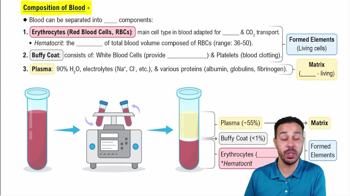
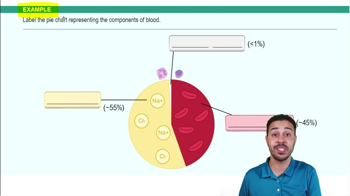
Plasma, red blood cells, white blood cells, and platelets.
Transports oxygen from lungs to tissues and carries some carbon dioxide back to lungs.
Glycolysis (anaerobic metabolism) since erythrocytes lack mitochondria.
In the red bone marrow through a process called erythropoiesis.
Regulated by erythropoietin, a hormone released mainly by the kidneys in response to low oxygen levels.
Iron is essential for hemoglobin synthesis, enabling oxygen binding.
Vitamin B12 and folic acid are required for DNA synthesis in RBC production.
A condition characterized by a decrease in red blood cells or hemoglobin, reducing oxygen delivery.
They are broken down mainly in the spleen and liver, recycling components.
Heme is converted to bilirubin, and iron is recycled; globin is broken down into amino acids.
Granulocytes have visible granules (neutrophils, eosinophils, basophils); agranulocytes do not (lymphocytes, monocytes).
Neutrophils and monocytes are the primary phagocytes.
Involved in blood clotting, forming platelet plugs, and releasing chemicals for hemostasis.
Albumins maintain osmotic pressure, globulins function in immunity, and fibrinogens are essential for clotting.
Albumins maintain colloid osmotic pressure, preventing excessive water loss from blood to tissues.
Converted to fibrin during clotting to form a stable blood clot.
The process that stops bleeding, involving vascular spasm, platelet plug formation, and coagulation.
Extrinsic is triggered by external tissue damage; intrinsic is activated by blood contact with damaged endothelium.
Conversion of prothrombin to thrombin, then fibrinogen to fibrin to form the clot.
Inhibits thrombin and other clotting factors to prevent excessive clot formation.
Antigens are molecules on cell surfaces that trigger immune response; antibodies are proteins that bind to antigens.
AB blood has no anti-A or anti-B antibodies, so it can receive any ABO blood type safely.
Type O blood has no A or B antigens, so it can be given to any ABO blood type.
Pulmonary circuit carries blood between heart and lungs; systemic circuit carries blood between heart and body tissues.
Reduces friction between the visceral and parietal pericardium during heartbeats.
Prevent backflow of blood from ventricles to atria during ventricular contraction.
Right atrium → right ventricle → lungs → left atrium → left ventricle → body.
Generates and conducts electrical impulses to coordinate heart contractions.
Closing of heart valves produces the characteristic lub-dub sounds.