 Back
BackAnatomy & Physiology: Body Positions, Directional Terms, Planes, and Movements
 02:40
02:40
Terms in this set (28)
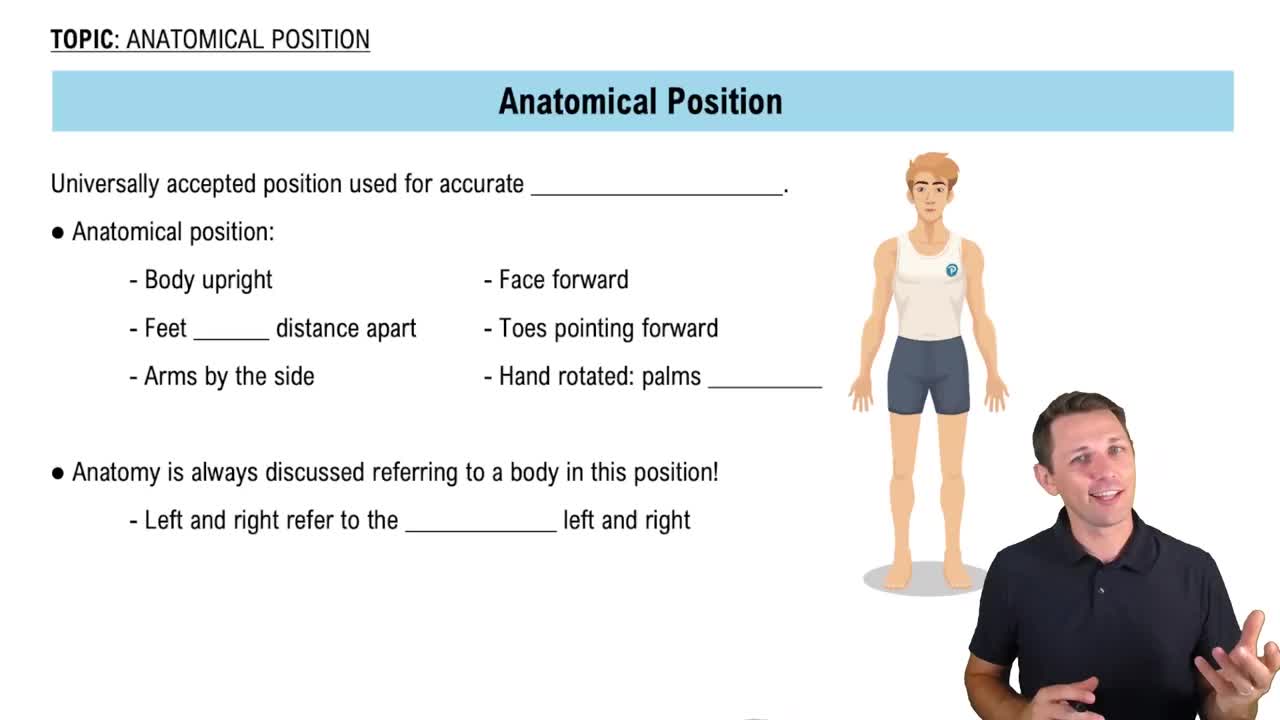
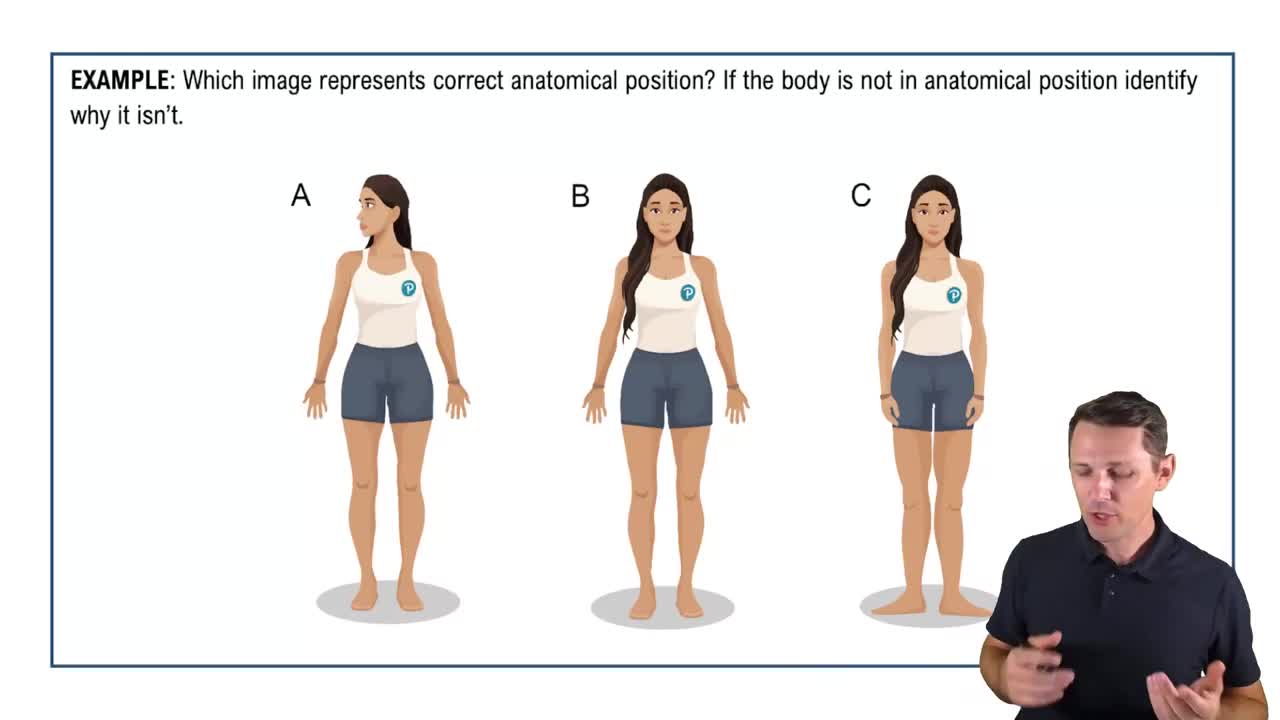
Standard reference position for describing the body: standing upright, facing forward, arms at sides, palms facing forward, feet facing forward.
Body lying face up.
Body lying face down.
It provides a common reference point so directional terms like medial and lateral are consistent for everyone.
Closer to the front of the body; opposite is Posterior.
Closer to the back of the body; opposite is Anterior.
Closer to the body's midline; opposite is Lateral.
Farther away from the body's midline; opposite is Medial.
Closer to the head and farther from the feet; opposite is Inferior.
Farther from the head and closer to the feet; opposite is Superior.
Farther from the body's surface; opposite is Superficial.
Closer to the body's surface; opposite is Deep.
Closer to the origin or point of attachment of a structure; opposite is Distal.
Farther from the origin or point of attachment of a structure; opposite is Proximal.
Divides the body into anterior and posterior portions.
Divides the body into left and right portions; not necessarily equal.
Divides the body into equal left and right halves.
Divides the body into superior and inferior portions.
Divides the body at an angle other than horizontal or vertical.
A cut through a body or structure; a transverse cut produces a horizontal cross-section.
Abduction and adduction.
Flexion and extension.
Rotational movements.
Decreases the angle between two body parts; usually bending a joint.
Increases the angle between two body parts; usually straightening a joint.
Movement away from the body's midline.
Movement toward the body's midline.
Turning a body part around its longitudinal axis.