 Back
BackAnatomy & Physiology: Body Systems and Homeostasis
 05:04
05:04
Terms in this set (32)
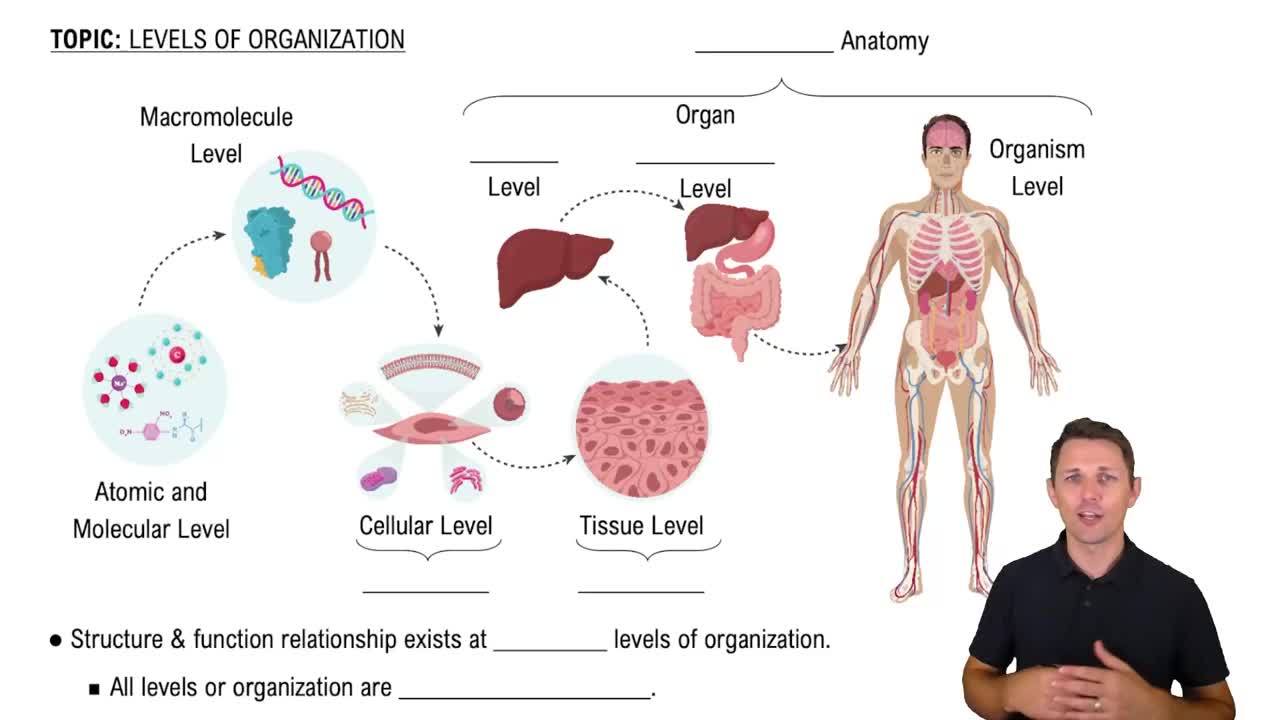
Chemical, Cellular, Tissue, Organ, Organ System, Organism
Skin, Hair, Nails, Exocrine glands, Sensory receptors
Protects against environmental hazards, provides sensory information, helps regulate body temperature
Bones, Cartilages, Ligaments, Bone marrow
Provides support, protects tissues, stores minerals, forms blood cells (hematopoiesis)
Skeletal muscles, Tendons
Provides movement, protection, support, and generates heat to regulate body temperature
Brain, Spinal cord, Nerves, Sense organs
Directs fast responses to stimuli, interprets sensory information, coordinates activities of other systems
Pancreas, Adrenal glands, Gonads, Thyroid gland, Pituitary gland, Endocrine tissues in other systems
Directs long-term changes, adjusts metabolic activity and energy use, controls development changes
Heart, Blood vessels (arteries, veins), Blood
Distributes water, nutrients, waste, gases; distributes heat; assists in temperature control
Spleen, Thymus, Tonsils, Lymphatic vessels, Lymph nodes, Lymph
Defends against infection, returns tissue fluids to bloodstream, transports nutrients, removes waste and cancer cells
Nasal cavities, Sinuses, Larynx, Trachea, Bronchi, Lungs, Alveoli
Delivers air to alveoli for gas exchange, provides oxygen to blood, removes carbon dioxide, produces sounds
Teeth, Tongue, Pharynx, Esophagus, Stomach, Small intestine, Large intestine, Liver, Gallbladder, Pancreas
Processes and digests food, absorbs water and nutrients, stores energy reserves
Kidneys, Ureters, Urinary bladder, Urethra
Excretes waste from blood, controls water balance, stores urine, regulates blood ion concentrations and pH
Produces sperm, seminal fluids, hormones; enables sexual intercourse
Produces oocytes and hormones, supports embryo development, provides milk, enables sexual intercourse
Existence of a stable internal environment maintained by all body systems within normal ranges of temperature, pH, fluid balance, etc.
Shivering, vasoconstriction, goosebumps to conserve heat
Activation of sweat glands, sweating, evaporation cools the body
Intrinsic (autoregulation) and Extrinsic (nervous and endocrine system control)
Receptor (sensor), Control Center (processes info), Effector (responds to commands)
Corrective action that opposes or negates a variation from normal limits to restore homeostasis
Response that exaggerates or enhances the original change, producing a self-amplifying cycle
Oxytocin release increases uterine contractions, which triggers more oxytocin until delivery ends the cycle
Platelets release chemicals attracting more platelets to the injury site, accelerating clot formation