 Back
Anatomy & Physiology: Bone, Skeletal System, Joints, and Nervous System Study Guide
 3:56

Terms in this set (29)
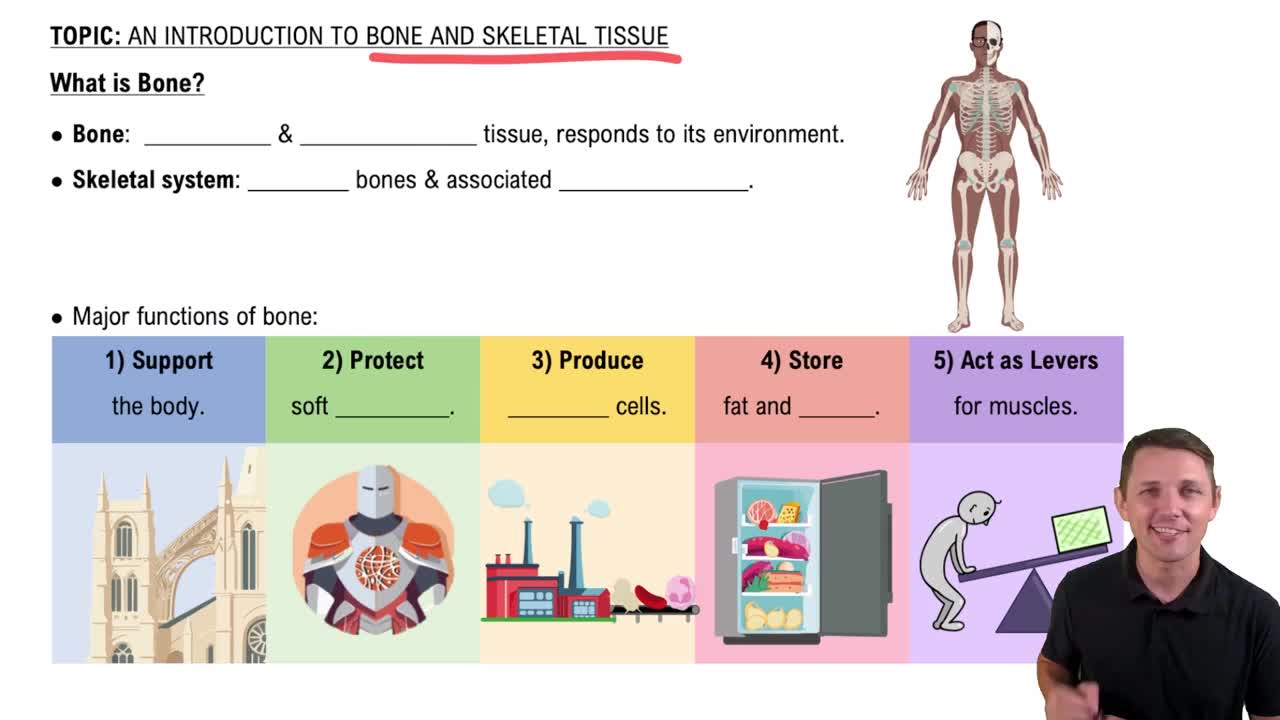
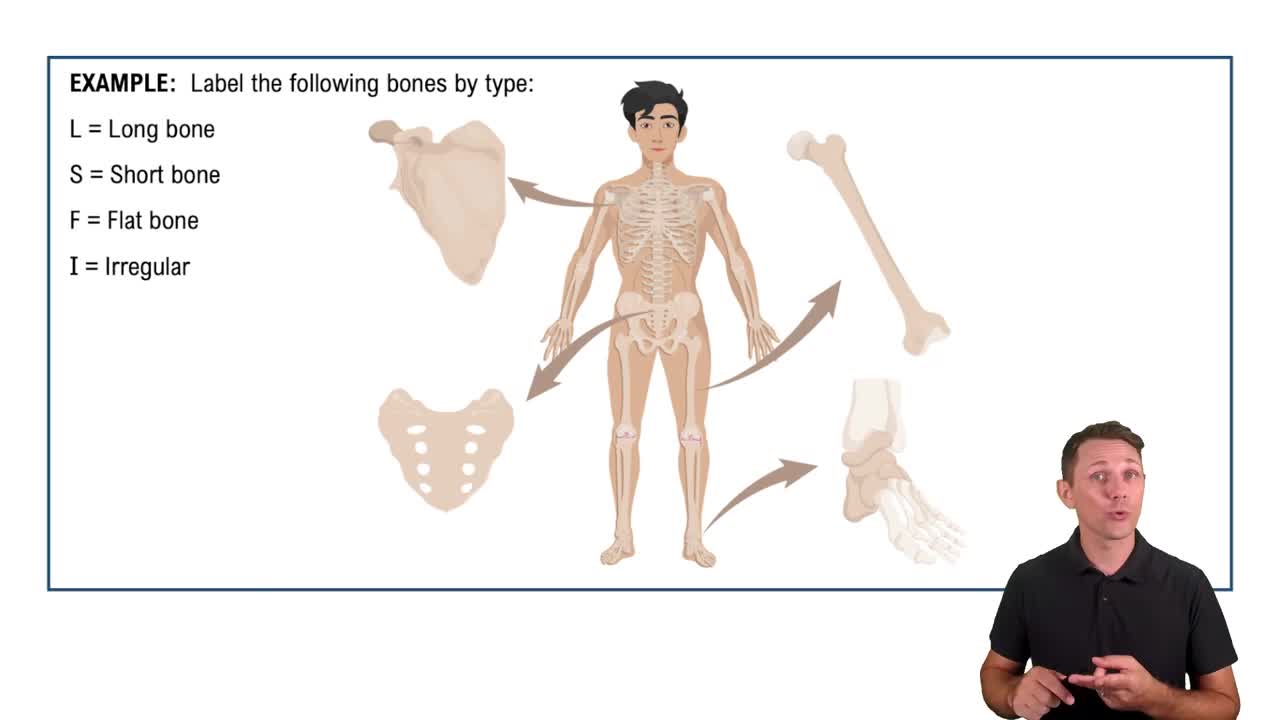
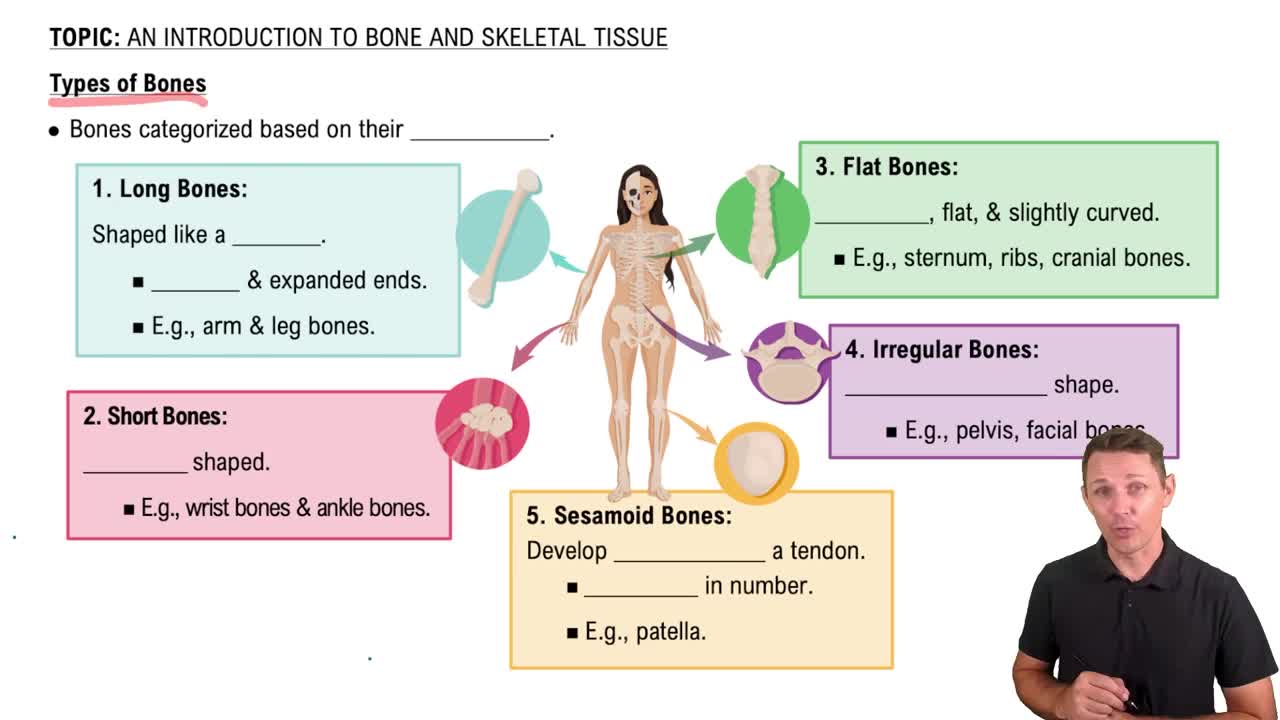
Long, short, flat, and irregular bones differ by shape and function. Long bones are longer than wide, short bones are cube-shaped, flat bones are thin and curved, and irregular bones have complex shapes.
Osteoblasts build bone, osteocytes maintain bone, osteoclasts resorb bone, and bone lining cells regulate calcium and bone surface maintenance.
A bone with a diaphysis (shaft) and epiphyses (ends) is a long bone, characterized by length greater than width and shaft with two ends.
Collagen deficiency weakens bone matrix, causing brittle bones as collagen provides tensile strength and flexibility.
Osteoblasts synthesize and deposit bone matrix, while osteoclasts break down bone tissue during resorption.
An osteon includes central canal (blood vessels), lamellae (concentric rings), lacunae (osteocyte spaces), and canaliculi (channels for nutrient exchange).
Interstitial growth involves chondrocyte division, matrix secretion, calcification, and replacement by bone tissue, lengthening the bone.
Bone forms directly from mesenchymal tissue without cartilage, involving osteoblast differentiation and matrix secretion.
Osteoblasts differentiate from mesenchymal cells and secrete bone matrix to form flat bones.
Bone develops by replacing hyaline cartilage with bone tissue, involving cartilage growth, calcification, and osteoblast activity.
Intramembranous ossification forms bone directly from mesenchyme; endochondral ossification replaces cartilage with bone.
The epiphyseal plate is a cartilage growth plate in children; the epiphyseal line is the ossified remnant in adults.
Increased testosterone and estrogen during puberty accelerate bone growth and epiphyseal plate closure, influencing height differences between sexes.
A person who exercises experiences more bone deposition due to mechanical stress stimulating osteoblast activity.
PTH increases blood calcium by stimulating osteoclasts; calcitriol enhances calcium absorption in intestines.
Vitamin C deficiency impairs collagen synthesis weakening bone; vitamin D deficiency reduces calcium absorption causing soft bones.
Ossification is bone tissue formation; calcification is deposition of calcium salts in tissue.
Fracture repair includes hematoma formation, fibrocartilaginous callus formation, bony callus formation, and bone remodeling.
The epiphyseal plate allows lengthwise bone growth by cartilage proliferation and ossification.
Damage to the epiphyseal plate can halt or reduce longitudinal growth, potentially causing limb length discrepancies.
No, calcification is necessary for ossification as calcium salts harden the bone matrix.
Bone resorption exceeds deposition, leading to bone loss and weakened structure.
Axial skeleton includes skull, vertebrae, ribs; appendicular skeleton includes limbs and girdles.
The pelvic girdle consists of the two hip bones (ilium, ischium, pubis) and sacrum.
The pectoral girdle includes the clavicle and scapula.
Cranial bones protect the brain; facial bones form the face structure.
Upper limb: humerus, radius, ulna, carpals, metacarpals, phalanges. Lower limb: femur, tibia, fibula, tarsals, metatarsals, phalanges.
Synarthrosis: immovable (skull sutures), amphiarthrosis: slightly movable (intervertebral discs), diarthrosis: freely movable (shoulder joint).
Fibrous joints are connected by dense connective tissue and allow little or no movement.