Back

Anatomy & Physiology: Bone Structure and Function

Control buttons has been changed to "navigation" mode.
1/30
  • Osteocyte

    A mature bone cell that maintains the bone matrix and resides in lacunae.
  • Compact Bone

    Dense bone tissue that forms the outer layer of bones, providing strength and protection.
  • Spongy Bone

    Light, porous bone tissue found inside bones, containing red marrow and providing structural support.
  • Chondrocyte

    A cell that produces and maintains cartilage matrix.
  • Diaphysis

    The shaft or central part of a long bone.
  • Epiphysis

    The rounded end of a long bone, usually covered with articular cartilage.
  • Osteoblast

    A bone-forming cell that secretes the bone matrix.
  • Osteon (Haversian System)

    The structural unit of compact bone, consisting of concentric lamellae surrounding a central canal.
  • Haversian Canal

    A central channel in an osteon containing blood vessels and nerves.
  • Osteoclast

    A large cell that breaks down bone tissue during growth and healing.
  • Lacunae

    Small spaces within bone tissue that house osteocytes.
  • Lamellae

    Concentric rings of bone matrix in an osteon.
  • Osteoporosis

    A condition characterized by decreased bone density and increased fracture risk.
  • Yellow Marrow

    Bone marrow that stores fat and serves as an energy reserve.
  • Red Marrow

    Bone marrow responsible for producing blood cells.
  • Appositional Growth

    Growth of cartilage or bone by addition of new layers on the surface.
  • Interstitial Growth

    Growth of cartilage from within by division of chondrocytes.
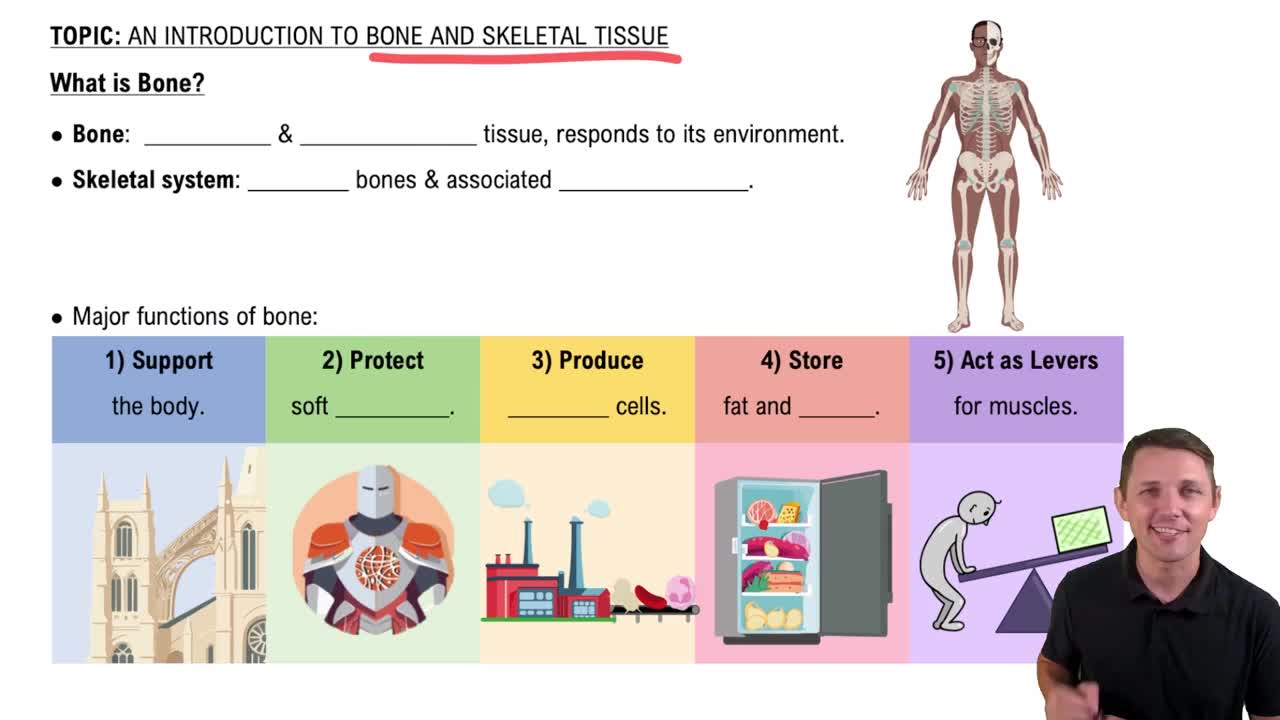
  • Functions of Bone

    • Support
    • Protection
    • Movement
    • Mineral Storage
    • Blood Cell Production
    • Energy Storage
  • Axial Skeleton

    The part of the skeleton that includes the skull, vertebral column, and rib cage.
  • Appendicular Skeleton

    The part of the skeleton that includes the limbs and girdles.
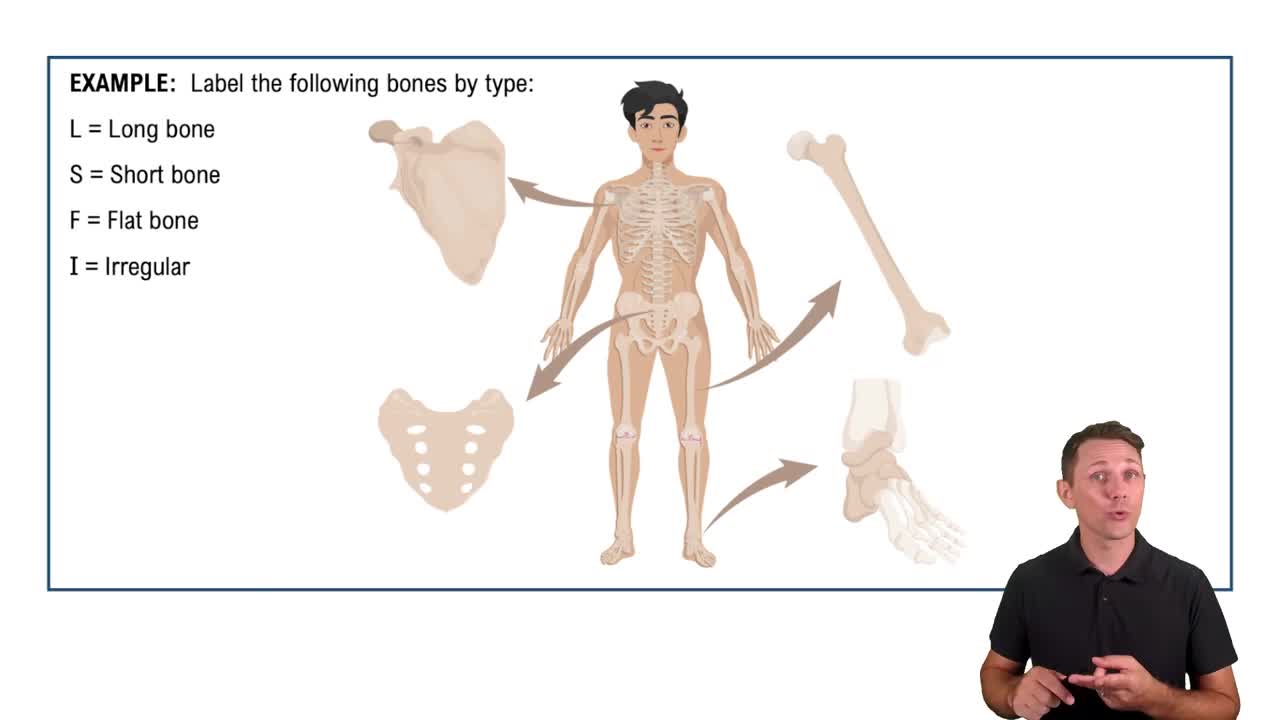
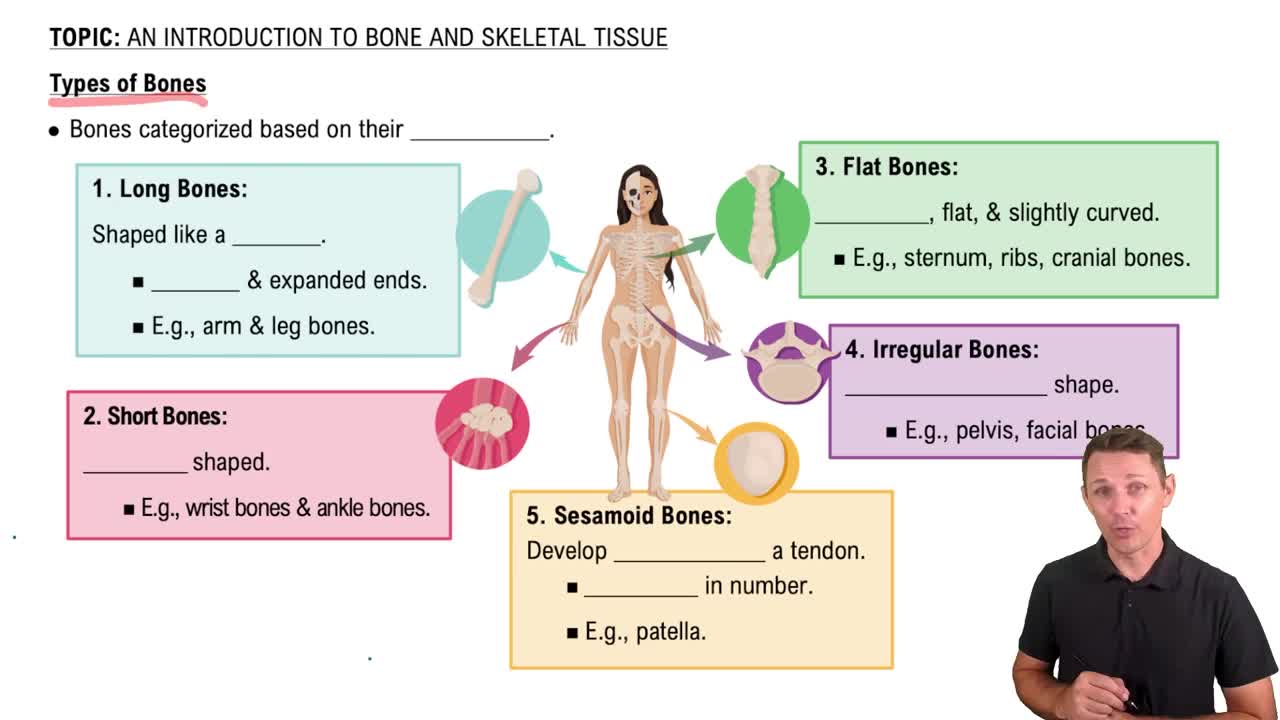
  • Long Bones

    Bones that are longer than they are wide, primarily found in limbs.
  • Short Bones

    Bones that are roughly cube-shaped, like those in the wrist and ankle.
  • Flat Bones

    Thin, flattened bones such as the sternum and skull bones.
  • Irregular Bones

    Bones with complex shapes, like vertebrae and some facial bones.
  • Sesamoid Bones

    Small bones embedded within tendons, such as the patella.
  • Metaphysis

    The region of a long bone between the diaphysis and epiphysis, containing the growth plate.
  • Articular Cartilage

    Smooth cartilage covering the ends of bones at joints to reduce friction.
  • Periosteum

    A dense layer of vascular connective tissue enveloping bones except at joints.
  • Endosteum

    A thin membrane lining the medullary cavity of a bone.
  • Medullary Cavity

    The central cavity of bone shafts where marrow is stored.