 Back
Anatomy & Physiology: Bone Structure, Growth, and Function
 6:19

Terms in this set (24)
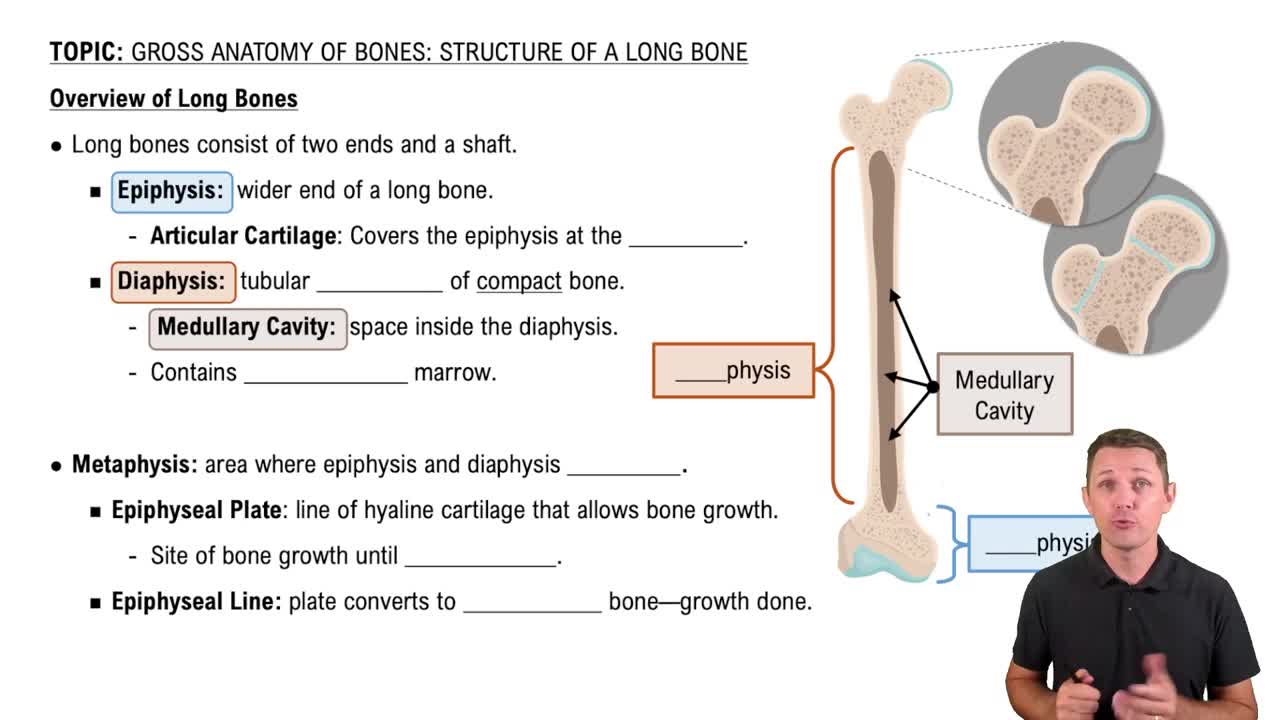
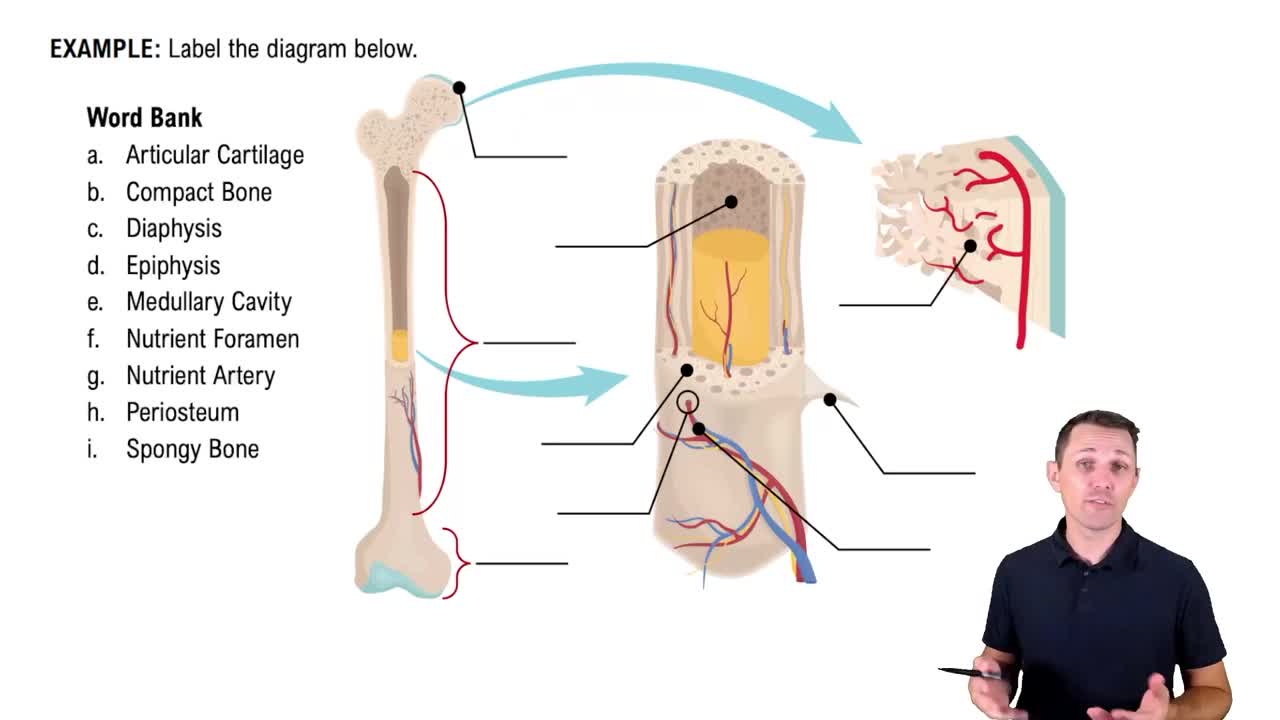
The central shaft of a long bone that provides strong support without cumbersome weight.
The expanded ends of a long bone; includes proximal (top) and distal (bottom) ends.
A fibrous connective tissue membrane that covers and protects the diaphysis of a bone.
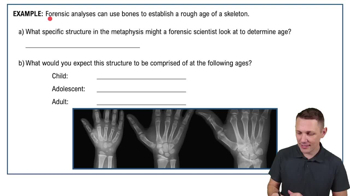
Occurs at the epiphyseal plate (hyaline cartilage) in children; after growth stops, it becomes the epiphyseal line.
Bone growth in width where osteoblasts add bone matrix to the outside of the diaphysis.
Glassy hyaline cartilage covering the epiphyses to reduce friction at joint surfaces.
Bone-forming cells responsible for producing new bone matrix.
Mature bone cells found in tiny cavities called lacunae that maintain bone tissue.
Cells that break down bone matrix to release minerals and remodel bone.
The structural unit of compact bone, consisting of a central (Haversian) canal surrounded by concentric matrix rings.
Tiny canals that connect osteocytes to the central nutrient supply within bone.
Includes the skull, vertebral column, and thoracic cage; primary function is protection of soft organs.
Includes limbs and girdles (shoulder and pelvic); primary function is movement and manipulation of the environment.
The large hole in the occipital bone through which the spinal cord passes.
A unique bone that does not articulate with any other bone in the body.
The sequence of vertebrae: cervical (neck), thoracic (mid-back), lumbar (lower back).
A fracture where the bone breaks into many fragments.
An incomplete break common in children due to flexible bones.
A fracture where broken bone ends penetrate through the skin.
A ragged break caused by excessive twisting forces.
1. Hematoma formation
2. Fibrocartilage callus formation
3. Bony callus formation
4. Bone remodeling
When blood calcium drops, Parathyroid Hormone (PTH) stimulates osteoclasts to break down bone and release calcium.
A bone-thinning disease that can be reduced by weight-bearing exercise and a diet rich in calcium and Vitamin D.
Typically has a wider pubic arch, larger inlet, and bones that are lighter and thinner than a male pelvis.