 Back
Anatomy & Physiology: Bone Tissue, Skeletal System, and Joints Review
 3:56

Terms in this set (20)
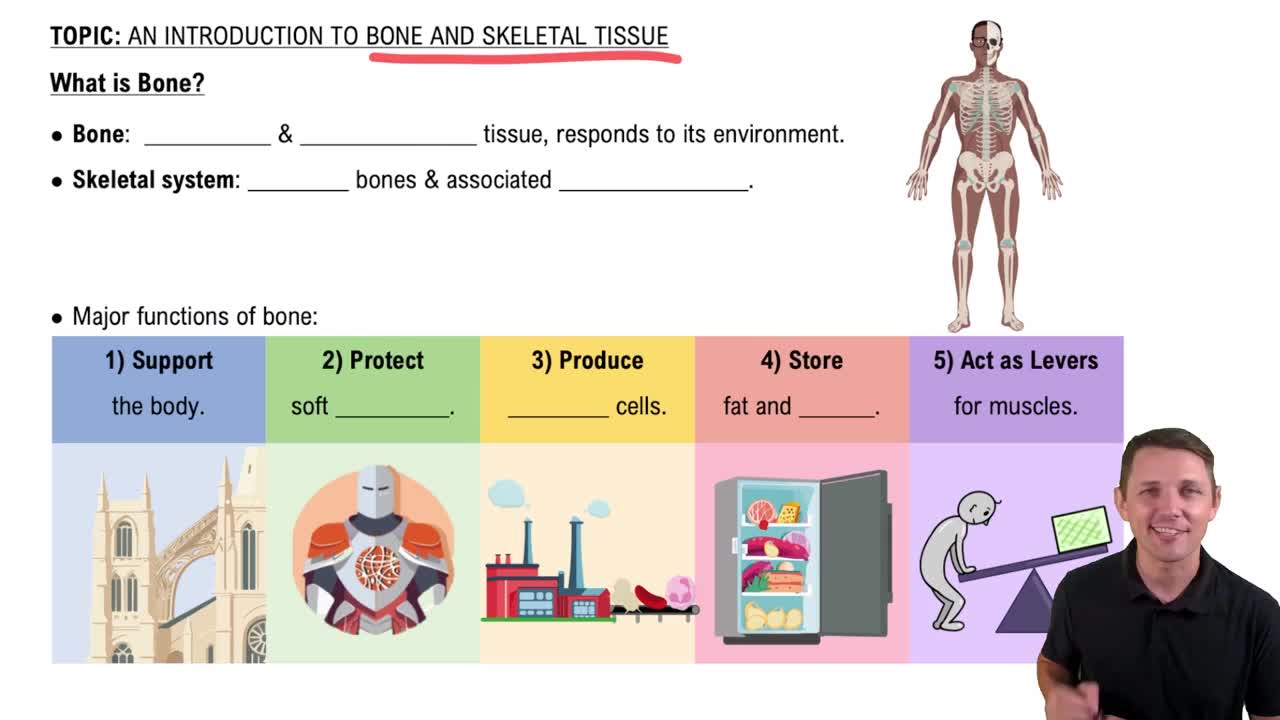
Support, protection, movement, mineral storage, and hematopoiesis (blood cell formation).
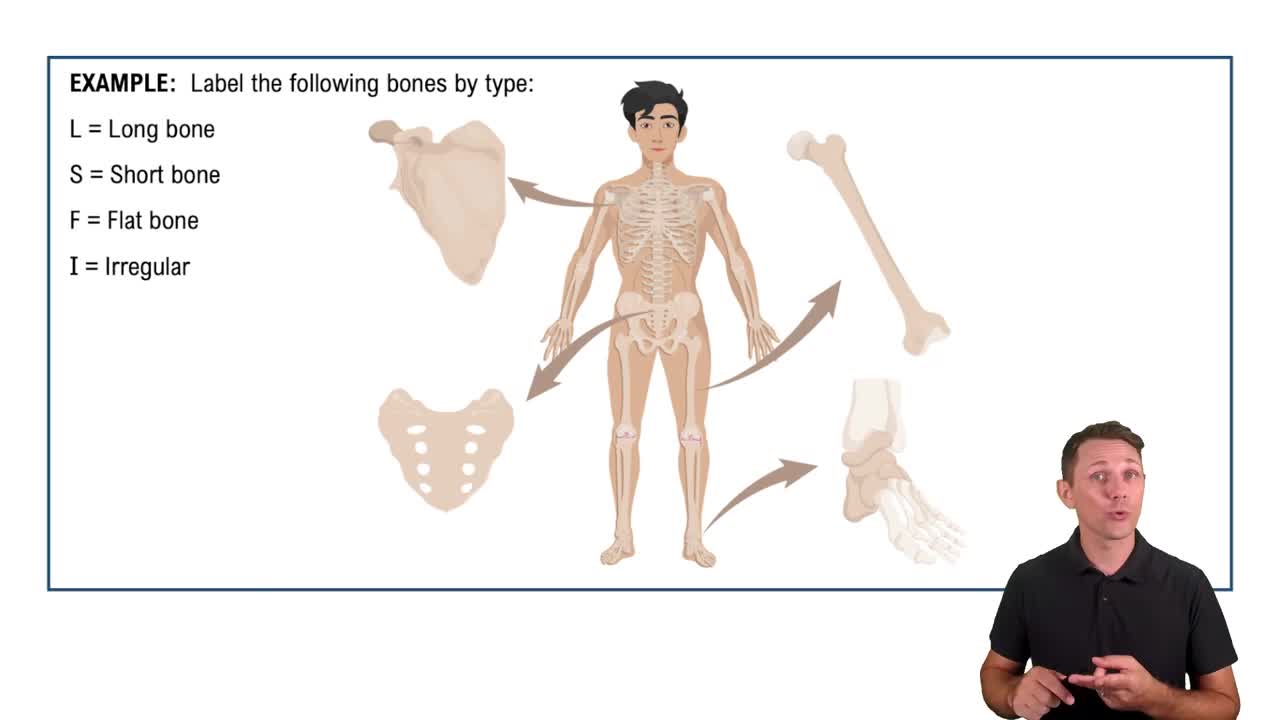
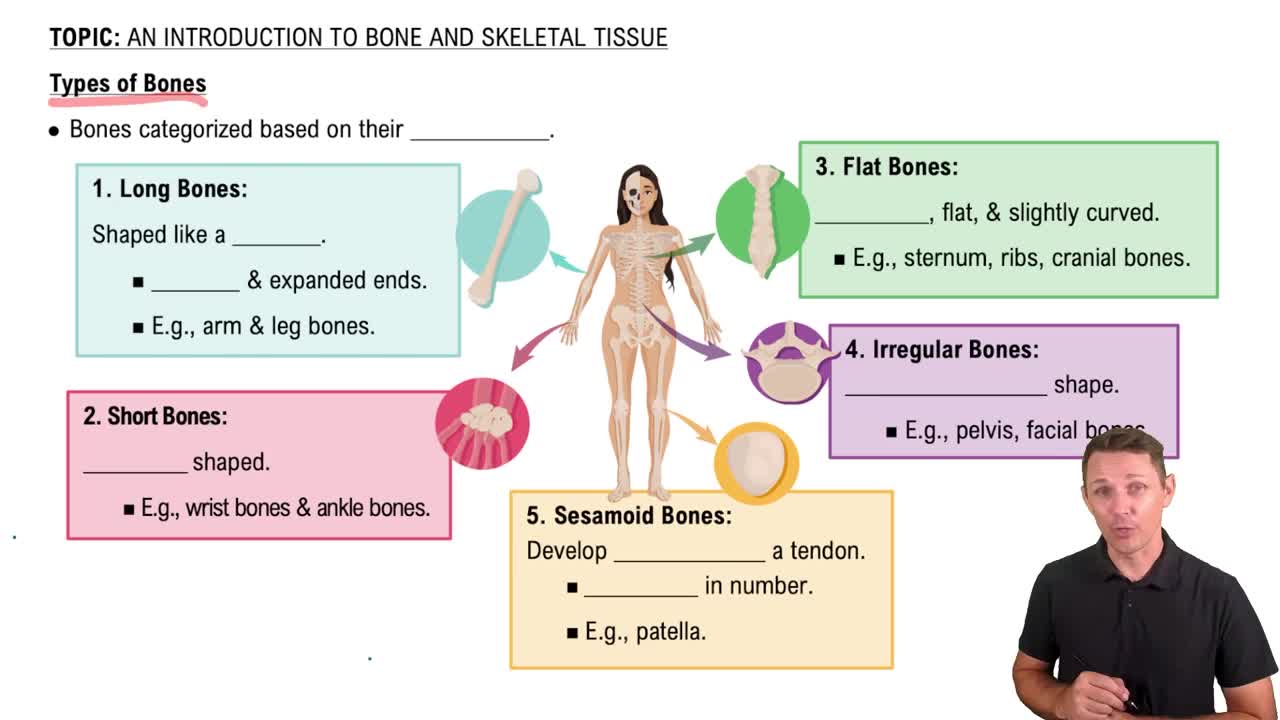
Bones are classified by shape into long, short, flat, and irregular bones.
Because they contain multiple tissue types including bone tissue, , , , and .
Surface features on bones such as projections, , and that serve as attachment points or passageways for nerves and vessels.
Compact bone is dense and provides strength; spongy bone is porous and houses bone marrow for hematopoiesis.
Consists of a diaphysis (shaft), epiphyses (ends), , and (growth plate).
In the red bone marrow found mainly in the spongy bone of flat bones and epiphyses of long bones.
The process of blood cell formation occurring in red bone marrow.
Bone deposition by osteoblasts and bone resorption by osteoclasts.
Hormones adjust bone remodeling to maintain blood calcium homeostasis by stimulating osteoclasts or osteoblasts.
Parathyroid hormone (PTH) is the chief hormone; calcitonin also plays a role.
PTH increases blood calcium by stimulating osteoclasts to resorb bone and releasing calcium into the blood.
Calcitonin lowers blood calcium by inhibiting osteoclast activity and promoting calcium deposition in bone.
Hematoma formation, fibrocartilaginous callus formation, bony callus formation, and bone remodeling.
It is the site of longitudinal bone growth in children and adolescents.
Intramembranous ossification forms flat bones directly from mesenchyme; endochondral ossification forms most bones from cartilage models.
Osteoblasts are cells that build new bone by secreting osteoid.
Osteoclasts are cells that by resorbing mineralized matrix.
A dense connective tissue membrane covering the outer surface of bones, containing osteoblasts and blood vessels.
A thin membrane lining the medullary cavity and trabeculae of spongy bone, containing osteogenic cells.