 Back
Anatomy & Physiology: Bones and Bone Structure
You can tap to flip the card.
Control buttons has been changed to "navigation" mode.
1/25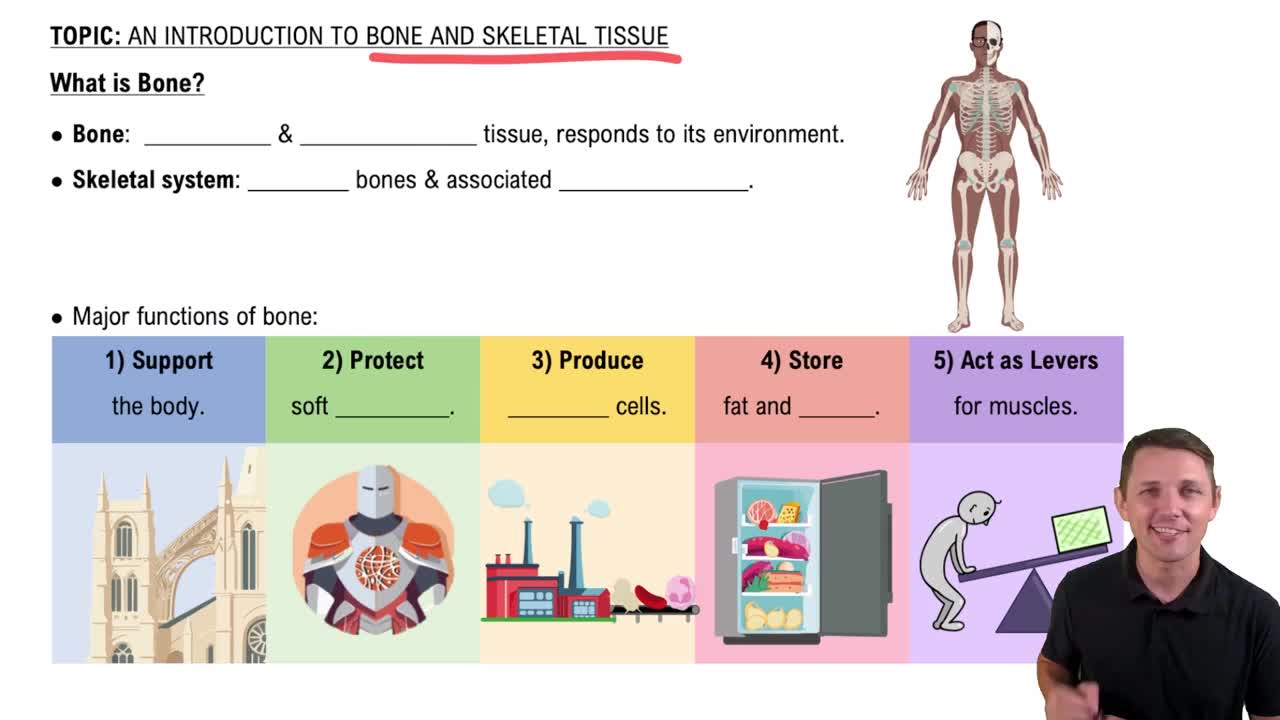
 3:56

Terms in this set (25)
- Support: Structural framework for body and soft tissues.
- Protection: Shields organs like brain and heart.
- Leverage: Bones act as levers for movement.
- Storage: Minerals (calcium, phosphorus) and lipids.
- Blood cell production: Hematopoiesis in red bone marrow.
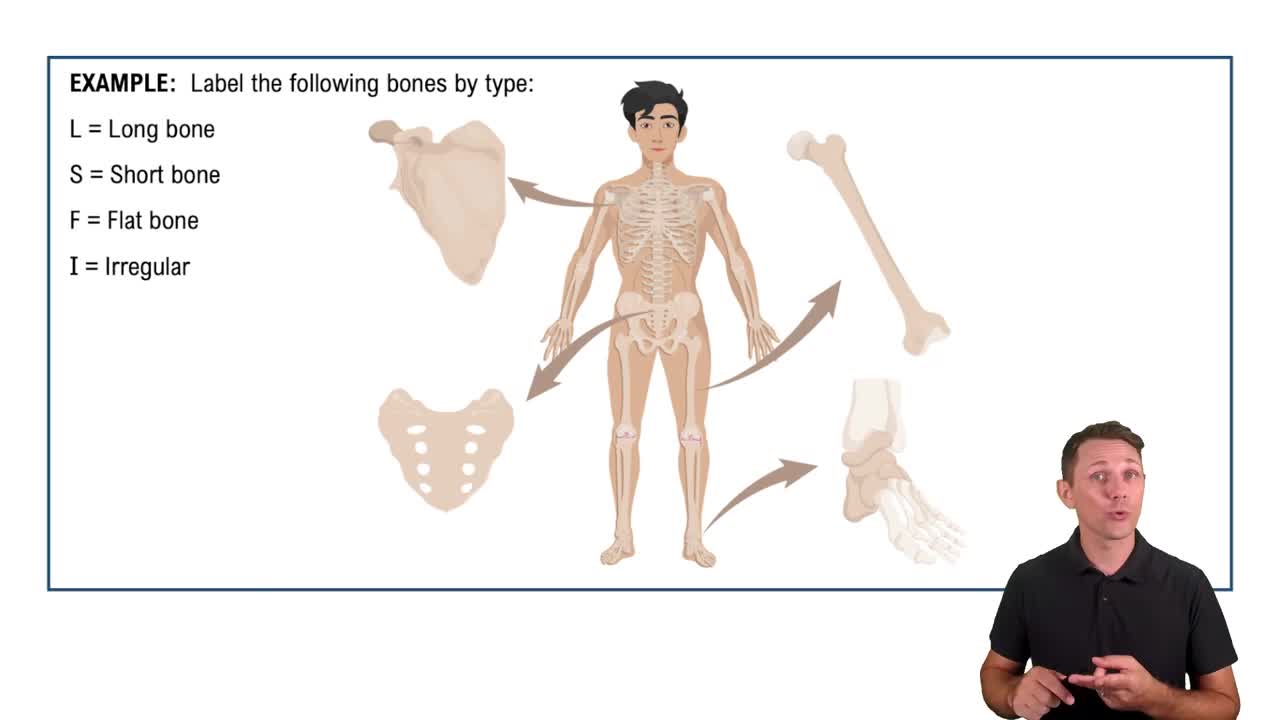
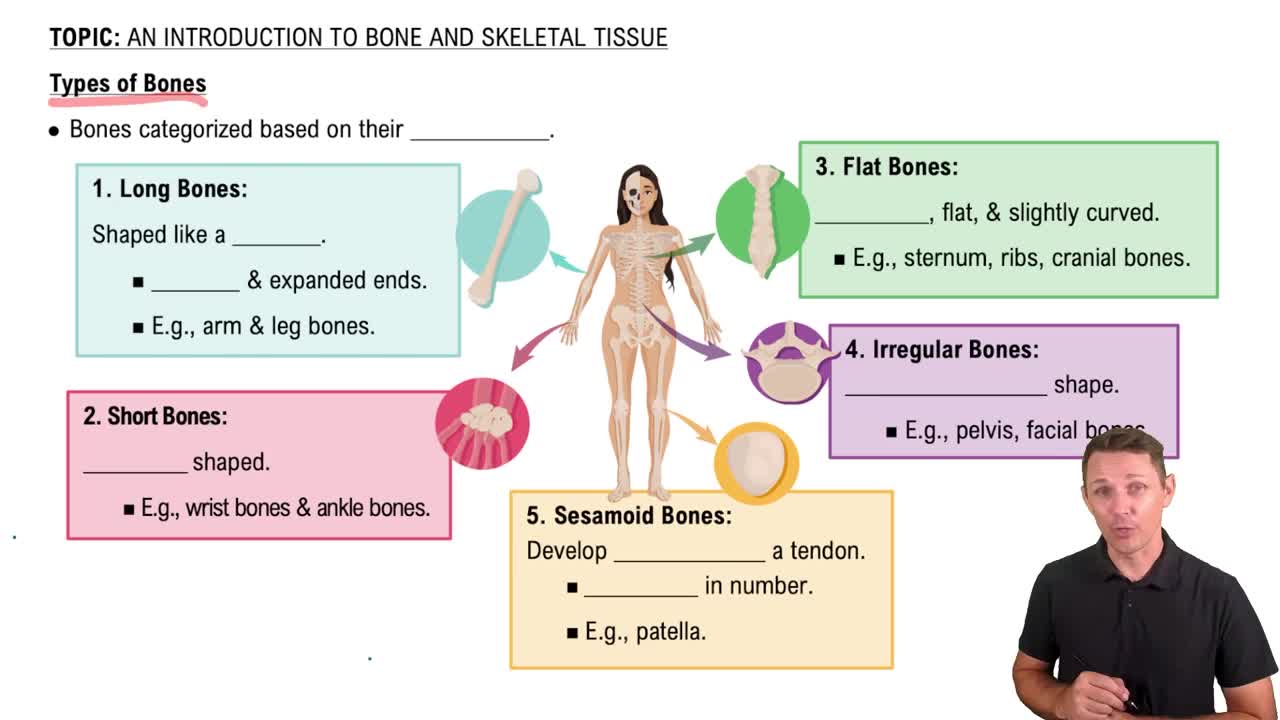
- Long bones: Long and slender (e.g., femur).
- Short bones: Boxy (e.g., carpals).
- Flat bones: Thin, parallel surfaces (e.g., skull).
- Irregular bones: Complex shapes (e.g., vertebrae).
- Sesamoid bones: Develop in tendons (e.g., patella).
- Sutural bones: Small bones between skull bones.
- Diaphysis: Shaft with compact bone surrounding marrow cavity.
- Epiphysis: Ends with mostly spongy bone.
- Metaphysis: Region between diaphysis and epiphysis.
- Calcium phosphate: About two-thirds of bone mass; forms hydroxyapatite crystals.
- Collagen fibers: About one-third; provide tensile strength.
- Other salts: Calcium carbonate, magnesium ions.
- Osteon: Functional unit with concentric lamellae around central canal.
- Perforating canals: Carry blood vessels perpendicular to bone surface.
- Lamellae: Layers of bone matrix (concentric, interstitial, circumferential).
- Trabeculae: Network of struts and plates without osteons.
- Red bone marrow: Fills spaces; site of blood cell formation.
- Yellow bone marrow: Stores fat.
- Nutrient artery and vein: Enter diaphysis through nutrient foramina.
- Metaphyseal vessels: Supply epiphyseal cartilage.
- Periosteal vessels: Supply superficial osteons and secondary centers.
- Calcitriol (Vitamin D): Enhances calcium and phosphate absorption.
- Vitamin C: Required for collagen synthesis and osteoblast differentiation.
- Vitamin A: Stimulates osteoblast activity.
- Vitamins K and B: Needed for bone protein synthesis.
- Growth hormone and thyroxine: Stimulate bone growth.
- Sex hormones (estrogen, testosterone): Stimulate osteoblasts and maintain bone mass.
- Parathyroid hormone and calcitonin: Regulate calcium ion homeostasis.
- Open (compound): Bone breaks through skin.
- Closed (simple): Bone does not break skin.
- Other types: transverse, displaced, compression, spiral, epiphyseal, comminuted, greenstick, Colles, Pott’s.
- Fracture hematoma formation: blood clot forms, bone cells die.
- Callus formation: internal and external calluses stabilize break.
- Spongy bone formation: osteoblasts replace cartilage.
- Compact bone formation: remodeled into compact bone, may be stronger.