Back

Anatomy & Physiology: Bones and Bone Structure

Control buttons has been changed to "navigation" mode.
1/20
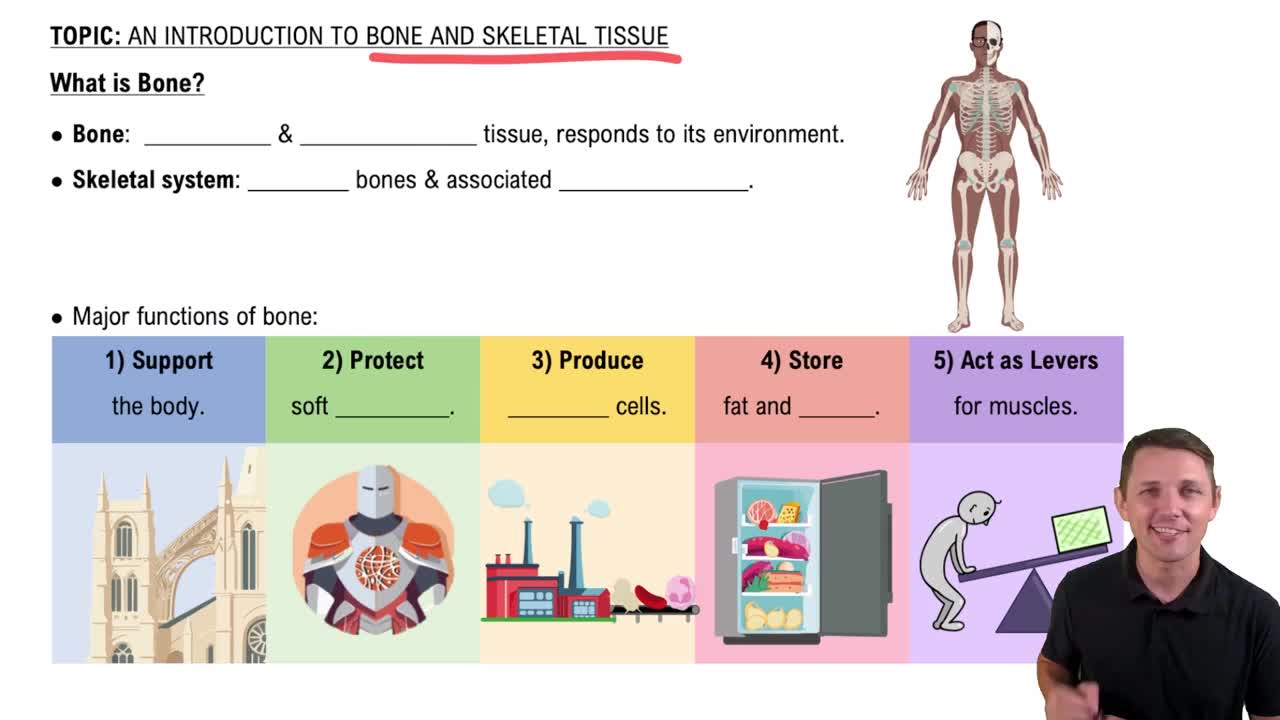
  • What is bone composed of and how does it respond to its environment?

    Bone is a living connective tissue that responds to mechanical stress and environmental changes.
  • What are the major functions of bone?

    • Support the body
    • Protect soft organs
    • Produce blood cells
    • Store fat and minerals
    • Act as levers for muscles
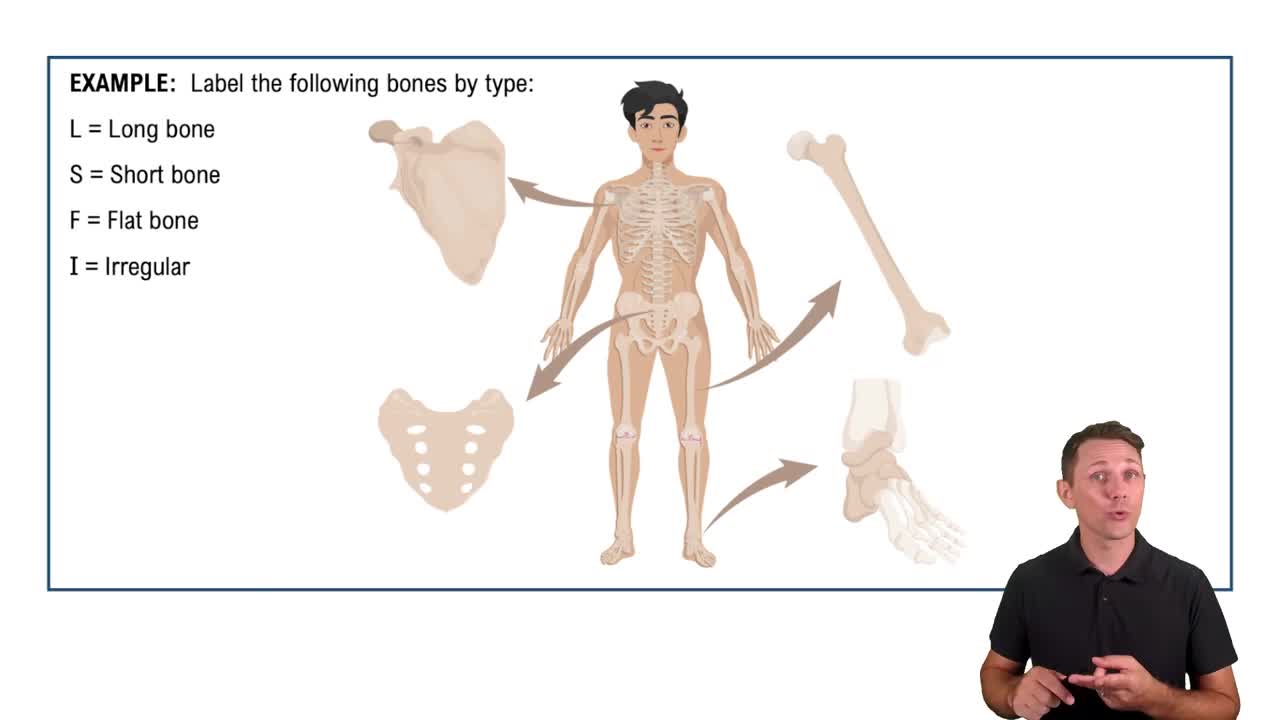
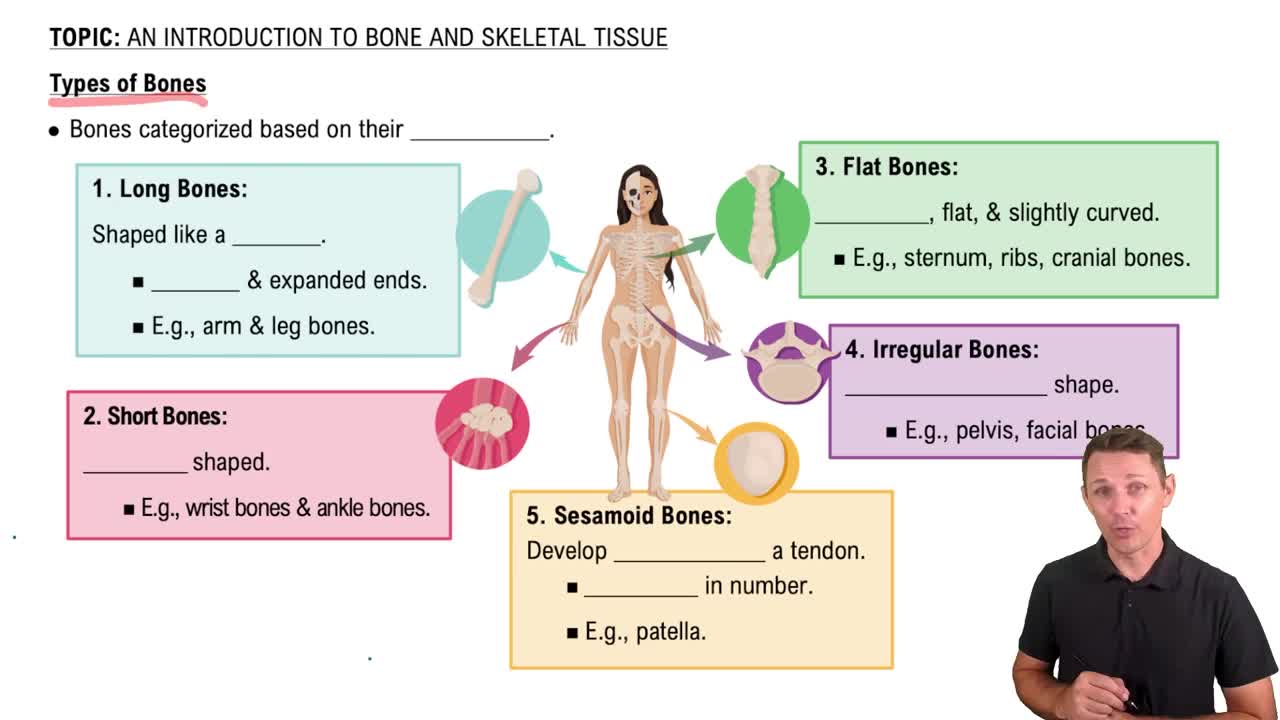
  • How are bones categorized based on their shape?

    • Long bones: shaped like a rod with shaft and expanded ends
    • Short bones: cube-shaped
    • Flat bones: thin, flat, slightly curved
    • Irregular bones: complex shapes
    • Sesamoid bones: develop inside tendons
  • What is the difference between compact bone and spongy bone?

    Compact bone is dense with no visible spaces, optimized for strength and hardness. Spongy bone has a scaffolding-like structure with trabeculae and spaces filled with marrow, reducing bone weight.
  • What is the periosteum and its layers?

    Periosteum is a connective tissue covering bone surface with two layers: fibrous layer (dense irregular connective tissue, collagen fibers for attachment) and osteogenic layer (bone stem cells).
  • What is the endosteum?

    Endosteum lines internal bone surfaces and contains osteogenic cells similar to the osteogenic layer of the periosteum.
  • What are the two types of bone marrow and their functions?

    • Red marrow: site of hematopoiesis (blood cell formation), found in spongy bone
    • Yellow marrow: fat storage, found in medullary cavity, can revert to red marrow
  • What structural characteristics do short, flat, and irregular bones share?

    They have a thin layer of compact bone surrounding spongy bone and are lined with periosteum and endosteum.
  • What are the main parts of a long bone?

    • Epiphysis: wider ends covered with articular cartilage
    • Diaphysis: tubular shaft containing medullary cavity with marrow
    • Metaphysis: region where epiphysis and diaphysis meet, contains epiphyseal plate for growth
  • What is the nutrient foramen and its role?

    A small opening in the diaphysis allowing blood vessels and nerves to enter and supply the bone.
  • What are the two main components of the bone matrix?

    • Inorganic matrix: hydroxyapatite crystals providing hardness
    • Organic matrix (osteoid): collagen fibers providing tensile strength and flexibility
  • What are the four types of bone cells and their functions?

    • Osteoprogenitor cells: bone stem cells
    • Osteoblasts: build bone by secreting matrix
    • Osteocytes: mature cells maintaining matrix
    • Osteoclasts: break down bone for remodeling
  • How do osteoblasts contribute to bone formation?

    Osteoblasts secrete collagen fibers and enzymes to form new bone matrix and can become osteocytes.
  • What is the role of osteocytes?

    Osteocytes maintain bone matrix, monitor bone stress, and communicate via gap junctions.
  • What structural feature of osteoclasts aids in bone resorption?

    The ruffled border increases surface area to secrete acid and enzymes that dissolve bone matrix.
  • What is an osteon and its components?

    The osteon is the structural unit of compact bone, consisting of a central canal, concentric lamellae, and lacunae containing osteocytes.
  • What is the function of canaliculi in bone?

    Canaliculi are tiny channels that allow osteocytes to communicate and exchange nutrients.
  • How does the arrangement of collagen fibers in lamellae affect bone strength?

    Alternating collagen fiber directions in lamellae provide strength in multiple directions and prevent fractures.
  • What are trabeculae in spongy bone?

    Trabeculae are small struts or plates of bone containing lamellae and osteocytes, aligned with stress lines to provide support.
  • Why is spongy bone lighter than compact bone?

    Spongy bone has many open spaces filled with marrow, reducing weight while maintaining strength.