 Back
Anatomy & Physiology: Bones and Skeletal Tissue
 3:56

Terms in this set (28)
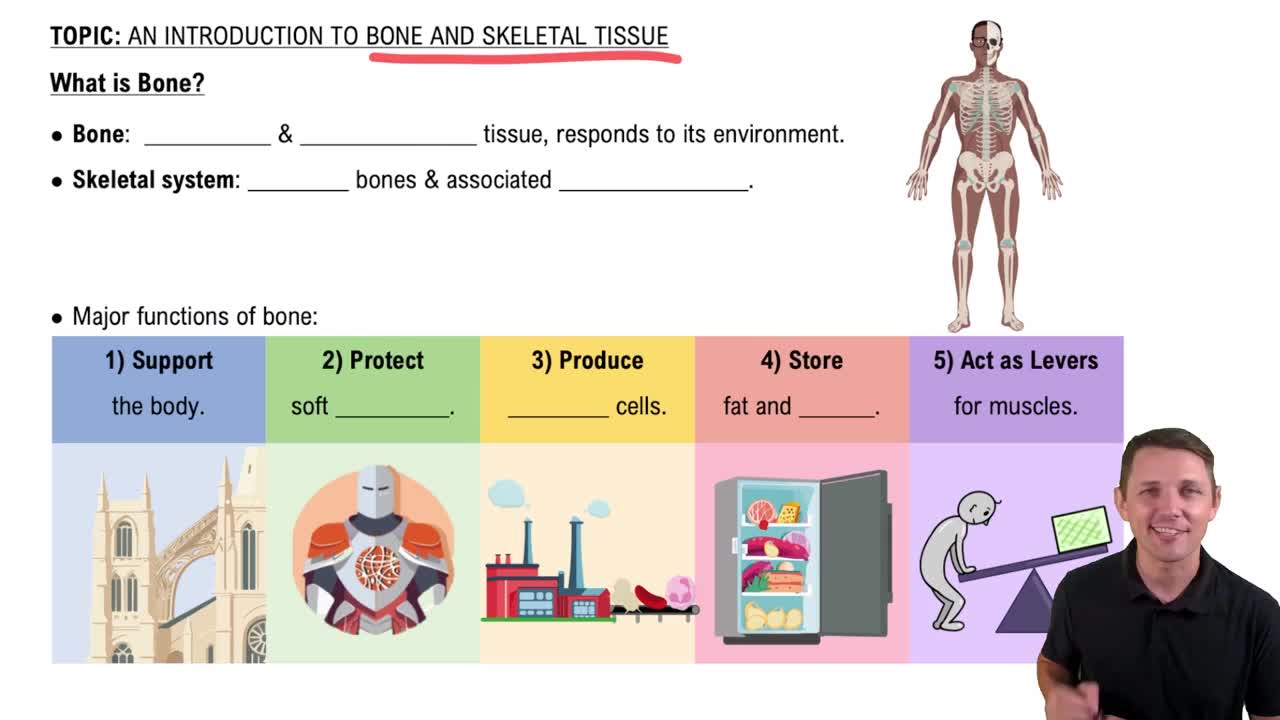
Support the body, facilitate movement, protect internal organs, produce blood cells, and store minerals and fat.
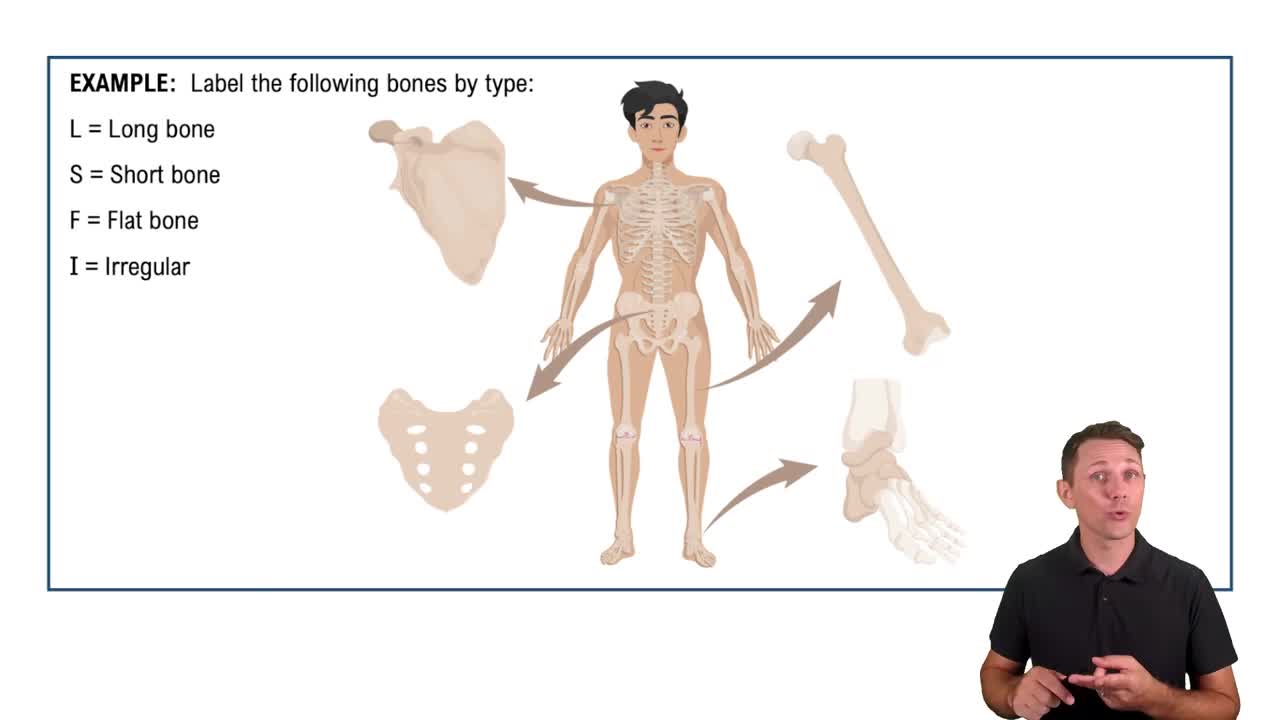
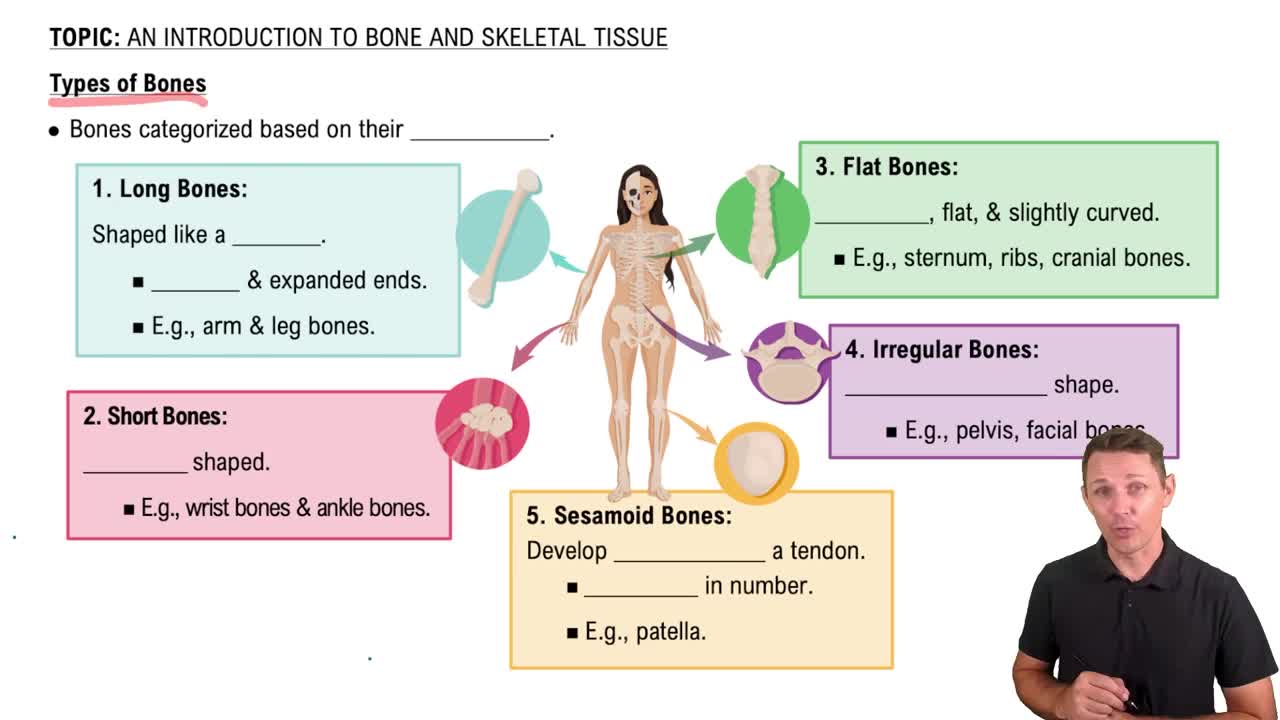
Long, short, flat, irregular, and sesamoid bones, each with distinct features and functions.
Cylindrical shape with a shaft (diaphysis), two ends (epiphyses), and a periosteum membrane.
Tubular shaft of a long bone with a medullary cavity filled with yellow marrow and walls of compact bone.
Wider ends of long bones filled with spongy bone and red marrow, covered by articular (hyaline) cartilage.
Narrow region between diaphysis and epiphysis containing the growth plate made of hyaline cartilage.
Fibrous membrane covering the outer bone surface, containing blood vessels, nerves, and attachment points for tendons and ligaments.
Delicate membrane lining the medullary cavity where bone growth, repair, and remodeling occur.
Articulations (joints), projections (attachment points), and holes (openings for vessels and nerves).
Collagen fibers and cells that provide tensile strength and a surface for mineral deposition.
Hydroxyapatites formed from calcium phosphate and carbonate, giving bone hardness and strength.
Stem cells in bone that divide and differentiate into osteoblasts.
Bone-forming cells that synthesize and secrete collagen matrix and calcium salts but do not divide.
Mature bone cells located in lacunae that maintain bone matrix and communicate via canaliculi.
Cells responsible for bone resorption, breaking down old bone to balance formation by osteoblasts.
Microscopic structural unit of compact bone composed of concentric lamellae around a central canal.
Central canal contains blood vessels and nerves; Volkmann's canals connect central canals to periosteum and endosteum.
Contains osteocytes in lacunae arranged in trabeculae, a lattice-like network providing strength along stress lines.
Bone develops directly from mesenchymal connective tissue; forms flat bones like skull and clavicles.
Bone develops by replacing hyaline cartilage; forms most bones except skull and clavicles.
Occurs at the epiphyseal plate where cartilage forms on the epiphyseal side and ossifies on the diaphyseal side.
Osteoblasts add bone on the outer surface while osteoclasts resorb bone on the inner surface of the medullary cavity.
Continuous process of resorption by osteoclasts and formation by osteoblasts to maintain bone strength and repair damage.
Enhances calcium absorption in the intestine and supports bone remodeling.
Growth hormone, thyroxine, and sex hormones promote osteoblastic activity and bone matrix synthesis.
Parathyroid hormone (PTH) increases osteoclast activity; calcitonin decreases it to regulate calcium levels.
Disease with decreased bone mass due to higher resorption than formation, common in aging and postmenopausal women.
Condition of low blood calcium levels causing brittle bones, often due to hormonal imbalance or poor diet.