 Back
BackAnatomy & Physiology: Bones, Joints, and Lever Systems
You can tap to flip the card.
Control buttons has been changed to "navigation" mode.
1/26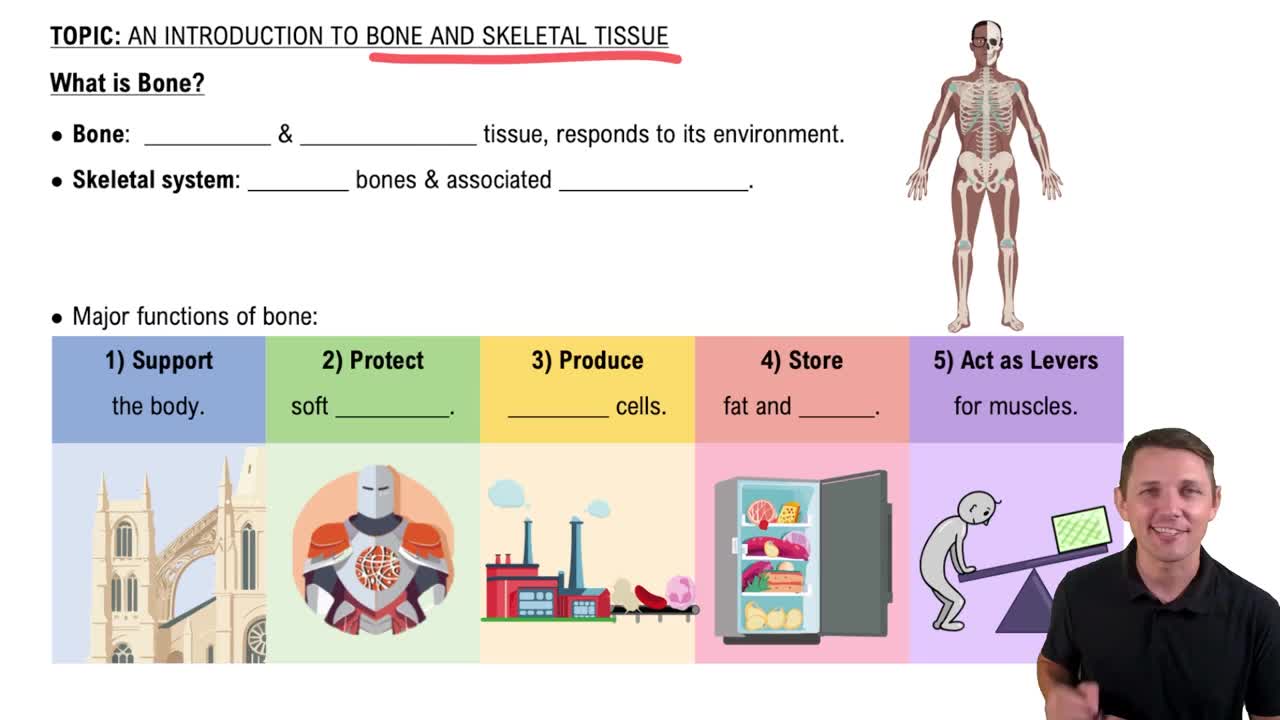
 3:56
3:56
Terms in this set (26)
- Support
- Protection
- Movement
- Mineral and growth factor storage
- Blood cell formation
- Triglyceride (fat) storage
- Hormone production (Osteocalcin)
- Hyaline cartilage
- Elastic cartilage
- Fibrocartilage
- Appositional growth: growth at cartilage surface
- Interstitial growth: growth from within cartilage
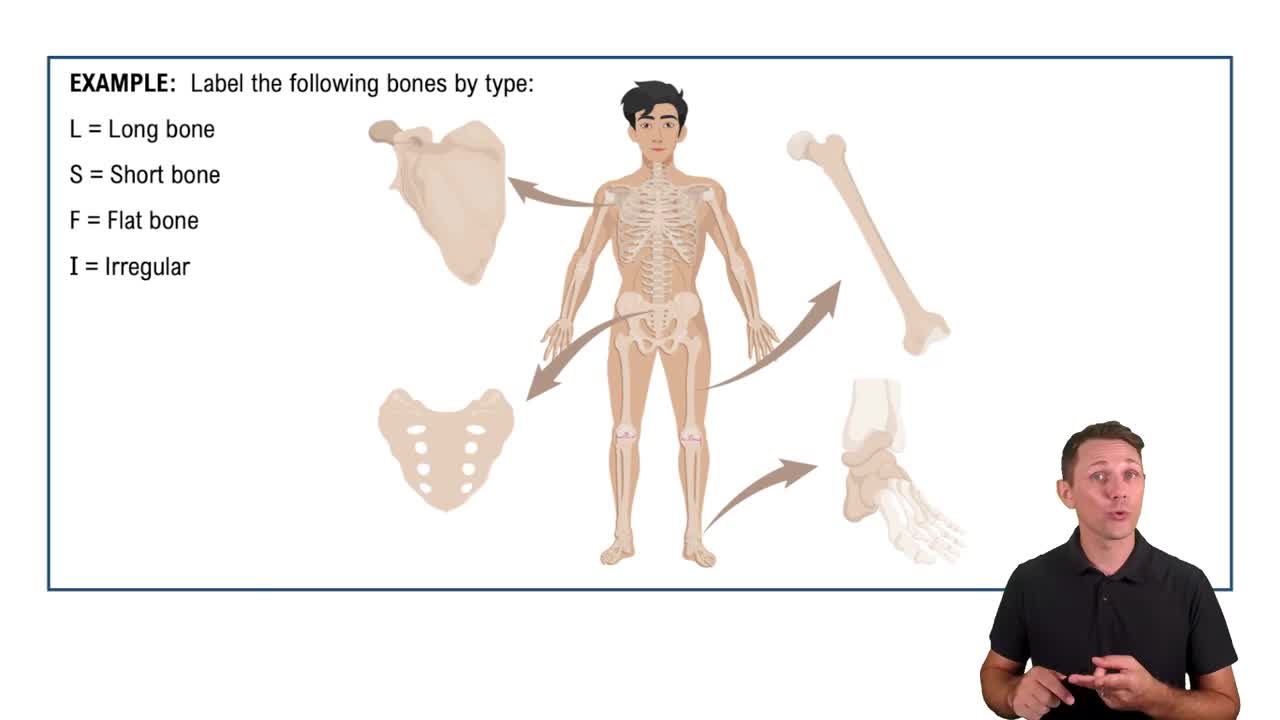
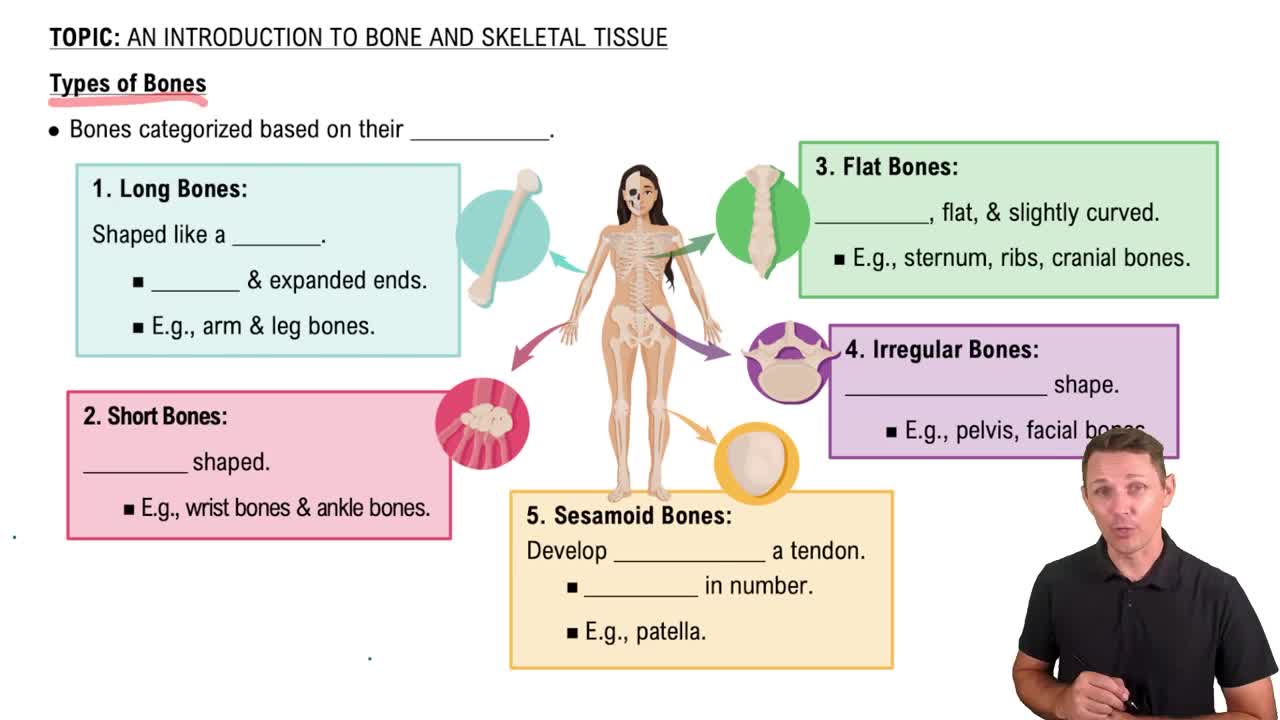
- Long bones
- Short bones
- Flat bones
- Irregular bones
- Sesamoid bones
- Diaphysis: shaft
- Epiphyses: ends
- Articular cartilage: covers joint surfaces
- Epiphyseal plate/line: growth region
- Periosteum and Endosteum: bone membranes
- Osteogenic cells: stem cells
- Osteoblasts: bone-forming cells
- Osteocytes: mature bone cells
- Bone-lining cells: maintain matrix
- Osteoclasts: bone-resorbing cells
- Osteon: structural unit
- Central canal: contains blood vessels
- Perforating canals: connect osteons
- Lacunae: house osteocytes
- Canaliculi: connect lacunae
- Osteoid: organic matrix of ground substance and collagen fibers
- Hydroxyapatites: calcium phosphate crystals providing hardness
- Endochondral ossification: bone develops from cartilage
- Intramembranous ossification: bone develops from fibrous membrane
- Interstitial growth: lengthening of bone
- Appositional growth: widening of bone
- Resting (quiescent) zone
- Proliferation (growth) zone
- Hypertrophic zone
- Calcification zone
- Ossification (osteogenic) zone
- Growth hormone
- Thyroid hormone
- Testosterone (males)
- Estrogens (females)
- Spongy bone replaced every 3-4 years
- Compact bone replaced every 10 years
- Balance of bone deposition and bone resorption
- Parathyroid hormone: increases blood calcium by stimulating resorption
- Calcitonin: lowers blood calcium by inhibiting resorption
- Hematoma formation
- Fibrocartilaginous callus formation
- Bony callus formation
- Bone remodeling
- Synarthroses: immovable joints
- Amphiarthroses: slightly movable joints
- Diarthroses: freely movable joints
- Bony (Synostosis)
- Fibrous: sutures, syndesmoses, gomphoses
- Cartilaginous: synchondroses, symphyses
- Synovial
- Articular cartilage
- Joint cavity
- Articular capsule: fibrous layer and synovial membrane
- Synovial fluid
- Reinforcing ligaments
- Gliding
- Angular: flexion, extension, abduction, adduction, circumduction
- Rotation: medial and lateral
- Plane
- Hinge
- Pivot
- Condylar
- Saddle
- Ball-and-socket
- Cartilage tears
- Sprains
- Dislocations (luxations)
- Bursitis
- Tendonitis
- Arthritis: osteoarthritis, rheumatoid arthritis, gouty arthritis, Lyme disease
- Lever
- Fulcrum (F)
- Effort (E)
- Load/Resistance (R)
- First-class lever: E-F-R
- Second-class lever: F-R-E
- Third-class lever: F-E-R
- Mechanical advantage: power lever, load is closer to fulcrum
- Mechanical disadvantage: speed lever, effort is closer to fulcrum